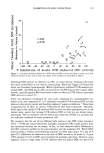
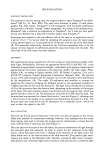
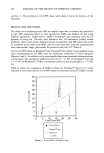
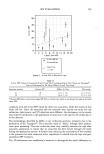
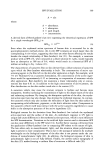
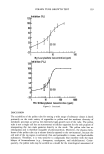
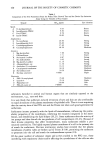
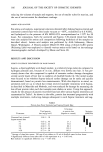
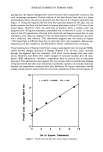
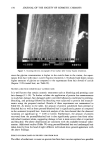
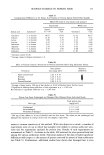
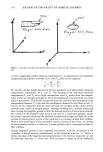
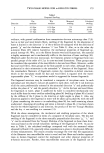
SPF EVALUATION 145 50 40 • 30 20 10 0 2 4 6 8 10 12 14 16 18 20 Label Claim SPF ß In Vitro SPF on Blenderm© tape . . Best fit line r = 0.387 Figure 3. In vitro SPF on Blenderm © tape. Table II In Vivo SPF Values for Sunscreens B and D and Their Corresponding In Vitro Values on Transpore © Tape as Determined by Dr. Brian Diffey (10) and This Study Sunscreen product Known SPF Diffey, In Vitro This study B 18 17.6 + 5.6 31.3 + 9.2 D 17 19.6 + 3.9 27.4 + 5.31 * Known SPF refers to an actual average SPF from a clinical trial, which is not always the same as the label claim SPF. correlated with the in vivo SPF values for these two sunscreens, while the results of this study did not. Since the sunscreen and the substrate were exactly the same but the technician, light source, and UV detectors were different, the discrepancy in the results may either be attributed to the application of sunscreen to the tape by the technician or to the detector. The methodology described by Diffey is very technician-sensitive, primarily due to the perforation of the Transpore ©. The sunscreen tends to "bleed" through these perfora- tions upon spreading. Thus the technician must very carefully examine the tape after sunscreen application to ensure that no sunscreen has been forced through the holes during the application process. A further issue reducing the universality of this method is the potential for some sunscreen active ingredients to absorb into the tape and give anomalous SPF estimates. The 3D radiometer was insufficiently sensitive to distinguish the small differences in

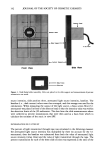
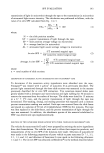
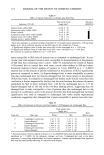
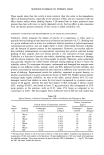
146 JOURNAL OF THE SOCIETY OF COSMETIC CHEMISTS percent transmission that separate high SPF products. The variability of repeated mea- surements of SPF values was high, as shown by the standard deviations reported in Table 1. For example, sunscreen K has a label claim SPF of 15, but the in vitro SPF on Blenderm © was 349.9 + 316.0. Sunscreen D also has a label claim SPF of 15, but the in vitro SPF was 40.4 & 3.7. Not only were the SPF measurements highly variable between measurements of the same sunscreen, but they also varied among sunscreens with the same label claim SPFs. As mentioned previously, Blenderm © is a surgical adhesive tape identical in composition to Transpore ©, without machined perforations, thus making the surface smoother and eliminating the possibility of sunscreen leakage through the perforations. From the first six sunscreens tested on both tapes (Table I), it was determined that Transpore © was not an acceptable substrate for evaluating SPF in vitro, but initial data from the Blenderm © were insufficient to determine its appropriateness as a model substrate. Therefore, 11 more sunscreens were tested on Blenderm © only. The in vitro SPF values did not correlate with in viva or label claim SPF values (Figure 3), and in viva or label SPF 15 and greater were usually overestimated. In vitro SPF values on Blenderm © had a lower overall standard deviation than Transpore ©, and this may be attributable to the fact that the Blenderin © is not perforated. In addition, no trends were discovered that indicated that the vehicle type or the inactive ingredients contributed to the disparity of the in vitro results. However, Diffey and Robson (9) stated that oil and alcohol based sun- screens absorbed into the tape and were not suitable for testing by this method. Sun- screens E and F, which are alcohol and oil based, respectively, were included in this study to determine if their effects on the tape were similar to or different from the lotion vehicle results, and they were found to have particularly erratic SPF estimates. For example, sunscreen E, the alcohol gel labeled SPF 25, when tested on Blenderm © yielded an estimated SPF of 57.6 +-- 51.92. The conclusion was drawn that both substrates were inappropriate for testing all sunscreen formulations when the described experimental equipment was utilized. Diffey and Robson suggested (9) that surgical tape may absorb the active sunscreen ingredients, and this possibility was tested using the detergent and water wash and THF extraction. The percent transmission of light through the tapes reached a constant value after the third detergent and water wash, indicating that all of the sunscreen on the surface of the tape had been removed. Slide 1 had an average transmission value of 1.7% after three washes, and slide 2 transmitted 1.4% after three washes. Prior to sunscreen application, slide 2 had a transmission value of 66.9%, and after the THF extraction the tape transmission was 63.7%, indicating that the THF had extracted a significant amount of sunscreen from the tape. The spectra of sunscreen D dissolved directly in THF looked very similar to the spectra of the THF solution that had been extracted from the sunscreen-treated and washed tape. A comparison of the absorbance spectra suggests that approximately three quarters of the sunscreen actives initially applied were absorbed into the tapes in the time (approximately 30 minutes) between sunscreen application and the first detergent and water washing. Another possible source of error was associated with the measurement of percent light transmitted by high-SPF products. The in vitro SPFs reported here are based on the ratio of percent transmission of light through untreated tape to that through sunscreen- treated tape. As the SPF increases, the percent of transmitted light approaches zero according to the relationship, %T = 100(1/SPF) (3). Thus a small error in the observed
Purchased for the exclusive use of nofirst nolast (unknown)
From: SCC Media Library & Resource Center (library.scconline.org)