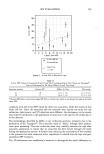
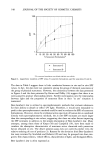
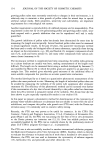
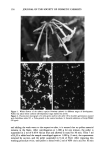
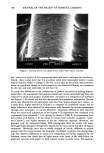
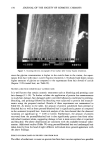
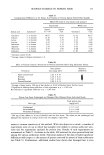
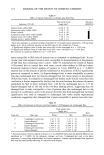
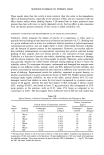
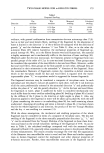
170 JOURNAL OF THE SOCIETY OF COSMETIC CHEMISTS Figure 5. Scanning electron micrograph of hair surface after twenty Suprox treatments. since the glycine concentration is higher in the cuticle than in the cortex, the super- natant from hair with intact cuticle (Suprox treatments 1-9) should (and does) contain higher amounts of glycine as compared to the supernatant from hair devoid of cuticle (Suprox x 20-treated hair see Table II). PROTEIN LOSS FROM COSMETICALLY ALTERED HAIR It is well known that certain cosmetic treatments such as bleaching and perming cause hair damage (11-14). To further validate the application of protein loss measurements to study hair damage, hair damaged under controlled laboratory conditions by perming, bleaching, and perming followed by bleaching were subjected to protein loss measure- ments using the proposed method. Results of these experiments are summarized in Table III. As shown in the table, the amount of protein solubilized from permed or bleached hair as well as from permed/bleached hair is significantly greater as compared to the untreated (control) hair. Statistical analysis of the data showed that the observed variations are significant (p = 0.05 or lower). Furthermore, the amount of protein recovered from the permed/bleached hair is also significantly greater than from either individual treatment alone, suggesting damage to hair is more severe when it is permed and bleached. The above observations are consistent with the available literature infor- mation. Additional studies (Table IV) using permed/bleached hair and undamaged hair taken directly from the head of eight different individuals show general agreement with the above findings. EFFECT OF SURFACTANTS ON PROTEIN LOSS FROM HAIR The effect of surfactants vs water on protein loss from hair was also explored as a possible

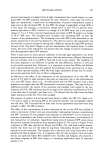
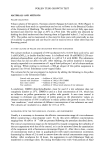
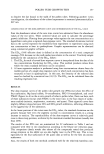
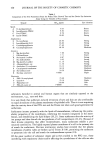
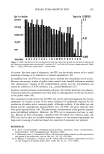
SURFACE DAMAGE IN HUMAN HAIR 17 ! Table II Compositional Differences in the Amino Acid Analysis of Various Suprox-Treated Hair Samples Moles/100 moles of total amino acids analyzed Supernatant Whole hair Suprox Suprox Amino acid Comments • x 1-x 9 b x 20 Untreated Suprox x20 Cystine/2 in Cuticle 18.63 13.04 12.52 10.27 Glycine in Cuticle 12.10 6.35 5.70 5.32 Lysine in Cuticle 3.89 1.79 2.41 2.29 Leucine in Cortex 4.32 7.32 5.92 6.84 Isoleucine in Cortex 2.01 3.13 2.52 2.90 Arginine in Cortex 2.44 4.54 6.42 6.77 Threonine in Cortex 4.76 7.96 6.48 7.28 Glutamic in Cortex 9.97 14.77 11.85 13.25 Literature survey (9,10). Average values for Suprox treatments 1-9. Table III Effect of Various Cosmetic Treatments on Protein Loss From Hair Using Laboratory Tresses Total protein Statistics Treatment loss (mg/g hair •) (ANOVA) None (control hair) 2.62 -+ 0.19 Permed 6.24 + 0.41 Bleached 6.65 --+ 0.81 Perreed/bleached 9.00 -+ 0.74 • Average of three tresses. 200 mg of hair shaken in 10 ml of distilled water for four hours. * Significantly different from other data of this experiment at p = 0.05 level. Bar indicates no significant difference at p -- 0.05 level. Table IV Protein Loss From Undamaged and Damaged Hair Obtained From Individual Heads Total protein loss Hair type (mg/g hair •) Undamaged 1.71 -+ 0.17 Perre-damaged 2.13 -+ 0.06 Perre/bleach-damaged 2.50 -+ 0.24 • 200 mg of hair shaken in 10 ml of distilled water for four hours. The values for the undamaged and damaged hair represent an average of four and two samples, respectively. means to increase sensitivity of the method. With this objective in mind, a number of experiments were set up in which hair samples were shaken in various surfactant solu- tions and the supernatant analyzed for protein loss. Results of such experiments are summarized in Table V. As shown in the table, SLS removed the most protein from hair among the various surfactants tested. Statistical analysis of the data revealed significant differences with respect to the amount of protein removed by several of these surfactants (see Table V). Furthermore, additional studies have shown that damaged hair is even
Purchased for the exclusive use of nofirst nolast (unknown)
From: SCC Media Library & Resource Center (library.scconline.org)