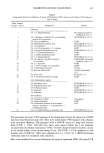
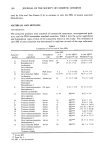
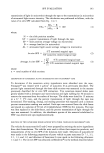
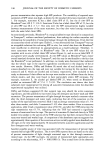
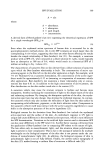
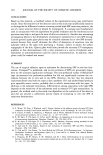
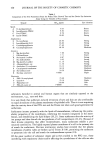
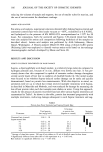
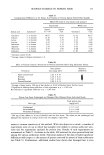
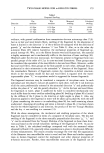
166 JOURNAL OF THE SOCIETY OF COSMETIC CHEMISTS reducing the volumes of sample and reagents, the use of smaller tubes for reaction, and the use of microcuvettes for absorbance readings. AMINO ACID ANALYSIS For amino acid analysis, supernatant solutions obtained after shaking Suprox-treated and untreated (control) hair were dried under vacuum at •-60øC, redissolved in 0.6 N HCI, and hydrolyzed in the presence of 6N HC1/0.05% mercaptoethanol at 115øC for 20 hours. For comparison, both the untreated and Suprox x 20-treated whole hair fibers were also analyzed for amino acid composition following hydrolysis of the samples (as described above). Amino acid analysis was performed by AAA Laboratory, Mercer Island, Washington. A Dionex analyzer (Model D-500) using a lithium buffer system (Pickering Labs) was employed to identify various amino acids based on ion-exchange chromatographic methods developed by Moore and Stein (8). RESULTS AND DISCUSSION EFFECT OF SUPROX TREATMENTS ON HAIR DAMAGE Suprox, a diperisophthalic acid-based oxidant, is a relatively large molecule compared to hydrogen peroxide and, because of its size, diffuses very slowly into hair. It was pre- viously shown that this compound is capable of extensive surface damage throughout several cuticle layers of hair due to oxidation of disulfide bonds (4). Our initial studies were focused to see whether Suprox-induced surface damage can be easily and quickly demonstrated, based on protein loss measurements. With this objective in mind, ex- periments were set up in which hair tresses received multiple treatments with Suprox, as described in Materials and Methods, and were analyzed for damage by measuring the loss of hair protein when such hair samples were shaken in water. Using this approach, results for the amount of protein recovered from hair after various Suprox treatments are summarized in Table I. As shown in the table, protein loss increased progressively with multiple treatments, indicating damage subsequent to each Suprox treatment and sug- Table I Protein Loss From Untreated and Suprox-Treated Hair % Increase Total protein in protein loss Statistics Treatment loss (mg/g hair a) (Suprox vs control) (ANOVA) Untreated hair (control) 3.66 + . 18 Suprox-treated hair x 1 4.65 -4-_ .46 27.1 x3 5.60 - .42 53.0 x6 6.60 + .53 80.3 x9 8.13 -+ .48 122.2 x20 9.73 -+ .50 165.9 a Average of three hair tresses. 150 mg of hair shaken in 10 ml of distilled water for four hours. * Significantly different from other data of this experiment at p = 0.05 level. Bars indicate no significant difference at p = 0.05 level.

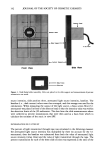
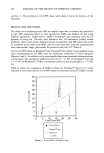
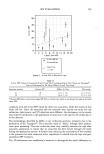
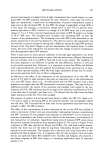
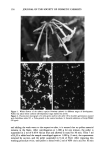
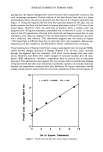
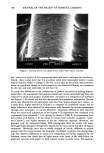
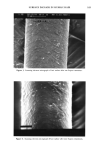
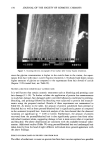
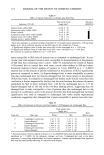
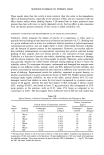
SURFACE DAMAGE IN HUMAN HAIR 167 gesting that the Suprox-damaged hair surface becomes more susceptible to protein loss with increasing treatments. Further analysis of the data showed that there is a linear relationship between the amount of protein lost from hair in 0-9 Suprox treatments (see Figure 1). Using the equation derived from the regression analysis of the data, one can predict protein loss from this hair batch vs Suprox treatments within 0-5 % error of the actual values. However, there was some loss of linearity when a similar curve was prepared for 0-20 Suprox treatments, presumably due to total loss of cuticle. It was also noticed that all supernatants obtained from untreated and Suprox-treated hair in nine treatments were turbid as compared to the one from Suprox X 20-treated hair the latter was a relatively clear solution. This observation suggests that the surface of Suprox x20-treated hair is different from that of other hair after nine treatments. Microscopic examination of hair samples as described below further confirmed this conclusion. Visual examination of Suprox-treated hair, using a scanning electron microscope (SEM), clearly showed changes indicative of damage (Figures 2-5). As seen, some cuticular damage was apparent after one treatment, with severe cuticle damage after nine treat- ments. However, hair fibers were totally stripped of cuticular material after 20 treat- ments. SEM information, therefore, complement data on protein loss as previously discussed. This information also suggests that protein material recovered during shaking of Suprox-treated hair after nine treatments is primarily a product of cuticular material, whereas the supernatant obtained from hair following 20 Suprox treatments should mainly contain protein matter from the structural components of the cortical regions. In E c• co o _1 10 y = 3.9675 + 0.46328x R^2 = 0.981 0 2 4 6 8 10 No of Suprox Treatments Figure l. Protein loss from hair after various Supfox treatments.
Purchased for the exclusive use of nofirst nolast (unknown)
From: SCC Media Library & Resource Center (library.scconline.org)