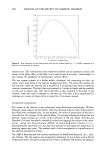
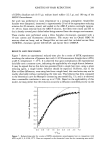
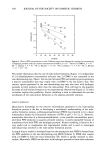
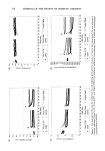
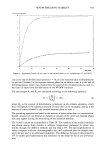
310 JOURNAL OF THE SOCIETY OF COSMETIC CHEMISTS technique, Dynamic Electrokinetic and Permeability Analysis (DEPA) (3), can provide detailed information about the process of shampooing. It is shown that a set of streaming potential, conductivity, permeability, and zeta potential data obtained in the process of the treatment and rinsing of a hair plug gives a unique insight into dynamics of the interactions of various components of a shampoo formulation with hair fibers. The concentration of anionic and cationic sites on the surface of hair (in terms of zeta potentials), kinetic parameters of surfactant rinseout, and the thickness of deposited surface layers could be estimated from these results. Detailed analysis of compositions based on anionic and amphoteric surfactants with cationic polymers (such as cationic guar gum and cationic cellulose), silicone oils, and cationic surfactants as conditioning agents is presented. The technique was also used to explore the effect of multiple treatments of hair involving conditioning and nonconditioning shampoos. These exper- iments allowed for quantitative assessment of practical problems such as the removabil- ity of adsorbed cationic surfactants and polymers by subsequent shampooing, or the build-up of polymers or polymer-surfactant complexes as a result of consecutive use of conditioning compositions. EXPERIMENTAL INSTRUMENTATION The schematic diagram of the experimental setup is presented in Figure 1. The details of the design, including the control diagram, were discussed previously (3). The device consists of a streaming potential cell, a conductivity meter, a pressure transducer, test and treatment solution reservoirs, a flow interruptor, an electronic balance, and several electric and manual valves that control the flow of solutions through the measurement cell, maintain air pressure in the system, and allow easy handling of solutions. The key features of the instrumentation are the following: (a) on-line positioning of test- and treatment-solution reservoirs, allowing fiber treatment within the streaming potential cell, (b) the pulse method of measuring the streaming potential (the timing of the pulses is effected by the flow interruptor), (c) simultaneous measurement of the streaming potential, conductivity, and flow rate (permeability of the plug), (d) special software allowing flexible design of the experiment, i.e., timing of treatment and test cycles, control of pressure, control of timing of the flow interruptor, forward and backward flow of the solutions through the plug, and data collection. The measuring cell is equipped with two perforated silver electrodes. One gram of hair fibers chopped into pieces 2-4 mm in length was used to form the plug. The distance between the electrodes could be adjusted in the range from 1.0 to 1.5 cm, which corresponds to hair plug densities of 0.72 g/cm 3 and 0.48 g/cm 3, respectively. The dynamic electrokinetic and permeability measurements described in this paper were obtained for the hair plugs at the concentration of 0.58 g hair/cm 3. The conductivity of the solution in the plug was measured by means of an Orion Model 101 conductivity meter at a frequency of 1 kHz. In all experiments the aqueous solutions were prepared from water purified by using the Barnstead NANOpure system. It was characterized by an initial conductivity of 5 x 10⁻⁸ (mho/cm). The operation of the instrument, data collection, and handling was performed by using an IBM AT computer.

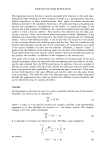
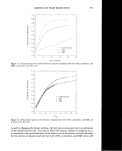
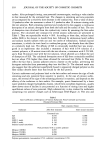
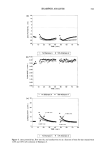
SHAMPOO ANALYSIS 311 A typical experimental protocol employed in this study included the following steps: 1. The measurement period of a new hair plug consisting of five pulses of 5 X 10- 5 M KCI solution at 12 cm Hg during 5 minutes in an alternating sequence: flow 30 s on-flow 30 s off. 2. On-line treatment of hair in the plug with solutions of surfactants or polymers consisting of five pulses of the treatment solution at 12 cm Hg during 5 minutes in an alternating sequence: flow 30 s on-flow 30 s off. 3. The measurement period of the treated hair consisting of 30 pulses of 5 X 10- 5 M KCI at 12 cm Hg during 30 minutes in an alternating sequence: flow 30 s on-flow 30 s off. 4. On-line retreatment of hair in the plug with the appropriate solutions consisting of five pulses of the treatment solution at 12 cm Hg during 5 minutes in an alternating sequence: flow 30 s on-flow 30 s off. 5. The measurement period of the retreated hair consisting of 30 pulses of 5 X 10- 5 M KCI at 12 cm Hg during 30 minutes in an alternating sequence: flow 30 s on-flow 30 s off. The first measurement period provides information about the surface and the perme- ability characteristics of a newly formed hair plug, in terms of the streaming potential, zeta potential [calculated from the Smoluchowski equation (4)], conductivity, and the flow rate of the test solution at a given pressure. These parameters are important for the data interpretation because of the considerable sample-to-sample variations in hair prop- erties as well as the difficulty in reproducible plug formation. In the second measure- ment period, the kinetics of sorption and desorption of ions can be followed by the streaming potential and the conductivity measurements. Note that while the streaming potential data reflect the state of the fiber surface, conductivity is related to the presence of free ions in the test solution. In addition to this, the changes in the flow rates may be indicative of either the variations in the volume of the fibers, i.e., their swelling or shrinking, or deposition of surfactant or polymer on the fiber surface. The third mea- surement period allows assessment of the effect of multiple treatments on hair. Some experiments included three or four treatments of the plug with shampoo solutions in order to better evaluate the buildup of conditioning agents. The rinsing cycle in these cases was shortened to 15 minutes. Several parameters were calculated for the quantitative description of the pe?formance of a shampoo: 1. Conductivity data were employed to calculate the rate coefficients of the rinse-off of conductive species from the plug according to the first order kinetics: In (conductivity (0)/conductivity (t)) = -kt (1) where conductivity (0), conductivity (t), k, and t are the initial conductivity of the plug (taken in the second cycle after the treatment), conductivity after time t, the rate desorption coefficient, and time, respectively. 2. Flow rate data can be employed to calculate the thickness, 8a, of a deposited layer of a conditioner according to the following dependence (3):
Purchased for the exclusive use of nofirst nolast (unknown)
From: SCC Media Library & Resource Center (library.scconline.org)