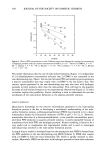
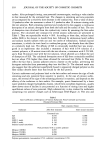
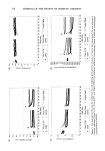
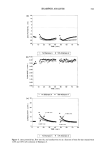
336 JOURNAL OF THE SOCIETY OF COSMETIC CHEMISTS Conditioning shampoos containing cationic polymers produce a durable modification of the surface by significantly increasing the values of zeta and streaming potentials. The extent of change varied for different formulations, being probably primarily determined by the type and concentration of a conditioning agent. The shape of the curves, zeta potential as a function of rinsing time, obtained for the systems based on anionic detergents with cationic polymer as a sole conditioning agent, suggest an initial depo- sition of a polymer-surfactant complex followed by desorption of anionic detergent, leaving the surface progressively less negatively charged. The experiments also provided evidence for the deposition of cationic surfactants on hair from formulations containing an excess of anionic detergents. The effect in this case is smaller than that observed for the systems based on high-molecular-weight cationic polymers. The modification of fibers by a composition containing uncharged silicone oil as a conditioning agent could only be detected by permeability measurements. Adsorption of silicone from this system was found not to affect the surface charge of hair fibers. The largest extent of surface modification was observed for the compositions based on amphoteric surfactants or blends of amphoteric surfactants with highly ethoxylated anionic detergents. Two investigated systems containing either cationic polymers or cationic surfactant-anionic surfactant complex as the conditioning agents were shown to reverse the surface charge of hair from negative to high-positive. Permeability measure- ments, on the other hand, indicated that the treatment of hair with these two compo- sitions produced relatively thin conditioning layers on the fiber surface. Finally, the technique can be employed to investigate the removability of conditioning layers left by the application of conditioning shampoos by nonconditioning cleansing formulations. The efficacy of this process can be estimated by using both the electroki- netic parameters (zeta potential) or the thickness of adsorbed layers calculated from the permeability data. The results presented in this paper suggest incomplete removal of adsorbed cationic polymer or cationic surfactant-anionic surfactant complex by an all- anionic composition. REFERENCES (10) (1) M. M. Breuer, Cleaning ofhair, J. Soc. Cosmet. Chem., 32, 437 (1981). (2) G. Barker, "Surfactants in Shampoos," in Surfactants in Cosmetics, Surfactant Science Series, Vol. 16, M. M. Rieger, Ed. (Marcel Dekker, New York, 1985), p. 251. (3) J. Jachowicz, C. Williams, and S. Maxey, Sorption/desorption of ions by dynamic electrokinetic and permeability analysis, Langmuir, 9(11), 3085 (1993). (4) A. W. Adamson, Physical Chemistry of Surfaces (John Wiley & Sons, Inc., New York, 1990), p. 207. (5) E. D. Goddard, J. A. Faucher, R.J. Scott, and M. E. Turney, Adsorption of polymer JR on keratinous surfaces•Part II, J. Soc. Cosmet. Chem., 26, 539 (1975). (6) J. A. Faucher, E. D. Goddard, and R. B. Hannan, Sorption and desorption of a cationic polymer by human hair: Effects of salt solutions, Text. Res. J., 47, 616 (1977). (7) H. Rushton, C. L. Gummer, and H. Flesh, Effects of shampooing on hair. Presented at the III Annual Meeting of the European Hair Research Society, Berlin, October 2-3, 1992. (8) D. H. Birtwistle, Shampoo composition containing surfactants and silicones, and guar gum deriva- tives, EP 468721 (1992), assigned to Unilever. (9) F. Harusawa, Y. Nakama, and M. Tanaka, Application of the anionic-cationic mixed surfactants to shampoos as conditioning agents. Preprints of the 16th IFSCC Congress, New York, October 8, 1990, Volume 2, p. 382. M. L. Garcia and J. Diaz, Combability measurements on human hair, J. Soc. Cosmet. Chem., 27, 379 (1976).

J. Soc. Cosmet. Chem., 45, 337-345 (November/December 1994) Analytical investigation of W/O/W emulsion stability using dihydralazine as breakdown indicator C. LAUGEL, P. CHAMINADE, A. BAILLET, M. SEILLER, and D. FERRIER, Laboratoire de Chimie Analytique HI (C.L., P.Co, A.Bo, D.F. ), and Laboratoire de Pharmacie Galgnique et de Biopharmacie, URA CNRS 1218 (M.S.), Facultg de Pharmacie, AvenueJean-Baptiste Clgment, Ch•tenay-Malabry Cedex, France. Received February 21, 1994. Synopsis This paper focuses on the analytical parameters to be determined for the choice of a suitable tracer compound introduced within a W/O/W emulsion for its stability evaluation. Physicochemical properties of dihydrala- zine respond to these requirements. This compound is then appropriate to quantify some W/O/W multiple emulsion breakdowns. The results obtained with three quantitative methods, two spectrophotometric and one chromatographic, are validated for monitoring of W/O/W emulsion stability. The stability kinetics of one multiple emulsion stored at ambient temperature and at 40øC are compared. INTRODUCTION Multiple emulsions have been described since 1925, when Seifriz (1) reported his observation of aqueous droplets inside the oil drops of an O/W emulsion. Numerous studies on multiple emulsion formulation and physicochemical control have been published over the last 20 years. Among them, stability studies in relation to diffusion of components and emulsion breakdown are of primary importance. Multiple emulsions of the W/O/W type (water/in oil/in water) can be deteriorated following several possible mechanisms of breakdown (2,3): ß Coalescence of the internal aqueous droplets ß Coalescence of the simple or multiple oil drops ß Rupture of the oil film ß Passage of water to and from internal droplets through the oil layer It has been reported that a combination of these mechanisms possibly takes place, and consequently the exact mechanism for the instability is not yet completely elucidated. Over the past few years, a number of new techniques have been developed to detect and quantify emulsion breakdown. Three main classes of methods can be distinguished: 337
Purchased for the exclusive use of nofirst nolast (unknown)
From: SCC Media Library & Resource Center (library.scconline.org)