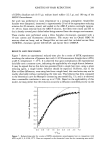
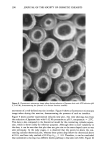
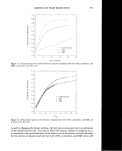
338 JOURNAL OF THE SOCIETY OF COSMETIC CHEMISTS ß Particle size analysis --photomicrography (3,4) --freeze-etching electron-microscope technique (5) --coulter-counter analysis ß Rheological studies (6,7) ß Use of a tracer utilized to assess the leakage and release of components entrapped in internal phase of systems [glucose (8), NaCl (6,9,10), tritium (11), fluorescent marker (12), pigments (13) . . .]. Among the preceding methods, the use of a tracer, included in the inner aqueous phase, seems to be the more suitable. However, the primary purpose of these works was to investigate the entrapment efficiency and the short term stability (two weeks) of W/O/W emulsions without a thorough examination of the analytical difficulties. The main objective of the present study was to deeply investigate the physicochemical parameters for the choice of a suitable tracer. These criteria (solubility in the inner phase, pK a, stability, non-diffusibility) have to be determined in the presence of the raw materials. They are of first importance to validate the use of a given tracer in the stability monitoring of any multiple emulsion. A W/O/W emulsion stability study was then undertaken over a larger time domain (three months) using a carefully selected UV-visible tracer to investigate the usability of several analytical techniques of procedures. Several analytical techniques or procedures were developed. Breakdown kinetic curves were modeled and compared. EXPERIMENTAL PREPARATION OF THE MULTIPLE EMULSION General formula. The lipophilic and hydrophilic emulsifiers were the mixtures of non- ionic surfactants to obtain HLB - 4.6 and HLB = 14.1, respectively. The oily phase was a mineral oil. Hydrated magnesium sulfate was used in the inner aqueous phase as a stabilizing agent. Dihydralazine sulfate was utilized as an internal tracer. The general formula was: ß Primary W/O emulsion (w/w): --Lipophilic emulsifier 4% --Mineral oil 20% --MgSO 4 0.3 % --Tracer 0,3 % --Demineralized water st 100% ß Multiple emulsion (w/w): ---Primary emulsion 70% --Hydrophilic emulsifier 4% --Demineralized water st 100% Preparation procedure. The W/O/W emulsion was prepared by the two-step emulsification procedure (14). The emulsion process for the first step, in which a single emulsion (W/O emulsion) was prepared, employed a micro-vortex with a centrifugal turbine of 30-mm diameter. The rotation speed was initially set at 1500 rpm and then decreased every 10

W/O/W EMULSION STABILITY 339 min to 1250 rpm and to 750 rpm. The initial temperature of the two solutions was set at 70øC, and was lowered to room temperature (25øC) during the emulsification process. The total mixing time was 30 min. This emulsion was incorporated into an aqueous solution of hydrophilic emulsifier at room temperature (25øC). The mixture was agitated at 200 rpm for 30 min. DESCRIPTION OF ASSAYS The assays were the following: a macroscopic analysis, a thermal stability test at 25øC -+ IøC and 40øC -+ iøC, and spectrophotometric and chromatographic analyses to monitor the stability. SAMPLE TREATMENT FOR SPECTROPHOTOMETRIC ANALYSIS Samples were diluted with sodium chloride solution 4.32 g/l (1:10). The suspension was decanted for one hour. The lower phase was pipetted and then clarified by dilution with tetrahydrofuran (1:2). The absorbance of this solution was determined using a Kontron 930 spectrophotometer at a wavelength of either 309.5 nm for dihydralazine alone or 488.5 nm after derivatization with ninhydrin. SAMPLE TREATMENT FOR CHROMATOGRAPHIC ANALYSIS Samples were diluted with the sodium chloride solution (1:1) prior to injection. Chro- matographic measurements were made with a Jasco PU 980 pump (Prolabo, Paris, France) equipped with a 20-1xl loop Rheodyne 7125 injection valve. UV detection at 310 nm (maximum absorbance of dihydralazine in mobile phase) was effected with a Shimadzu SPD-2A UV spectrophotometer (Touzart et Matignon, Vitry-sur-Seine, France). The flow rate was set to ! ml/min. The chromatograms were recorded using a Hewlett-Packard 3395 integrator. A Merck C 8 RP-Select B analytical column (5-mm, !25 X 4-mm ID) was employed (Merck, Nogent-sur-Marne, France). The mobile phase was methanol/water (50:50), potassium dihydrogen phq,sphate (2.5 X !0-2 M) and heptan-! sulfonic acid sodium salt (2.5 x !0-2 M). Methanol, obtained from Prolabo, was HPLC grade. Ultra-high quality water was obtained from a Milli-Q plus !85 (Millipore, St-Quentin, France). Potassium dihydrogen phosphate was ob- tained from Merck. pH mobile phase was adjusted to 4.4 using o-phosphoric acid. Heptan-! sulfonic acid sodium salts of Lichropur © quality were obtained from Merck. The mobile phase was filtered through a 0.22-1xm Millipore filter under vacuum. MATHEMATICAL TREATMENT Calculations were done using the non-linear regression package Minim !. 8 from R. D. Purves (University of Otago, Dunedin, New Zealand). The Gauss-Newton-Macquardt algorithm was used to model the parameters of the appearance kinetic of the tracer in the external phase.
Purchased for the exclusive use of nofirst nolast (unknown)
From: SCC Media Library & Resource Center (library.scconline.org)