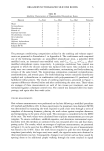
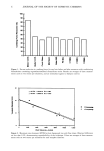
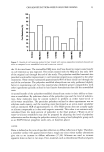
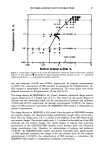
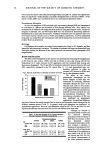
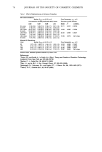
10 JOURNAL OF THE SOCIETY OF COSMETIC CHEMISTS compounds results in greater conditioning benefits. Conditioning efficacy of a quat generally increases with either increasing alkyt chain length, or with increasing alkyl substitution according to the series mono-alkyl di-alkyl tri-alkyl (25). Thus it was anticipated that increasing the alkyl chain length of the olefin group grafted onto the siloxysilicate resins would result in increased hair conditioning benefits. This was not the case for the resins evaluated in the present study, all of which performed similarly in combing experiments regardless of the chain length of the olefin group. As can be seen in Figure 1, within experimental error [previously reported to be +/-12% (28)], addi- tion of the organofunctional siloxysi!icates did not significantly alter the combing work for wet hair as compared to the base composition. The prototype conditioner base provided a 38% reduction in combing force. The conditioner composition containing the unfunctionalized MQ resin was found to decrease combing work by 45%. The formulation containing the ester-modified siloxysilicate reduced combing work by 44%, the polyether functional material by 39%, and the C•o , C16_18, and C2o_2 4 alkyl- modified resins by 39%, 44%, and 40%, respectively. The commercial volume- enhancing conditioning formulation was found to be comparable in conditioning per- formance to the prototype formulations, within the limits of experimental error. Treat- ment with this product resulted in a reduction in combing work of 46%. Treatment with the moisturizing version of the commercial conditioner, on the other hand, resulted in a reduction in combing work of 85% as compared to the control. This degree of combing improvement is not atypical for an aminofunctional silicone-based composi- tion. In addition to conditioning benefits, hair body is a highly desirous quality according to consumers. It is, however, a rather subjective and poorly defined quality, which actually comprises several interactive components including volume, springiness, stiffness, fiber density, configuration on the scalp, and fiber-fiber interactions (24,29-30). It is gen- erally accepted that tress volume is related to or provides a means for quantitatively measuring hair body. One method utilized to increase hair volume, or impart body, is to deposit a hydrocar- bon-based film on the hair via a preparation that remains on the hair between shampoos. These preparations typically contain a hydrocarbon resin, generally impart drag, and increase interfiber friction, resulting in higher forces required to comb the hair (30). Such products, depending on the choice of resins and base solvents, may also result in the appearance of unsightly flakes on the hair, and depending on the choice of hydrocarbon solvent-resin mixtures, the hair may become dry and brittle, resulting in hair fiber breakage during subsequent grooming. The coating thickness of these products must be very limited in order to maintain the natural surface and topography characteristics of the fibers (29). Another method employed to increase fiber diameter is through internal deposition of foreign materials. This process employs high-molecular-weight materials such as poly- mers and proteins since small molecules--such as alcohols, water and amines--are easily sorbed by the hair fibers and tend to act as plasticizers, effectively reducing hair stiffness and allowing the hair to lie fiat against the head (31-33). High levels of internal polymer deposition have been accomplished both on wool and cut hair, with significant increases in body, volume, and manageability characteristics (29). An alternative ap- proach, which has been shown to offer much greater potential, is to form the high- molecular-weight materials within the hair by in situ free radial polymerization tech-

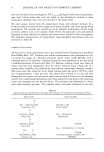
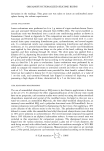
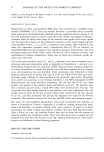
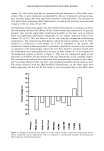
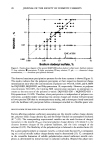
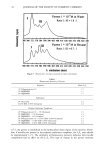
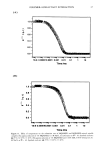
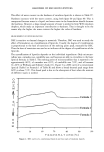
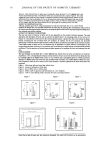
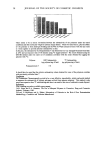
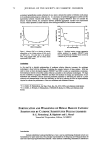
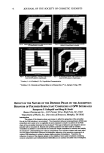
ORGANOFUNCTIONALIZED SILICONE RESINS niques (34). Hair body may also be increased through alterations in fiber fiber inter- actions. This is most commonly accomplished by the use of polymeric setting lotions, gels, and hair sprays that form rigid joints between contacting fibers. The existence of such joints limits subsequent fiber displacement, increasing the resiliency and structural integrity of the set mass of hair (29). Incorporating conditioning agents into these fixative formulations in attempts to protect the hair usually decreases the efficacy of the volume-enhancing composition. In general, products that provide appreciable conditioning benefits to the hair, such as silicone fluids and quaternary ammonium compounds, do not impart improved body or hair volume (29-30,35). This was found to be the case with the commercial conditioning compositions. The moisturizing formulation, which decreased combing work by 85%, resulted in a reduction in tress volume of 15.4% as compared to the control. The commercial volume-enhancing product was found to provide an increase in hair volume as compared to the moisturizing version (by over 8%) however, the hair treated with this formulation was characterized by a decrease in tress volume of 7% as compared to the shampooed control, as shown in Figure 4. This was not unexpected, based on the reduction in interfiber friction observed with this formulation in the combing studies. The correlation of combing force reduction with corresponding decrease in tress diam- eter was indeed observed with the ester- and polyether-modified silicone resins as well. The results obtained with the alkyl-modified siloxysilicates, on the other hand, were rather surprising and did not fit this trend. It was anticipated that as the alkyl chain 25 20 15 10 5 0 -5 -10 -15 -20 .,:: o { Figure 4. Changes in maximum tress diameter, or hair volume, for hair treated with conditioning formu- lations comprising various siloxysilicate resins • compared to commercially available moisturizing and body-enh•cing conditioning products.
Purchased for the exclusive use of nofirst nolast (unknown)
From: SCC Media Library & Resource Center (library.scconline.org)