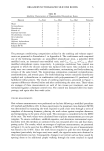
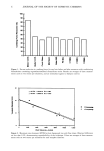
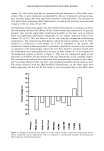
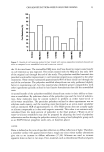
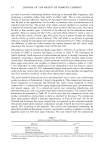
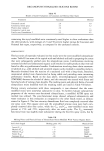
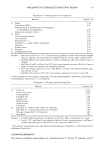
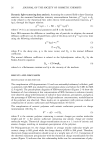
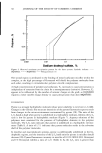
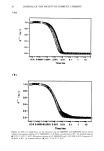
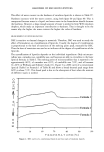
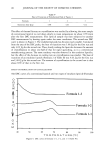
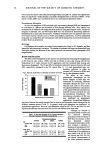
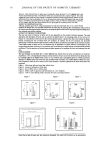
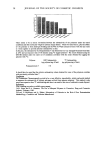
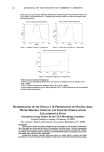
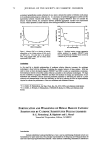
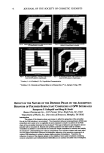
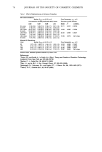
12 JOURNAL OF THE SOCIETY OF COSMETIC CHEMISTS length increased, the conditioning ability would improve and the tress volume would decrease. In fact, there was no significant difference in combing forces between any of the compounds evaluated, while the resins modified with longer-chain olefin groups pro- vided a volumizing effect to the tresses, effectively improving hair body. It can be seen in Figure 4 that the conditioner base control composition produced a decrease in maximum tress diameter (MTD) of approximately 12%. This percentage reduction in tress diameter is typical for known conditioning agents such as dimethi- cone, amodimethicone, or quats (30,35). The unmodified siloxysilicate resin and the Clo alkyl-modified resin produced comparable reductions in MTD of approximately 10% each, as did the ester-functional material. The composition containing the polyether- modified resin performed slightly better, with a reduction in tress volume of approxi- mately 5%. The C16_18 and C2o_24 materials, on the other hand, were found to increase hair volume by approximately 8% and 21%, respectively. Since most agents that in- crease hair volume (such as organic resins, polymers, or proteins) also increase combing forces, it was noteworthy that the longer-chain alkyl-modified siloxysilicate resins pro- vided an increase in tress diameter while actually reducing combing forces by up to 44% as compared to the shampooed control. In subjective evaluations, panelists rated these tresses as feeling softer and being more manageable than the controls, manageability being defined as the ease of arranging hair in place and its temporary ability to stay in place (36). Thomson eta/. reported on a different type of silicone resin, cationic silsesquioxane or "T" resins, which they found to also increase hair volume (35). These compounds were prepared by hydrolysis of ethylenediamine trialkoxy silane that rendered the resulting silsesquioxane resins water-soluble. The alkylsilanes were found to provide improve- ments in body/volume and manageability for dry hair however, the results of panel tests indicated detrimental to at best equivalent performance in combing, tangling, feel, and weight of both wet and dry hair treated with these compounds. The alkyl-modified siloxysilicate resins of the current investigation were unique in that they resulted in significant increases in tress volume (up to 21% for the C20_24-modified material) while also providing a reduction in combing forces and imparting a soft feel to the hair. The dependence on volume increase with increasing alkyl chain length is noteworthy, and the trend is expected to continue with the C24_26 and C3o + materials. In order to evaluate this theory, a new conditioning formulation is under development that will support incorporation of these particular resins. Also planned is synthesis of comparable resins holding the alkyl chain length constant while varying the degree of substitution, and subsequent combing and volume measurements utilizing these compounds. SET RETENTION The results of the curl retention study are presented in Figure 5. It can be seen that under the test conditions the water-set control maintained approximately 50% of its original curl after 24 hr. The alkyl-modified resins were not efficacious in this application, with the Clo and C16_18-treated tresses each losing approximately 60% of their curl. The C2o_24-treated tress performed slightly worse, with a 76% reduction in curl during the same time period. The tresses treated with the ester functional resin were found to be comparable to the alkyl-modified resins, with approximately 65% of the curl lost over

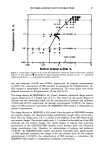
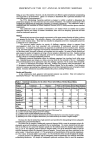
ORGANOFUNCTIONALIZED SILICONE RESINS 13 100 90 80 • 70 = 60 ._o 50 n, 40 o 30 • 20 0. Figure 5. Results of curl retention studies for hair treated with various organofunctionalized siloxysilicate resins as compared to an unmodified resin and a water-set control. the 24-hr time frame. The unmodified MQ resin itself was found to impart some benefit in curl retention as was expected. The tresses treated with the MQ resin lost only 30% of the original curl through the end of the study. The polyether-modified material also provided a noticeable improvement in curl retention properties as compared to the other treatments. These tresses maintained approximately 80% of their initial curl through the end of the evaluation. The polyether-modified siloxysilicate not only performed slightly better in maintaining curl, but this material also exhibited greater compatibility with other ingredients typically utilized in hair fixative formulations than did the unmodified resin. A second benefit of the polyether-modified siloxysilicate resins is their ability to func- tion as emulsifiers. By judicious choice of the polyether type and the level of substitu- tion, these molecules may be custom tailored to perform as either water-in-oil or oil-in-water emulsifiers. The particular polyether utilized in these experiments was an ethylene oxide moiety, and the resulting resin functioned as an oil-in-water emulsifier with an estimated HLB of approximately 12. (The HLB system does not actually apply to silicone compounds as it does with organic materials. This value is an estimate only, calculated from the mole percent of polyether in the final product.) Water-in-oil or water-in-silicone emulsifiers may also be prepared by adjusting the level of polyether substitution and/or altering the polyether moiety by using a less hydrophilic group such as an EO/PO blend, propylene oxide only, or butylene glycol. LUSTER Shine is defined as the ratio of specular reflection to diffuse reflection of light. Therefore, a smoother surface will appear shinier than a rough one since minor surface aberrations give rise to an increase in diffuse reflection (37,38). Silicones are used to increase apparent shine on hair in two ways. First, materials such as dimethicone fluids and gums
Purchased for the exclusive use of nofirst nolast (unknown)
From: SCC Media Library & Resource Center (library.scconline.org)