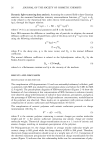
2 JOURNAL OF THE SOCIETY OF COSMETIC CHEMISTS Incorporation of silicones into hair care products followed shortly thereafter, dating back to the early 1950s, when Lanolin Plus introduced a spray lotion called Sudden Date (5), and in 1958 the first patent incorporating dimethicone into conditioning shampoos was issued to the Simonize Co. (6). The unique properties and benefits afforded by silicones in personal care products became increasingly evident, but their usage remained quite limited for many years due to their inherent solubility and incompatibility problems. With the advent of new polymeric thickeners and suspending agents, silicone emulsi- fiers, and organomodification of the silicone polymers themselves, the use of silicones in personal care products has dramatically increased in recent years, to the point that approximately half of all new personal care products introduced into the marketplace in 1994 contained at least one type of silicone in the formulation (7). Today there is a wide variety of silicone products available that provide numerous benefits in personal care formulations (8-9). Dimethicones are still used to provide an anti-whitening effect and a breathable barrier on the skin, and for their conditioning benefits in hair care products. Dimethicone copolyols, or silicone glycol copolymers, are primarily used as resin plasticizers in hair-fixative products. They are also utilized in shampoo systems as co-solubilizers and for their ability to reduce irritation to skin and mucous membranes by primary surfactants in these formulations (10). They may addi- tionally provide light conditioning benefits and are widely utilized as emulsifiers in skin care compositions, particularly in antiperspirants and sunscreens. Aminofunctional si- loxanes provide conditioning benefits and impart softness to hair, while phenylmodified silicones are used as luster-enhancing additives in hair products and ernollients for the skin. Alkyl-modified silicone polymers provide an occlusive barrier in skin products, reducing the amount of transepidermal water loss to levels similar to those observed with petrolatum (11). Also available are specialty materials containing a wide range of func- tionalities grafted onto the silicone chain, including protein moieties, quats, fatty acids, amphoteric surfactants, amino acids, and fragrance oils (12-15). Silicone resins are also used as additives in personal care formulations, providing im- proved deposition characteristics and substantivity to hair and skin (16-22). There are two types of silicone resins known as silsesquioxane or "T" resins (SIO3/2) and siloxy- silicates or "Q" resins (SIO4/2). Silsesquioxanes are best known for their ability to provide "slip" in color cosmetics and reduce agglomeration in powders. Siloxysilicates are most often used in sunscreens and color cosmetics to form a protective film on the surface of the skin, holding actives (or pigments) in place, and in hair care products to increase deposition of other silicones and to impart stiffness (21-24). The use of silicone resins, however, is still somewhat limited due to their inherent solubility limitations and instability in oil-based systems. It was the authors' intent to prepare a series of resins with a greater organic character to lessen these formulation restrictions. This paper describes the synthesis of several siloxysilicate resins with pendant groups consisting of organic esters, alkyls, polyethers, and phenethyl moieties, and their subsequent evalu- ations in personal care applications. EXPERIMENTAL SYNTHESIS The organomodified siloxysilicate resins used in these experiments were prepared in-

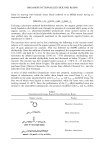
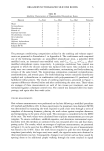
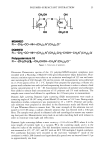
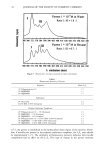
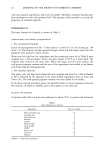
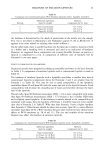
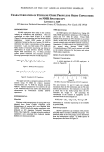
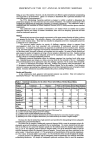
ORGANOFUNCTIONALIZED SILICONE RESINS 3 house by starting with hydride silane fluids (referred to as MHQ resins) having an empirical formula of: [HSi(CH3)201/g]x[(CH3)3SiOl/2]y[SiO4/g]z Utilizing a platinum-catalyzed hydrosilylation reaction, the organic groups were cova- lently bonded to the hydride resin through the presence of a terminal olefin group in the organic moiety, i.e., phenethyl-modified siloxysilicate resins utilized styrene as the coreactant, alkyl resins utilized alpha-olefin hydrocarbons, etc. The various functional- ities grafted onto the compounds examined in the experiments reported herein are represented in Table I. The reactions were carried out by first combining the following in the reaction vessel: solvent, a 3% molar excess of the organic group (10% excess in the case of the polyether), and 10 ppm platinum for catalysis. This was followed by SLOW addition of the silylhydride. Once the addition of hydride was completed, the temperature was raised to 110-120øC and held for 3-4 hr. At this time the amount of residual silylhydride was monitored by infrared spectroscopy (2160 cm -• Si-H absorption), maintaining tem- perature until the residual silylhydride levels had decreased to below 50 ppm (95% reacted). The reaction was then stripped under vacuum at -150øC @ 25 mm Hg to remove volatiles to a level below 50 ppm. The alpha olefins used in these reactions were purchased from Chevron Chemicals, the styrene from Aldrich Chemical Co., and the polyether from Dow Chemical. A series of alkyl-modified siloxysilicate resins was prepared, maintaining a constant degree of substitution, while the olefin chain length was varied from C 6 to C3o+. Included in the study reported herein were C•o, C•6_•8, and C2o_24-modified resins, the first two of which were liquids at room temperature, while the latter was a soft wax melting around 35-40øC. Since the performance of the C•o alkyl-modified resin was similar to the unmodified siloxysilicate, the products modified with C 6 and C 8 olefins Table I Organofunctional Groups Reacted Onto Siloxysilicate Resins Organic reactant Product ---• Phenethyl siloxysilicate • (CH2)xCH3 o .•v/ORO• (CH2)xCH3 where R = diol or higher alkanol • (CH2CH20)x(CH2CHRO)y R' where R = CH 3 and R' = H, CH 3, or COCH3 Alkyl siloxysilicate Ester siloxysilicate Polyether siloxysilicate
Purchased for the exclusive use of nofirst nolast (unknown)
From: SCC Media Library & Resource Center (library.scconline.org)