j. Soc. Cosmet. Chem., 48, 23-40 (January/February 1997) Complexation of aminoalkylcarbamoyl cellulosics and oppositely charged mixed micelies MELISSA MANUSZAK-GUERRINI, LUCILLE SMITH-WRIGHT, ROBERT Y. LOCHHEAD, and WILLIAM H. DALY, Macromolecular Studies Group, Louisiana State University, Baton Rouge, LA 70803-1804 (M.M.-G, L.S.-W., W.H.D.), and Department of Polymer Science, The University of Southern Mississippi, Hattiesburg, MS 39406-0076 (R. Y.L.). Accepted for publication March 31, 1997. Presented at the Society of Cosmetic Chemists' 50th Annual Scientific Meeting, December 8, 1995. Synopsis We have compared the interactions between Polyquaternium 10-mixed surfactant micelle complexes of sodium dodecyl sulfate and Octoxynol with comparable complexes of mono- and diquaternary aminoalkyl- carbamoyl cellulose derivatives. The methods utilized were precipitation studies, fluorescence, and dynamic light scattering. The results of the fluorescence study indicated that miceliar regions were formed in the polymer-mixed surfactant micelie complexes. Temperature studies indicated that the Polyquaternium 1 O-mixed surfactant micelie complex exhibits a different temperature response than complexes formed with polymers synthesized in our laboratories. INTRODUCTION Polymer and surfactant interactions have been a subject of intense research (1-4) re- suiting from the many industrial applications that make use of a polymer-surfactant system. Some of these industrial applications include cosmetic formulation (5-10), rheology control (11), and drug release (12). Fundamentally, these systems are of interest as models for polyion-colloid systems, reversible equilibrium aggregates, and natural supramolecular assemblies. The interactions between polyelectrolyte and surfactant are largely dominated by elec- trostatic forces, with hydrophobic interactions playing a secondary role in complex formation (1-4). Complexation of polyelectrolytes and oppositely charged surfactants begins at a surfactant concentration that is much lower than the critical micelie con- centration (CMC) for the free surfactant (4). This surfactant concentration that first results in complexation is known as the critical aggregation concentration (CAC) (13). In particular, for the case of a cationic polymer and anionic surfactant, precipitation of the charge-neutralized complex is observed (8-10). The region of maximum precipita- 23

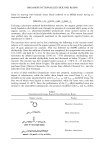
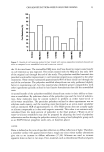
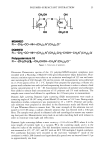
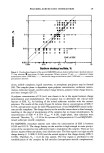
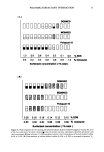
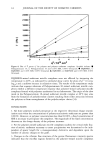
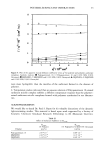
24 JOURNAL OF THE SOCIETY OF COSMETIC CHEMISTS tion for the complex occurs near a stoichiometric charge neutralization (8-10). Addition of excess amount of anionic surfactant results in the resolubilization of the precipitated complex (8-10). The interaction between cationic hydroxyethyl cellulose derivatives and oppositely charged surfactants has been studied extensively (1,5-10,14-19). However, in previous studies, the cationic moiety is attached to poly(oxyethylene) spacer groups that provide flexibility independent of the cellulose chain (20). We have prepared new mono- and diquaternary aminoalkylcarbamoyl cellulose derivatives as graft copolymers having a defined charge density where the quaternary nitrogen is located at the sites of carboxy- methylation of the starting polymer (21,22). The degree of substitution of the carboxy- methylcellulose was 0.70 and the degree of substitution of the aminoamide derivative was 0.56 (23,24). These model polymers have been used to determine the behavior of complexes formed between the charged polymer and oppositely charged mixed surfac- tant micelies of sodium dodecyl sulfate (SDS) and Octoxynol. The interaction of these novel polymers with mixed surfactant micelies has been compared with the behavior of Polyquaternium 10. The results of these studies reveal the role of polymer charge density and graft length on the behavior of the polymer-mixed surfactant micelie complexes. EXPERIMENTAL MATERIALS The surfactants, sodium dodecyl sulfate (99%) and reduced Octoxynol {c•[4-(1,1,3,3,- tetramethylbutyl)cyclohexyl]-co-hydroxypoly(oxy-1,2-ethanediyl)} (99%), were obtained from Sigma Chemical Company (St. Louis, MO) and Aldrich Chemicals (Milwaukee, WI), respectively. Polyquaternium 10, UCARE Polymer JR-400, was obtained from Amerchol Corporation (Edison, NJ). The aminoalkylcarbamoyl cellulosic derivatives (Figure 1), 2-trimethylammoniumethyl carbamoyl cellulose chloride (MQNNED) and 3-trimethylammonium-2-hydroxypropyl-N,N,-dimethylammoniumethyl carbamoyl- methyl cellulose chloride (DQNNED), were prepared in our laboratories (21-24). Water was purified by reverse osmosis, deionization, and filtration (Osmonics, Inc.). Ultrapure water used in light-scattering experiments was obtained using a NANOpure system from Barnstead. METHODS Precipitation studies. Pseudo-phase diagrams were prepared for the following system: SDS/ polymer/water. The solutions were prepared by addition of a concentrated polymer solution (3%) to a solution of SDS. The samples were shaken, placed in an oven at 60øC for eight hours, and allowed to cool slowly. The appearance of the liquid and precipitate was judged visually following the method of Goddard and Hannan (8,10). Phase diagrams were also prepared for systems of 1% polymer/SDS/Octoxynol, varying the ratio of surfactants (1% total). The solutions were prepared in the same manner as previously described, varying the percentage of SDS from 0-1% (w/v) and maintaining a constant polymer concentration of 1% (w/v).
Purchased for the exclusive use of nofirst nolast (unknown)
From: SCC Media Library & Resource Center (library.scconline.org)