j. Soc. Cosmet. Chem., 48, 41-50 (January/February 1997) The effect of formulation on the hardness and crystallization of emulsion lipsticks TSUI-SHUANG WANG and GINGER LEE, Department of Applied Chemistry (T.-S.W.) and Department of Cosmetic Science (G.L.), Chia-Nan College of Pharmacy and Science, Tainan 717, Taiwan, R.O.C. Received j•r publication April 15, 1997. Synopsis Emulsions can improve the emollient property of lipsticks because of the introduction of hydrophilic ingredients. A lipophilic emulsifier (Span 60 or Span 80) or a hydrophilic emulsifier (Tween 20) was used to prepare emulsion lipsticks. The experimental results show that a hydrophilic emulsifier is as good as a lipophilic emulsifier. Both of them give stable W/O emulsion lipsticks that also have similar values of hardness (or stiffness). A comparison of physical properties of emulsion lipsticks was made with a conventional lipstick. An emulsifier has a good compatibility with waxes and thus decreases the crystallization, which also decreases the hardness. On the contrary, the formation of emulsion droplets increases the hardness of lipsticks. The effect of water content on the physical properties of emulsion lipsticks is also discussed. INTRODUCTION Lipsticks are very common color cosmetics. Most women apply lipsticks, especially when they go out. The essential factors are pleasant smell, luster, color, stability, safety, adhesion, and extensibility. A panel test is the most popular and direct method to understand what customers prefer (1). Usually customers are concerned very much about the feel, color, and lasting effects of lipsticks. There was a revolution in lipsticks after 1980, both in shape and ingredients. On the one hand, lipsticks were sold in a slim design, with elliptical and even multiple-sided cross-sections. On the other hand, new ingredients were introduced to improve the function of the lipsticks (1-7). Castor oil derivatives with hydroxy groups, carboxyl groups, and double bonds can increase adhesion to the lip surface (1). Lanolin derivatives can improve adhesion and luster (5), and silicones (6,7) can reduce the surface energy and thus reduce friction, providing a good feel and good extensibility in lipstick formulae. Moisturizers, such as ethylene glycol and polysaccharides, have been used in lipsticks to prevent the lips from drying and cracking. However, moisturizers are not compatible 41

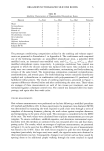
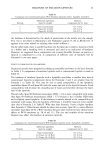
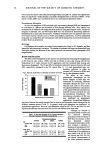
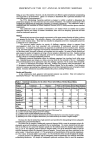
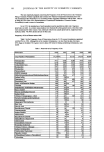
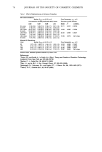
42 JOURNAL OF THE SOCIETY OF COSMETIC CHEMISTS with most lipstick ingredients, which are oil-soluble. Therefore, emulsion lipsticks have been developed to solve this problem (8,9). The purpose of this research is to study the properties of emulsion lipsticks. EXPERIMENTAL The basic formula of a lipstick is shown in Table I. COMPOUNDING AND MIXING OF INGREDIENTS 1. For conventional lipsticks: Castor oil and pigments (red No. 7) were mixed in a ratio of 2 to 1 by stirring (p. 146 of ref. 11). The mixture was then passed through a three-roll mill many times until the pigments were ground to about 20 pm. Waxes and oils (the first five ingredients and the remaining castor oil in Table I) were weighed into a 500-ml beaker, which was then heated to 85øC in a water bath. The contents were stirred at the same time. When the waxes and oils were molten, the well-ground pigment mixture and the rest of the ingredients were added to the beaker and mixed together homogeneously. 2. For emulsion lipsticks: The waxes, oils, and Span 60 (or Span 80) were weighed and mixed in a 500-ml beaker at 85øC, followed by the addition of the water-soluble ingredients (such as water and Tween 20). The well-ground pigment mixture was then added to the beaker. In the above mixing procedure, great care should be taken to avoid trapping air because the existence of small air bubbles gives a bad quality to the lipsticks. MOLDING THE LIPSTICKS A lipstick mold with ten holes was preheated to about 45øC to prevent the formation Table I Basic Formula of a Lipstick Ingredients Parts by weight Microcrystalline wax 10 Carnauba wax 5 Candelilla wax 6 Beeswax 2 Lanolin 10 Oleyl alcohol 10 Cetyl alcohol 2 2EPH* 10 Stearic acid 2 Castor oil 50 Pigment 8 *2EPH = 2-ethyl hexyl palmitate.
Purchased for the exclusive use of nofirst nolast (unknown)
From: SCC Media Library & Resource Center (library.scconline.org)