j. Soc. Cosmet. Chem., 48, 51 (January/February 1997) Preprints of the 1997 Annual Scientific Seminar May 1-2, 1997 Opryland Hotel Nashville, TN 51

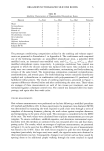
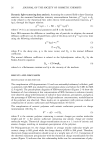
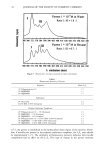
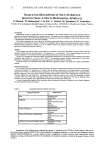
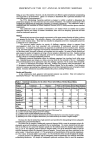
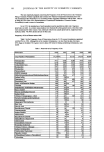
52 JOURNAL OF THE SOCIETY OF COSMETIC CHEMISTS SEARCH FOR DESCRIPTORS OF SELF-ATTRIBUTED SENSITIVE SKIN: A MULTI-DIMENSIONAL APPROACH F. Morizot •, M. Dubourgeat •, I. Le Fur l, C. Guinot •, M. Tenenhaus 2, E. Tschachler • •Centre d' investigaions Epidermiques et Sensoridles, CE.R.I.E.S., Neuilly sur Seine, France 2Groupe HEC, Jouy en Josas, France Introduction Although the concept of sensitive skin is now well established in the cosmetic literature, there is little agreement about its definition and limited understanding of its underlying causes. The question of what consumers actually mean when they declare their skin to be sensitive has received little attention, and any attempts to correlate such subjective reactions with objective clinical or dermatological parameters have rarely been undertaken. The current investigation set out to explore the individual symptoms and causes which women who say they have sensitive facial skin perceive themselves to possess. Furthermore, it attempted to find out whether self-attributed sensitive skin is a single or multi-dimensional phenomenon. Finally, it set out to establish whether such subjective reactions could be related to clinical parameters or biophysical properties of the skin. Methods Three hundred and nineteen healthy women aged 20-50 underwent a clinical skin examination and were asked to rate the sensitivity of their skin on a four point scale (1 = not sensitive to 4 = very sensitive). Those women declaring their skin to be sensitive (categories 2-4) were asked to list the reasons which they believed to account for this sensitivity. Of these, 172 volunteers also underwent a batter)' of biophysical measurements of the facial skin under conditions of controlled temperature and humidity (T = 24 +IøC RH=47+9%). The assessment schedule included measurements of skin colour, capacitance, conductance, transepidermal water loss, casual sebum level, relief and level of scaliness. Statistical analyses were performed using SAS© software for descriptive analysis, and simple and multiple corespondence analyses. Results and discussion Of 319 women, 286 (90%) declared the skin on their face to be sensitive. 1006 data entries relating to facial skin sensitivity were collected and arranged to 21 symptoms and 13 causes. After exclusions of equivocal and non relevant entries, 425 descriptors declared by 197 women were further analysed. Among these, the most frequent symptoms of sensitivity were:- reddening (50%), feelings of tightness (17%), spots (15%), sensations of stinging (8%), patches of scurf and skin cracking (4%), burning sensations (3%), skin flaking (2%) and itching (2%). Self assessed causes of this skin sensitivity were:- cold (32%), application of certain cosmetics (14%), heat (12%), hard water/chlorine (10%), stress or emotion (11%), diet/alcohol (7%), soap or detergems (4%), menstrual cycle (4%), pollution (1%), rapid temperature change (2%) and touching or rubbing (2%). A simple correspondence analysis of the associations between symptoms and causes as declared by the volunteers suggested five sets of associations described in table 1. Table 1: Associations between symptoms and causes :SymptOms declared t Related causes Spots Menstrual cycle Diet/alcohol Reddening Cold Rapid temperature change Heat Rubbing Stress/emotion Feelings of tighteness Hard water/chlorine Soap/detergents Pollution Patches of surf and skin cracking itching Cold Rapid temperature change Heat Rubbing Sensations of burning & stinging & itching Application of certain cosmetics Examination of the different causes suggested four groups: 1- menstrual cycle (CYCLE), 2- causes related to life style i.e. diet, alcohol, stress, emotion (LIFESTYLE), 3-causes related to environmental conditions i.e. cold, heat, rapid temperature change, pollution (ENVIRONMENTAL), 4- causes related to contact i.e.application of certain cosmetics, hard water/chlorine, soap or detergents, touching or rubbing (CONTACT). The distribution of the retained symptoms as related to the groups of causes is listed in table 2.
Purchased for the exclusive use of nofirst nolast (unknown)
From: SCC Media Library & Resource Center (library.scconline.org)