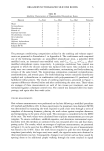
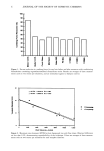
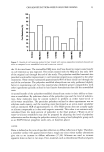
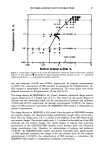
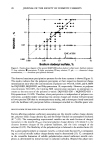
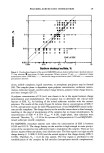
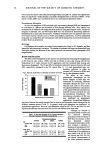
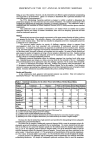
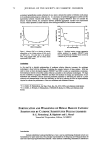
PREPRINTS OF THE 1997 ANNUAL SCIENTIFIC SEMINAR 55 indicated as much as a four-fold increase in thickness compared with untreated and VIC-treated skin. In addition, there appeared to be hypertrophy of the epithelium lining the hair follicles. References 1. Leyden, J. J., Lavker, R. M., Grove, G., and Kaidbey, K. J. Geriatr. Dermatol., 3 (Suppl A), 33A (1995) 2. Lavk'er, R. M.• Kaidbey, K., and Leyden, J. J. J. Amer. Acad. Dermatol., 26, 535 (1992) 3. Jansen, L. H., Hojyo~Tomoko, M. T., and Kligman, A.M. Brit. J. Dermatol., 90, 9 (1974) 4. Bronaugh, R. L., Stewart, R. F., and Simon, M. J. Pharm. $ci. 75, 1094 (1986) EFFECXS OF PROmJCX SXRtJCXURE AND FORMULATION ON THE DELIVERY oF AHA TO SKIN A. Sah u, S. Mukherjee 2, R.R. Wickett • •University of Cincinnati, College of Pharmacy, 3223 Eden Avenue, Cincinnati OH 45219 2Unilever Research US, 45 River Road, Edgewater, NJ 07020 The alpha-hydroxy acids (AHA's), such as Lactic or Glycolic acids which are widely used in cosmetic formulations, penetrate poorly through the lipid barriers of stratum comeum (SC) due to partial ionization as well as high polarity. Formulation manipulations such as lowering of pH or addition of propylene/butylene glycol have been used to increase skin penetration of such actives from complex commemial creams and lotions, however, the mechanism of enhancement is not well understood. In this presentation four aspects of AHA delivery to skin will be discussed namely: (1) effects of pH, (2) effect of dose of application (finite dose vs. infinite dose) and (3) penetration enhancers like propylene glycol on the delivery of lactic acid from well-characterized oil-in-water emulsions were investigated. (4) In addition, the effects of product structure on delivery were studied using oil-in-water (o/w), water-in-oil (w/o), water-in-oil-in- water (w/o/w) multiple emulsions with identical compositions to minimize the effect of formulation on delivery. Some in-vivo irritation test results will also be presented corelating with in-vitro work. METHODS Preparation of emulsions: All the emulsions for in vitro tests were prepared from the same formula: Paraffin oil 35%, Hypermer A60 2.8%, Synperonic 1.2%, Lactic acid 8%, pH adjuster KOH, and balance water. The specific activities of the emulsions were 30 gCi/g. The emulsions were stored at 4øC overnight before use in the experiments. Preparation of skins and measurement methods: The in-vitro percutaneous absorption measurements were carried out in flow through Bronaugh cells, using dermatomed porcine skins. The barrier integrity was checked using Trans Epidermal Water Loss measurements. The experiments were carried out at two dose levels of emulsions, 2 pl (finite dose) or 75 pl (infmite dose). The cells were covered with parafilm for the infinite dose to avoid evaporation of the vehicle. The receptor fluids (Phosphate Buffered Saline) were collected every half hour for six hours after dosing the skins. At the end of six hours unabsorbed emulsion was washed with deionized distilled water three times. For the infinite dose, the excess emulsion was removed with a cotton swab prior to washing the skin. The radiolabelled material was recovered in the stratum corneum, epidermis, dermis and receptor fluid. Absorption was expressed as the percent of applied dose. In Vivo Irritation Test A four exposure occlusive patch test (24, 18,18,18 hours) was conducted to compare the level of irritation produced by 8% glycolic acid o/w emulsions at pH 3.8 and pH 4.2. On each day, six hours after the patch was removed test sites were ranked in order of severity of irritation by a trained evaluator. The results were compared using nonparametric statistical methods with the panelist as a block. RESULTS AND DISCUSSION EFFECT OF APPLICATION DOSE: The rate and the extent of penetration of lactic acid depend significantly on the mode of delivery. Our results suggest that for oil-in-water emulsion, fmite dose delivered more (Figure I) compared to an occluded infmite dose system. The greater efficiency of the rob-on system was most probably a consequence of the increase in the active concentration due to rapid water evaporation from the applied thin film. The results highlight the fact that physicochemical changes accompanying the evaporative increase in the thermodynamic activity of the active in the topically applied film can often be a significant factor in controlling skin delivery. EFFECT OF pH: Decreasing the pH ofafinite dose o/w rob-on vehicle from 7.0 to 3.8 led to a more than 100% increase in lactic acid penetration in six hours (Figure 3). At pH 3.8, lactic acid is only 50% ionized (pK,g3.8) whereas at neutral pH it is almost completely ionized. This increase at low pH is due to low permeability of SC lipid barrier to ionized lactic acid. The low permeability is a consequence of high Born energy associated with moving the ion from water (high dielectric constant of 80) to bilayer (low dielectric constant of 4).

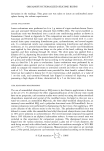
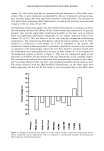
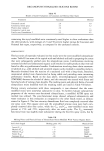
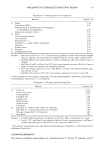
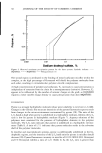
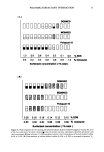
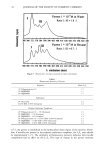
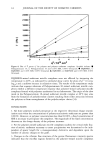
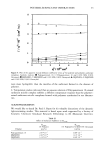
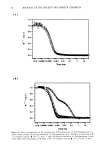
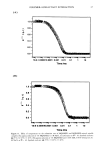
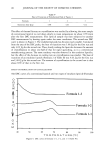
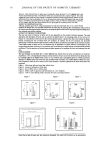
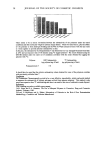
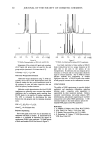
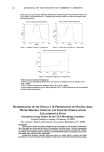
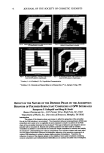
56 JOURNAL OF THE SOCIETY OF COSMETIC CHEMISTS However, when delivered from an infinite dose, lowering the vehicle pH from 7.0 to 3.8 did not lead to any increase in penel•ation and only a small fraction of the lactic acid penetrated the comeurn (Figure3). The results suggest that water soluble acid may permeate a completely hydrated comeurn through aqueous channels. So, the rate limiting factor may be adsorption of active to comeurn protein matrix rather than transfer from water to lipid bilayer. As both the acid and ionized forms are highly soluble in water, pH will have minimal effect on delivery. In vivo irritation data also show more irritation at lower pH (Figure 4) correlating with in vitro data. EFFECT OF PROPYLENE GLYCOL: Although, propylene glycol at 5%, enhanced peneU•ation for both finite and infinite dose, it was a more efficient enhancer at infinite dose. The possible mechanisms of action may be reducing the concentration of the active in the vehicle and affecting the barrier function by solvating the alpha-keratin and occupying hydrogen-bonding sites, thus reducing active/tissue binding. EFFECT OF PRODUCT STRUCTURE: The rate and extent of delivery of lactic acid is also dependent on the product (vehicle) sUucture. The total deposition and absorption of lactic acid as a percent of applied dose is in increasing order of o/ww/o/ww/o (Figure 5). Concentration of the active in the external aqueous phase, is greater than that in the internal oil phase, thereby increasing the rate of release from o/w emulsion. In contrast, for the w/o emulsion, the favorable partitioning towards the internal aqueous phase renders the lactic acid almost unavailable in the external oil phase .Thus higher uptake of lactic acid in o/w emulsion may be attributed to a higher effective concentration in the external aqueous phase and from w/o/w emulsion may be attributed to a larger stratum comeurn/vehicle partition coefficient. Thus the presence of external aqueous phase appears to be important for lactic acid transport into the skin. CONCLUSIONS: The key findings are (a) finite dose is more efficient than infinite dose for lactic acid delivery (b) reduction ofpH (from 7.0 to 3.8) significantly enhances dermal delivery of lactic acid when delivered from finite dose but has minimal effect in an infinite dose system. In vivo irritation data (c) propylene glycol is a better penetration enhancer at infinite dose than finite dose and (d) Oil-in-water emulsion was a better delivery vehicle for lactic acid compared to water-in-oil or water-in-oil-in-water emulsion. Possible explanations for these observations are suggested. Figure 1: Finite dose delivered more than infinite dose Figure 2: Lower pH enhances at finite dose Figure 3: No pH effect seen at infinite dose Figure 4: Effect of pH on slycolic acid formulation (in -vivo irritation) Figure 5: O/W is most efficent product structure for lactic acid tissue delivery Figure I Figure 2 Figure 3 Figure 4 1 Figure5 ll*lll !l l" !l IIIIllllll ! II.lllll II o i•lllll ]lil Note: Due to lack of space only few results are illustrated. All results will be shown in the presentation
Purchased for the exclusive use of nofirst nolast (unknown)
From: SCC Media Library & Resource Center (library.scconline.org)