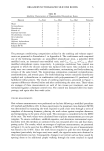
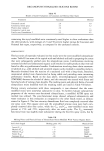
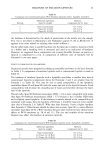
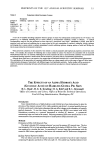
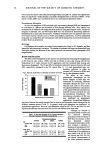
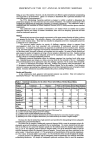
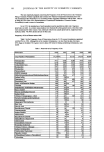
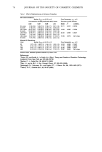
PREPRINTS OF THE 1997 ANNUAL SCIENTIFIC SEMINAR 63 filling or use of the material. However, not all preservatives are effective against all potential contaminating microorganisms in all formulations. Hence it is necessary to demonstrate that a particular formulation will control the growth of microorganisms.•a The CTFA Microbiology Committee undertook a program to validate a method to demonstrate the preservative adequacy of a water based non-eye area cosmetic formulation. The method is based on the CTFA Guideline for Determining the Preservative Adequacy in Cosmetic Formulations. 4 The eollaborative study is conducted under the Association of Official Analytical Chemists (AOAC), which prescribes rigorous statistical requirements. This eollaborative study is intended to demonstrate a new method which can reliably and accurately distinguish between two classes of cosmetic formulations, those which are adequately preserved and those which are inadequately preserved. Method Preserved and unpreserved test samples representative of the most common formulas of toiletry products were prepared for this study. They included a shampoo, a hair conditioner, a water in oil emulsion lotion and an oil in water emulsion lotion. These had been classified as adequately preserved or inadequately preserved, as defmed by U.S.P. XXII criteria. s The proposed method employs ten species of challenge organisms, chosen to represent those microorganisms which have been associated with contamination of inadequately preserved eosineric formulations. To simplify test performance, the organisms are combined into four inoeulum pools. Bacteria, yeasts, and molds typical of organisms recovered from contaminated cosmetic and toiletry products are grown on laboratory media, harvested, calibrated, and inoculated into test samples. By means of serial dilutions and plate counts, the number of organisms surviving in the test samples is determined over time. Samples meeting the specified criteria are considered adequately preserved for manufacture and consumer use. Samples not meeting criteria are considered inadequately preserved. Adequately preserved formulations reduce the challenge organisms from inoeulum levels within seven days. Microbial counts must remain at or below seven day levels for the remainder of the test. Inadequately preserved formulations fail to significantly reduce the challenge organisms over the course of the test period. A total of 19 laboratories participated in this study. Products were prepared, coded, and distributed. All 19 laboratories conducted the proposed Preservative Efficacy Method Test on the samples. Each laboratory received 24 samples representing three adequately preserved and three inadequately preserved samples of each preduct. Seventeen laboratories successfully completed the protocol, yielding 408 data points. Results and Discussion In the collaborative study, agreement with expected outcomes was excellent. Data were analyzed as described by McClure 6. The results are summarized in Table I. •able 1. Statistical Calculations for the AOAC Preservative Efficacy Method Round Robin Product Conditioner Shampoo Water in Oil Emulsion I Oil in Water Emulsion Preservation ½') Adequate Inadequate Adequate Inadequate Adequate Inadequate Adequate Inadequate Positive 48 0 49 0 51 I 51 C Samples cø) Negative 3 51 2 51 0 50 0 51 Samples • Sensitivity (a) 0.941 n/a 0.961 n/a I n/a 1] n/• Specfficit• ') n/a I n/a I n/a 0.98 n/a l Standard error 0.033 0 0.027 0 0.0196 0 0 C of mean 95% 0.882 I 0.912 I I 0.946 I l Confidence (a) As determined by the USP XX]II Antimicrobial Preservative Effectiveness Test. (b) A positive sample exhibits adequate preservative efficacy. (e) A negative sample exhibits inadequate preservative efficacy. (d) Sensitivity is the number ooeposifives determined by the method divided by the total number ofpositive samples. (e) Specificity is the number of negatives determined by the method divided by the number ooenegative samples. The data show that the method has a high sensitivity and specificity for distinguishing between adequately and inadequately preserved formulations. The results from all samples of inadequately preserved shampoo failed to meet the acceptance criteria for adequately preserved formulations as specified by the test methodology. The results obtained from forty-nine (49) of the fifty-one (51) preserved shampoo samples met the method criteria for adequacy of preservation. One (1) out of the triplicate preserved shampoo samples tested in two of the laboratories failed to meet the specified acceptance criteria for adequately preserved samples. Several factors may have contributed to the outlier results. Critical factors include: (1) The preparation and standardization of the inoeulum suspensions. (2) The volume ofinoeula added to each sample. (3) The distribution of the inoeula throughout the sample. Triplicate samples of an adequately and an inadequately preserved conditioner were tested by each of the collaborating laboratories. All samples of inadequately preserved conditioner failed to meet the acceptance

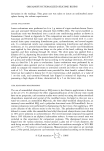
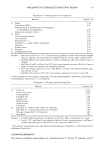
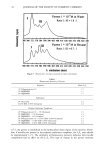
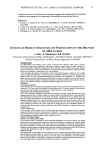
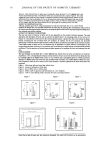
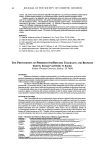
64 JOURNAL OF THE SOCIETY OF COSMETIC CHEMISTS criteria. The results obtained from forty-eight (48) of the filly-one (51) preserved conditioner samples met the criteria. All three samples analyzed by one collaborator failed to meet the specified acceptance criteria. Triplicate samples of an adequately and an inadequately preserved water-in-oil emulsion were tested by each of the collaborating laboratories. All samples of inadequately preserved water in oil emulsions failed to meet the acceptance criteria. One collaborator reported one false negative outlier. Several factors may have contributed to the outlier. Critical factors include: (1) Difficulty in dispersing the inoculum throughout the sample. (2) Difficulty in dispersing the sample in the diluent. Triplicate samples each of adequately and inadequately preserved oil in water emulsion were tested by each of the collaborating laboratories. The results from all samples of inadequately preserved oil in water emulsions failed to meet the acceptance criteria. The results of all adequately preserved formulations met the acceptance criteria. References 1.) Susan M. Lindstrom and Joyce D. Hawthorne, d. Soc. Cosmet. Chem., 37,481 (1986). 2.) Daniel K. Brann• James C. Dille, and David J. Kaufman, Appl. and Environ. Microb., 53(5), 1827 (1987). 3.) R.E. Leak and R. Leech, Microbiological Quali• Assurance in Pharmaceuticals, Cosmetics and Toiletries, 129 (1989). 4.) Anita S. Curry, Joyce F. Graf, and G.N. McEwen, Jr., eds., CTFA Microbiology Guidelines, (1993). 5.) Antimicrobial Preservatives - Effectiveness, The United States Pharmacopeia, XXII, (1990). 6.) Foster D. McClure, d. Assoc. Off. Anal. Chem., 73, 953 (1990). THE PHENOMENON OF PRESERVATIVE/BIOCODE TOLERANCE AND BIOFILMS Daniel K. Brannan* and Bobby M. Butchee Abilene Christian University, Abilene, TX 79699 Introduction Mechanisms of tolerance or resistance to antimicrobials (e.g. biocides, preservatives, antibiotics) include genotypic mechanisms (e.g. plasmid acquisition and mutations), phenotypic mechanisms (e.g. inducible expression of genes and transcriptional or translational regulation of genes), and even community mechanisms (e.g. association within a biofilm or within cell aggregations). The ability to withstand the effect of biocides is independent of whether the mechanism is phenotypically-, genotypically-, or community-derived. In fact, several of these mechanisms may be acting at the same time. A bacterium can thus l) grow within a biofilm deriving protection from other populations occupying the community, 2) phenotypica!ly express one or more attachment-inducible genes for the production of biocide inactivating enzymes or agents, or express key cell envelope constituents to alter the cellular targets of the biocide, and 3) acquire plasmids or mutations within individuals of the population for a variety of biocide inactivating mechanisms. The Death of a Paradigm Table I demonstrates the various mechanisms for tolerance of bacteria against biocides and preservatives. Phenotypic expressions and community associations within biofilms provide a significant contribution for tolerance development against biocides and preservatives. Tolerance to biocides is a function not only of the individual but also of the organization of individuals into a network of more tolerant populations and even into communities of microorganisms in a biofilm. In nature, microorganisms grow as attached biofilms or aggregates and express different phenotypes than their planktonic counterparts. When bacteria use the community strategy of biofi!in/aggregate formation or when they use phenotypic strategies expressed during biofilm formation, their tolerance to biocides increases up to 500x '. Therefore, biocide assessments based on batch-grown planktonic cells are likely misleading in that they do not correctly represent the ecology of microorganisms in nature. Table 1 - Resistance and Tolerance Mechanisms of Bacteria Against Biocides Mechanism 1 Example and Literature Reference for Existence of Mechanism Commamiry - Glycocalyx functions as biocide neutralizer to protect cells remote from the treated surface 2, 3, 4, • Assoclatiom -- Biofilm protector guilds, "altmisls", and lysis of"sacrificial" layers that release inactivating enzymes 6, ?. s Tolerance - Growth in aggregates and clumps 6, 9 ("intrinsic") - Production of extracellular hydrolases to denature biocide as it diffuses across the biofilm 2 - Reaction-diffimion interactions to protect organisms near the substratum or within microcolony interiors 2' •0 Phenotypic - Slower grow• ra• within biofilms and clumps for enhanced prodaction oftolerance factors in glycocalyx (fatty aci&, Expresslorn phospholipids, cation incorporation, proteins, polysaccharides) and extraeelhilar enzymes for biocide inactivation ii Tolerance - Glutathione synthctase production of glutathione (inactivator of electrophilic biocides) •2 ("intrinsic") - Sigma factor-regulated. adhesion-dependent exopolymer production to inhibit diffusion or neutralize biocide 2' •a - Suppression of critical outer member protein T through adaptation [}•roc•s 14 Genolypic Mutations: Less OprD potins produced in Pseudomonas aerugmosa Expressiota Plasmid acquisition: Effiux mechanisms to pump out biocides specific enzymes for biocide degradation •I, 16 Resislanee {"acquired"} '{' The terms intrinsic and acquired have the same meaning as originally defined by Russell •7.
Purchased for the exclusive use of nofirst nolast (unknown)
From: SCC Media Library & Resource Center (library.scconline.org)