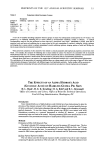
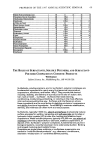
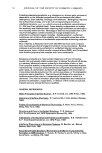
PREPRINTS OF THE 1997 ANNUAL SCIENTIFIC SEMINAR 67 SALT The use of extreme levels of salt as used by the ancient mariners to preserve their meat is effective and it very likely that the preservation of the Egyptian mummies was, in part, achieved by the 40 day treatment in natron (a concentrated brine solution that osmotically drained the tissues of water). COLD Placing a product in the cold merely 'stops the clock' on microbiological growth and this is perfectly fine, provided the product was sterile when it was placed in the cold and/or had sufficient preservative 'mass' to counter any new organisms subsequently introduced. ACID pH The preservative activity can be boosted by operating at as low a pH as possible. Natural acidity could be obtained from one of the many of the alpha hydroxy acids (AHAs) which are obtained from citrus species, where the major components are citric and malic acids. CHELATING AGENTS In addition to formulating at low pH, chelating agents such as femlic acid extracted from rice bran, could be added to enhance the activity of the natural preservative. ANTIOXIDANTS Antioxidants such as natural tocopherol and ascorbic acid will further aid in preservation, as well as reducing the potential rancidity. GLYCERINE High levels of vegetable glycerine, up to 15-20%, will also have a preservative effect, similar to that effect obtained by the use of high levels of sugar. PLANTS SELF-PRESERVATION Plants in the wild do not go mouldy, and yet they are in an environment that predisposes them to suffer from the infestation of all manner of spoilage organisms. Yeasts, moulds and bacteria abound in the soil. all working to breakdown dead plant material and provide fresh humus for those plants living in the soil. Living plants resist the natural forces of disintegration. The process of protection is achieved through chemical entities present in the plant, which if extracted carefully can be a source of natural preservatives. REFERENCES 1. Dweck, A.C.: Natural preservatives. Part 1. SOFW Journal 1995, 7, 490-495 2. Dweck, A.C.: Natural preservatives. Part 2. SOFW Journal 1995, 9, 673-681 FREQUENCY OF USE OF PRESERVATIVES IN THE UNITED STATES, 1996 By David C. Steinberg Steinberg & Associates, Inc., Plainsboro, NJ 08536 Introduction In the United States, The Food and Drug Administration (FDA), is responsible for the regulations of cosmetics. In general, the industry is serf regulated, as the FDA works on a "negative" list bases. That is, you can use any ingredient in cosmetics, unless the FDA specifically prohibits the use of the ingredient.

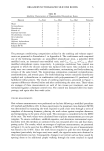
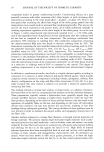
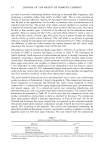
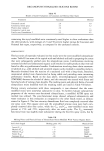
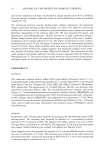
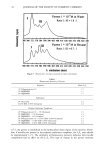
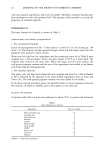
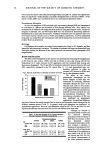
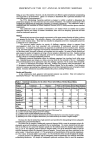
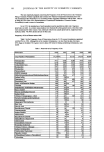
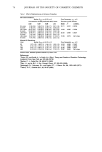
68 JOURNAL OF THE SOCIETY OF COSMETIC CHEMISTS The most important program concerning the Frequency of Use of Preservatives is the Voluntary Filing of Cosmetic Product Ingredient and Cosmetic Raw Material Composition Statements (Part 720). The manufacturer files Form FDA 2512 (Cosmetic Product Ingredient Statement) with the FDA. There is no filing fee. FDA Form 2514 (Discontinuance of Commercial Distribution of Cosmetic Product Formulation) is used to remove a formulation. Up to 1992, the intended use of each ingredient must be specified as either color, fragrance, presen, ative or other. As a result, many products were checked off as being preservatives. when they really were incorporated for other reasons. Also, chemicals which were actually preservatives, might have been marked as other. The FDA did not edit any of these uses. Frequency of Use of Preservatives 1996 Table 1 list the Frequency of use of Preservatives from the 19,150 current formulations registered with the FDA in 1996. Although this is for cosmetic formulations, it is clear from the dam, that many OTC drugs are included. The Agency receives about 200 forms for listing and deleting formulations, each month. Table 1. Preservatives by Frequency of Use Preservative 1996 1993 1992 1990 1987 total Number of Formulations 19,150 NA 20,351 20,035 18,850 Methylparaben 7731 6738 8288 7754 7306 Propylparaben 6278 5400 6632 6343 6030 lmidazolidinyl urea 2498 2312 2481 2749 2499 Butylparaben 1991 1669 1343 1200 1072 Ethylparaben 1240 1213 853 810 581 Phenoxyethanol 1143 929 674 375 253 DMDM Hydantoin 955 747 773 550 318 Methylchloroisothiazolinone/Methylisothiazolimone 808 1042 637 711 512 Sodium Sultite 789 558 NA 64 64 Quatemium-15 704 639 898 705 673 Diazolidi ,nyl Urea 690 466 427 280 130 So•bic Acid/Potassium Sotbate 484 363 NA 256 296 Triclosan 459 359 356 181 138 Deh•droacetic Acid/Sodium Dehydroacetate 456 321 NA 383 375 Benzol Alcohol 417 237 NA 64 86 Benzoic Acid/Sodium Benzoate 378 265 NA 200 226 Sodium Borate 375 358 NA 29 29 2-Bromo-2-Nitropropane- 1,3-Diol 210 223 305 321 317 Formalin (includes paraformaldehyde) 187 228 NA 463 494 [sobutylparaben 125 89 NA 38 26 Iodopropynyl Butylcarbamate 122 0 0 0 0 Boric Acid 101 106 NA 26 28 Salicylic Acid 101 82 NA 23 26 Benzalkonium Chloride 96 86 199 161 41 •hloroacetamide 76 75 NA 82 40 Sodium Bisulfite 68 48 Na 55 43 Methenamine 67 0 NA 1 1 Benzethonium Chloride 59 55 NA 23 20 Methyldibromo Glutaronitrile 57 22 4 0 0 •hloroxylenol 46 49 NA 55 47 •lutaraldehyde (Glutaral) 46 61 NA 41 39 Hexamidine Isethionate 45 0 NA 5 0 5-Bromo-5 -Nitro- 1,3 -Dioxane 40 60 NA 58 44 Sodium Methylparaben 38 0 NA 21 18 Ehlorhexidine Digluconate 37 27 NA 18 13 Phenethyl Alcohol 37 NA NA 8 8 •-Phenylphenol/sodium o-Phenylphenol 36 8 NA 15 20 rriclocarban 22 0 NA 4 3
Purchased for the exclusive use of nofirst nolast (unknown)
From: SCC Media Library & Resource Center (library.scconline.org)