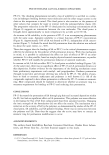
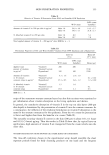
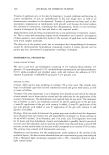
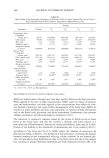
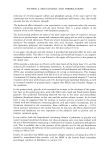
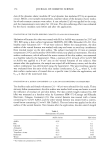
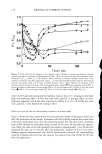
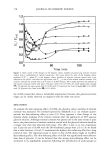
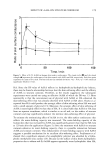
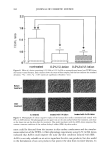
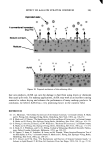
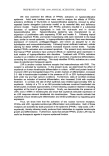
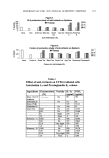
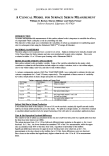
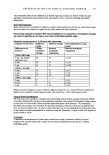
PREPRINTS OF THE 1999 ANNUAL SCIENTIFIC SEMINAR 191 Figure-1 SLS protection study of anti-irritants on Epiderm 250 • 200 •[• MTF assay 150 None SLS Green tea Black tea Ceylon tea Agro tea Rosemagi Rosemagi A B SLS+Antiirritants (%) None Figure-2 Croton oil protection study of anti-irritants on Epiderm Croton oil Green Tea Black Tea Ceylon Tea Agro Tea Rosema•JA RosemaryB Croton oil+ Anti-irritants (%) Table-1 Effect of anti-irritants on UVB irradiated cells Interleukin lcx and Prostaglandin E2 release Ingredients Concentration Toxicity IL-lcx PGE 2 (%) (pg/ml) (pg/ml) None - No UV ........... No 99 781 treatment indomethacin '" No 111 36 , None (UVB) 573 15135 Indomethacin No 544 143• Green"Tea 0.001 No 425 12763 0.01 No 3'77 15568 0.1 Slight 230 2175 1.0 Toxic -4 140 Rosemary-A 0.001 No 400 16'586 0.01 No 357 10043 0.10 Very slight 476 1691 1.0 Toxic -2 1098 , Rosemary- B 0.001 No 490 10118 0.01 No 608 15656 0.10 Very slight 820 3750 1.0 Toxic -2 1206

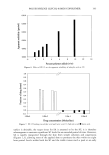
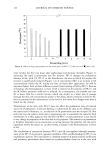
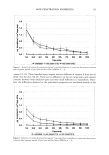
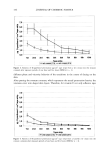
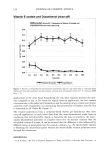
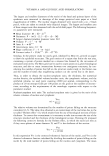
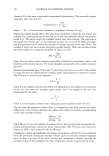
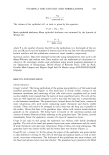
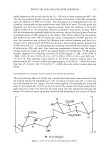
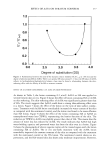
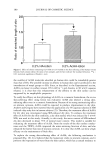
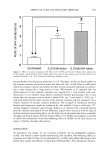
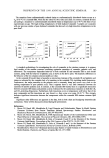
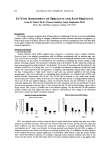
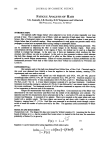
192 JOURNAL OF COSMETIC SCIENCE IN VIVO ASSESSMENT OF IRRITANTS AND ANTI-IRRITANTS Louis B. Fisher, Ph.D., Theresa Smithey, Gopa Majmudar, Ph.D. Mary Kay Holding Company, Dallas, TX 75247 Introduction The average consumer recognizes skin irritation either as a reddening of the skin or as an uncomfortable sensation such as itching, burning or stinging. Published scientific literature describes investigations of both of these forms of irritation. However, the methodology has not been standardized. The work described in this paper modified the available procedures and used them to investigate the potential anti-irritancy of cosmetic ingredients. Methods and Results A. Dermal Reactivity Sodium dodecyl sulfate (SDS), applied under occlusion, is commonly used to induce erythema. However, there is no standard concentration used by different investigators, and the duration may vary from a few hours to overnight. The human eye may not be able to distinguish different levels of relatively mild erythema. For this reason, the Chromameter was introduced to quantirate the relative change in skin redness following irritation. The instrument commonly used is the Minolta CR-200, which has a relatively large measuring aperture (approximately I cm diameter). To be sure of measuring only the treated site, the irritation would have to be larger than lcm 2. If it is smaller, the inclusion of adjacent, normal skin could "dilute" the value obtained by the Chromameter. In addition, this instrument requires direct contact with the skin. Consequently, a "light touch" must be used since any pressure applied to the skin during measurement could cause blanching. In considering these possibilities, we compared the CR-200 with another Minolta Chromameter, the CS-100. The CS-100 can be focused to very small areas, thereby circumventing the "dilution" effect. It also does not contact the skin directly, avoiding potential blanching. Since the CS-100 uses ambient lighting, a lamp was mounted directly onto the instrument to provide a consistent illumination. When several irritated skin sites were measured with the two instruments, the data showed good agreement between them. It also showed that the CS-100 produced higher values with a larger spread. This, in part, is probably due to the different lighting. The fact that the CR-200 produced smaller numbers may also support the ideas of "dilution" and blanching. This change in the instrument allowed us to reduce the degree of irritation required. Botanical Extracts as Anti-irritants Effect of Green Tea on SDS Irritation (Extractl combined with SOS) .• ......................... t40 .............. 40 ....................... ..... I ............. 1. I 1o .............. Fig. 1 Fig. 2 SDS was applied under occlusion using the Haye's patch, which has a smaller area than most of the systems used for this procedure. The patch was removed after only 3 hours, and the skin was rinsed and dried. Erythema was read 24 hours later. Using this technique, a very good correlation between SDS concentration and a* values was obtained. By mixing potential anti-irritants with the SDS, a number of botanicals extracts were found to be effective in reducing erythema (Fig. 1). In addition, the short duration of this method allowed the separate application of anti-irritants either before or after the irritant. Results have varied with different materials for example, Gorgonian extract reduced erythema only when it was mixed with the irritant. On the other hand, Green Tea extract reduced erythema when it was applied after
Purchased for the exclusive use of nofirst nolast (unknown)
From: SCC Media Library & Resource Center (library.scconline.org)