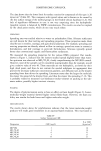
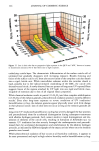
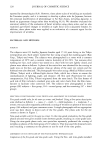
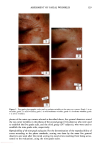
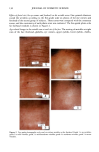
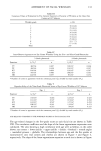
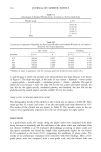
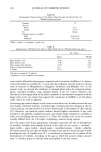
132 JOURNAL OF COSMETIC SCIENCE 60% of the five-grade scores of wrinkles at the eye corners in the second group were grade 4 or 5 (Table II), showing relatively many wrinkles. In the nine-grade evaluation, however, subjects with grades 7-9 occupied 38.9% of the third group, and the distri- bution of the scores was relatively even (Table III). The degree of consistency between the five-grade and nine-grade evaluation scores determined by each examiner and the consensus score by calculation of kappa values are shown in Table IV. The kappa values in the five-grade evaluation ranged from 0.400 to 0.657 (mean 0.499), indicating that the agreement was fair to substantial. In the nine-grade evaluation, the kappa value ranged from 0.252 to 0.507 (mean 0.396), indicating fair-to-moderate agreement. Since the distribution of grades and the number of subjects differed between these two evaluations, a direct comparison of the results may not be appropriate. However, the nine-grade evaluation scores were less consistent with the standard scores than were the five-grade evaluation scores. REPRODUCIBILITY OF THE NINE-GRADE SCALE Table V shows reproducibility when the examiner repeated the evaluation of the wrinkles of the same subjects in the third group by the nine-grade photo scale. The kappa values ranged from 0.252 to 0.507 (mean 0.396) in the first scoring and from 0.327 to 0.474 (mean 0.414) in the second scoring, indicating that this nine-grading procedure is reproducible with fair-to-moderate agreement. EFFECTS OF SITE (EYE CORNERS VERSUS FOREHEAD) ON THE WRINKLE SCORES The distribution of the five-grade score for forehead wrinkles is shown in Table VI. In this group, grades 4 and 5 accounted for 31.1%, which was lower than the percentage of grades 4 + 5 at the eye corners (about 60%). A relatively even distribution of forehead wrinkle scores was observed. Table VII shows the degree of consistency between the five-grade scores for the forehead and those for the eye corners determined by each examiner and the consensus score. The kappa values in the evaluation at the eye corner ranged from 0.400 to 0.657 (mean 0.499), indicating fair-to-substantial consistency, and that at the forehead ranged from 0.322 to 0.441 (mean 0.363), indicating fair-to- moderate consistency. The kappa value was slightly lower at the forehead than at the eye corners. Table II Consensus Values of Evaluation by Five General Examiners of Severity of Wrinkles at the Outer Eye Corners of 164 Subjects Wrinkle grade n (%) 1 34 (20.7) 2 11 (6.7) 3 19 (11.6) 4 66 (40.2) 5 34 (20.7) Total 164

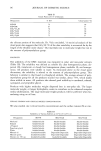
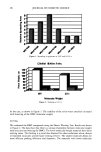
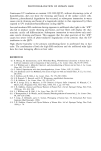
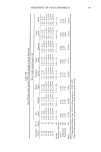
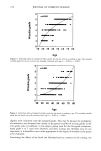
ASSESSMENT OF FACIAL WRINKLES 133 Table III Consensus Values of Evaluation by Five General Examiners of Severity of Wrinkles at the Outer Eye Corners of 247 Subjects Wrinkle grade n (%) 1 36 (14.6) 2 25 (10.1) 3 21 (8.5) 4 36 (14.6) 5 33 (13.4) 6 35 (14.2) 7 25 (10.1) 8 19 (7.7) 9 17 (6.9) Total 247 Table IV Inter-Observer Agreement on Eye Corner Wrinkles Using the Five- and Nine-Grade Photoscales 5-Grade photoscale 9-Grade photoscale Examiner fo/ N.r* K fo/NT* YT 86/164 0.407 130/247 0.464 TF 89/164 0.426 114/247 0.397 KT 114/164 0.604 139/247 0.507 AO 84/164 0.400 108/247 0.361 HO 122/164 0.657 83/247 0.252 * Number of scores in agreement with the consensus panel (fo) divided by total number (NT). Table V Reproducibility of the Nine-Grade Photoscale Scores of Eye-Corner Wrinkles of 247 Subjects Exp. 1 Exp. 2 Examiner fo/N•r* K fo/NT* • YT 130/247 0.464 122/247 0.425 TF 114/247 0.397 113/247 0.392 KT 139/247 0.507 127/247 0.452 AO 108/247 0.361 132/247 0.474 HO 83/247 0.252 99/247 0.327 * Number of scores in agreement with the consensus panel (fo) divided by total number (NT). AGE-RELATED CHANGES IN THE WRINKLE SCORES AT EACH FACIAL SITE The age-related changes in the five-grade scores at each facial site are shown in Table VIII. The correlation coefficient and the slope of the linear approximate expression were calculated. The sites showing a high correlation with age were as follows, in the order shown: eye corners lower eyelids upper eyelids cheeks forehead mouth angles nasolabial grooves glabella. The relationships between age and the five grades at representative sites (eye corners and cheeks) are shown in Figure 3 and Figure 4, respectively. The slope of the linear approximate equation at each site is shown in Figure
Purchased for the exclusive use of nofirst nolast (unknown)
From: SCC Media Library & Resource Center (library.scconline.org)