j. Cosmet. Sci., 53, 35-42 (January/February 2002) Influence of vehicles on the phase transitions of model sebum MONICA R. MOTWANI, LINDA D. RHEIN, and JOEL L. ZATZ, Therics Inc., 115 Campus Drive, Princeton, NJ 08540 (M.R.M.), SmithKline Beecham Consumer Healthcare, 1500 Littleton Road, Parsippany, NJ 07054 (L.D.R.), and New Jersey College of Pharmac•y, 160 Frelinghuysen Road, Piscataway, NJ 08854 q.L.Z. ). Accepted for publication November 15, 2001. Synopsis It is hypothesized that vehicles that are miscible with sebum may concentrate drugs in the sebaceous tbllicle. This is important for the treatment of diseases like alopecia and acne. The main objective of the study was to identify different vehicles that affect the thermal behavior of sebum using differential scanning calorim- etry (DSC). For this purpose, a model sebum mixture was prepared based on a composition reported in the literature. The test vehicle was added in a concentration of 15 % of the weight of the sebum. Small portions of the above mixture were put in a pre-weighed DSC pan. These were run from -50 to 100øC at 5øC/minute. In the model sebum, four distinct transitions were observed: Mp-1 and Mp-2 occurred below 0øC while Mp-3 and Mp-4 occurred above 30øC. Vehicles that affected Mp-3 and Mp-4 were considered for further analysis. From the vehicles tested it was found that the hydrophobic materials were more eft•ctive in lowering Mp-3, while the ones that affected Mp-4 did not show any particular trend. Some of the vehicles tested are known skin permeation enhancers, and it is proposed that they interact with sebum and increase permeation by the follicular route. It was found that DSC may be used to identify vehicles that are miscible with sebum and that may deliver drugs preferentially to the sebaceous follicle. INTRODUCTION To date, most of the work done on skin permeation deals with transport through the lipold pathway of the stratum corneum. However, there is a renewed interest in the importance of appendages, particularly the follicle, in the topical delivery of medica- ments. Increased follicular deposition of therapeutic agents would be preferred over the lipoidal pathway to treat follicular diseases such as acne and alopecia. Studies done to date and methods used to investigate follicular delivery have been reported a number of times (1-3). We wanted to probe further the mechanisms by which different solvents influence follicular delivery. Sebaceous glands connected to the hair follicle by ducts release sebum into the upper third of the follicular canal. This creates an environment rich in neutral lipids composed 35

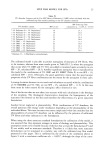
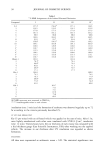
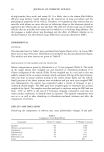
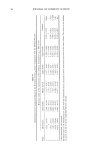
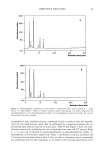
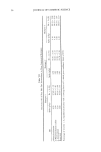
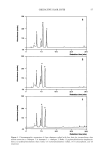
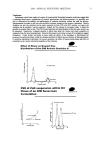
36 JOURNAL OF COSMETIC SCIENCE of triglycerides, fatty acids, and waxes (4). It is likely that in the sebum-filled follicle efficient drug delivery would depend on the interaction of drug and sebum and the physiological properties of the vehicle. Therefore, we hypothesize that vehicles that are miscible with sebum are more selective at delivering drugs to the sebaceous glands as opposed to the vehicles that are not miscible. The objective of this study was to identify vehicles that are miscible with sebum and to mobilize it to facilitate drug delivery. For this purpose, a model sebum was developed and the effect of different vehicles on its thermal behavior was determined using differential scanning calorimetry (DSC). EXPERIMENTAL MATERIALS The materials listed in Table I were purchased from Sigma Chemical Co., St. Louis, MO. They were at least 99% pure. Chloroform and methanol was also purchased from Sigma. The vehicles and their sources are given in Table II. PREPARATION OF LIPID SAMPLES AND DSC PROCEDURE Sebum composition as given by Nordstorm et alo (5) was prepared (Table I). The lipids of the model sebum were weighed out and dissolved in chloroform-methanol (3:1). Fifteen milligrams of the vehicle (Table II) was weighed out in a vial and to this was added a volume of the co-solvent mixture, which contained 100 mg of the lipid mixture. This was done to ensure uniform mixing of the model sebum lipids and the vehicle. Small portions of the above mixture were withdrawn and put onto a pre-weighed DSC pan. Subsequently, the solvent was evaporated under a stream of nitrogen to get a uniformly mixed sample. The DSC pans were weighed again to determine the accurate weight of the lipids. The samples were then analyzed in triplicate using the DSC and run from -50øC to 100øC at the rate of 5øC/minute. Singular components were also run under similar conditions, to identify them in mixtures. The separate components were run as is, as well as after dissolving in chloroform-methanol mixtures and after the evaporation of solvents. RESULTS AND DISCUSSION Dissolving the components in solvents may cause polymorphic changes. If any poly- Table I Components of the Model Sebum Component Purity (% weight) % Weight in mixture Squalene 98 13.00 Palmitic acid myristyl ester 99 27.00 Tripalmitin 99 6.67 Tripalmitolein 98 3.33 Palmitic acid 99 33.33 Palimitoleic acid 99 16.67 Total 100
Purchased for the exclusive use of nofirst nolast (unknown)
From: SCC Media Library & Resource Center (library.scconline.org)