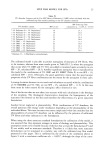
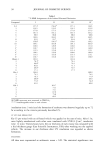
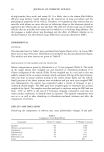
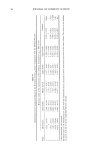
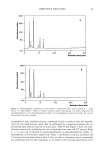
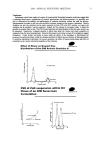
OXIDATIVE HAIR DYES 47 RESULTS AND DISCUSSION The validation is obviously a crucial step in the development of an analytical method and has therefore to be based on strong grounds. In the present work, five synthetic formu- lations are used to carry out this procedure, each of them containing the four active hair dyes, p-phenylenediamine, m-phenylenediamine sulfate, m-aminophenol, and resorcinol, chosen for the following reasons: ß They are representative of three major classes of oxidative hair dyes: aromatic amines, aminophenols, and phenols. ß They appear regularly in the composition of commercial formulations. These active compounds were mixed with several substances classically used in the matrices of cosmetic formulations: ß Erythorbic acid (antioxidant) ß EDTA (chelatant) ß Sodium metabisulfite (reducing agent) ß Butylene glycol (solvent, viscosity decreasing agent) ß Laureth-8 (surfactant, emulsifying agent) ß Laureth-3 (surfactant, emulsifying agent) ß Cetrimonium chloride (antistatic agent, cosmetic biocide, surfactant, emulsifying agent) ß Trideceth-2 carboxamide MEA (surfactant, foam booster, viscosity increasing agent, aqueous) ß Butoxyethanol (solvent, viscosity decreasing agent) ß Oleyl alcohol (emollient, solvent, viscosity increasing agent, non-aqueous) Further separations with formulations containing up to 15 oxidative hair dyes were also performed to confirm the following results (data not reported). CHROMATOGRAPHIC SEPARATION AND IDENTIFICATION OF THE PEAKS IN SYNTHETIC FORMULATIONS Each sample was submitted to chromatography after extraction. Each analysis was repeated three times in order to test the repeatability of both the extraction and the chromatographic separation. As an example, the chromatographic separations obtained for the "light brown" and the "light blonde" samples are depicted in Figure 1. Similar chromatograms were obtained for the three other formulations. Obviously, most of the matrix compounds are 100% extracted, and the chromatograms show only six peaks, with an excellent resolution, calculated according to the following formula: (tR2- try) x 2 R1, 2 = (/./21 -3- w2 ) (a) where R1, 2 is the resolution (determined for two consecutive peaks), tR1 and t•2 are the retention times of two consecutive peaks, and w• and w 2 are the peak widths at the baseline (base width) (8). All the calculated resolutions ranged between R4, 5 = 1.77 and R3, 4 = 4.76 (see peak labeling in Figure 1). The identification of the hair dye intermediates could then be easily performed using individual retention times and UV spectra. Indeed, these two characteristics having been previously recorded in a data base for 68 hair dyes and matrix

48 JOURNAL OF COSMETIC SCIENCE +l • +l +1 +l +l .... 04 +l +1 +l +l +l +l
Purchased for the exclusive use of nofirst nolast (unknown)
From: SCC Media Library & Resource Center (library.scconline.org)