OXIDATIVE HAIR DYES 51

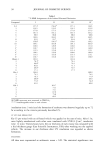
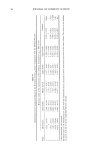
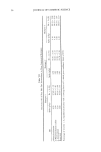
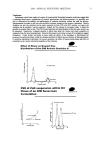
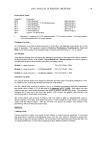
52 JOURNAL OF COSMETIC SCIENCE 1 ooc 75C- 50C - 25C- 001] 200 250 300 4•0 1 ooo I // 600 -I / o •o Figure 2. UV spectra comparison of four hair dye intermediates and a matrix compound between 200 and 400 nm. a: p-phenylenediamine reference. b: p-phenylendiamine in the analyte. c: m-phenylenediamine sulfate reference. d: m-phenylenediamine sulfate in the analyte. e: m-aminophenol reference. f: m- aminophenol in the analyte. g: resorcinol reference. h: resorcinol in the analyte. i: sodium ascorbate reference. j: sodium ascorbate in the analyte. The repeatability of the analysis was also investigated, in terms of retention times and peak areas for the four hair dyes in the five formulations. Data are gathered in Table III. On the whole, the repeatability of the separation is high for both the retention times (0.10%RSDl.24%) in the five formulations and the peak response intensity (0.21%RSD9.46%) except for this second parameter in the "light blonde" formula- tion: the RSD of peak areas in the "light blonde" formulation is somewhat higher (5.84%RSD14.35%) because of the low concentration of the hair dyes in this for- mulation. The quality of the column was also evaluated by calculating the peak asymmetry factor s and the capacity factor k' of the peaks attributed to the hair dyes according to the following formulas (b) and (c) respectively: a5va + b5v• s - (b) 2 x a5v •
Purchased for the exclusive use of nofirst nolast (unknown)
From: SCC Media Library & Resource Center (library.scconline.org)