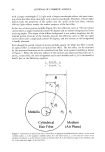
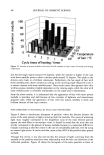
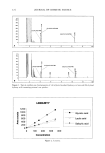
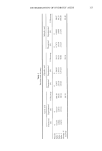
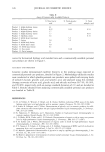
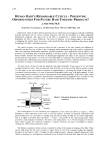
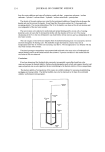
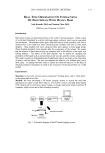
134 JOURNAL OF COSMETIC SCIENCE from free water additions and water ofhydration varied such that: magnesium carbonate sodium carbonate - hydrated sodium silicate - hydrated sodium metasilicate - pentahydrate. The density of the each mixture was varied by the incremental addition of fumed silica to decrease the density and sand to increase the density. It was found that for a given mixture the Tc decreased with increasing density. The inverse relationship of the Tc to the density was observed for all test mixtures and was independent of the total water content. The test mixtures were subjected to isothermal and ramped heating profiles in test cells of varying diameters and in all cases the Tc decreased inversely with the diameter of the test cell. The inverse relationship of the Tc to the test cell diameter was observed for all test mixtures and was independent of the total water content. The total oxygen content of the test samples from the isothermal heating tests were measured at set time intervals throughout the heating cycle. The available oxygen decreased at a nearly linear rate at temperatures below the Tc with the rate increasing near the Tc. The rate appeared to vary directly with the total water content of the mixture. Functional prototype compositions were prepared and subjected to the same series of isothermal and ramped heating profiles as the fueled oxidizer test mixtures. A precise correlation in the results from the two series of tests was observed. Conclusions It has been determined that hydrated salts commonly incorporated in persulfate based hair color removers decrease the thermal stability. Further, physical properties such as bulk and compact density, total mass and particle size are also significant factors contributing to the thermal stability of these compositions. The thermal stability of compositions of this nature is a reliable indicator for assessing manufacturing, packaging and storage safety. The thermal stability may also be employed as the basis for accelerated stability / performance testing program. Teml•r•tur• Borollllcata Tube I•E Separator Di.•k Alurnln•,m Btm:k

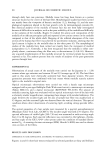
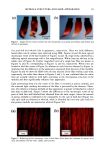
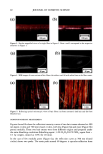
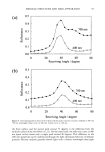
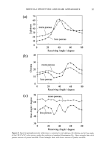
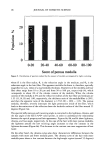
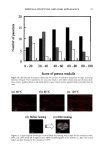
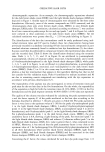
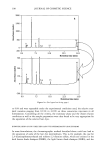
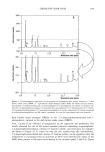
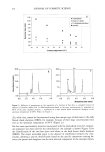
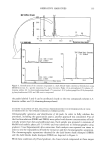
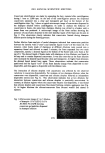
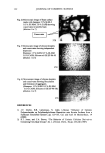
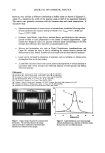
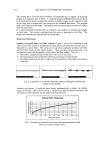
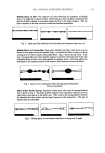
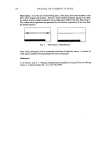
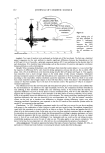
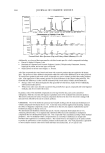
2001 ANNUAL SCIENTIFIC MEETING 135 OPTICAL PROPERTIES OF HAIR- EFFECT OF TREATMENTS ON LUSTER AS QUANTIFIED BY IMAGE ANALYSIS R. McMullen and J. Jachowicz International Specialty Products, Wayne, N J, USA Introduction The attribute of hair luster has been a significant concern to the consumer and marketers for quite some time, especially recently due to the proliferation of reactive and damaging hair treatments. Luster is commonly defined as the ability of a given material to produce a bright reflection. Stature et al. [1,2] employed a goniophotometer and multiple fibers to record light distribution curves necessary to calculate luster parameters. This work was later expanded by Czepluch et al. [3], who constructed a computerized goniophotometer. Reich and Robbins [4] and Bustard et al. [5], who also utilized a goniophotometer, employed single fibers to study the effects of shampooing and dyeing on the luster of hair. Maeda et al. [6] has presented luster measurements performed by using a color image processor. More recently, hair luster was measured using diffuse reflectance spectrophotometry [7]. The objective of this work was to reassesss the effect of various hair treatments, including selected polymers and oils, on hair luster and deternfine the mechanism of the observed luster enhancement or reduction. Materials & Methods Luster analysis was performed on natural white, light blonde, light brown, medium brown, and dark brown hair purchased from IHI & Products, Inc. (Valhalla, NY). An Olympus Camedia El0, with a resolution of 4 megapixels, was employed as the image collection device for all studies presented in this report. Image analysis was carried out using the software, Sigma Scan Pro 5.0 (SPSS), which enabled us to obtain light intensity (luminance) distributions along a given hair tress (Figure 1). The data were further analyzed by integrating the area under the luminance curves in order to obtain values of luster parameters. We also utilized the image analysis software, Image Tool 2.0, in order to analyze reflection patterns from African hair [8]. Hair treatments included polymers, oils, and pigments such as Ethyl Ester of PVM/MA Copolymer, Vinyl Caprolactam/PVP/ Dimethylaminoethyl Methacrylate Copolymer, Isobutylene/Ethylmaleimide/ Hydroxyethylmaleimide Copolymer, Phenyl Trimethicone, Amodimethicone, Castor Oil, and ZnO. Results & Discussion Every measurement set consisted of obtaining an image of two untreated tresses on the cylinder mount followed by treatment of one of the tresses with an investigated solution. The second tress served as an internal control. We then examined the difference, before and after treatment, for the treated tress. A plot of luminance as a function of distance along the hair tress is provided in Figure 2, which shows specular curves corresponding to the reflected light from the dark brown hair. Also shown in Figure 2 are estimated diffuse reflection curves in which the endpoints of the specular reflection curves are used to generate a diffuse reflection curve. While we were able to obtain true diffuse reflection curves by using linear polarizers, the method of diffuse reflection estimation, devised by Stature et al. [1,2], provided results that correlated much better with human panel test evaluations. By determining the area under the specular (S) and diffuse (D) curves, we were then able to calculate luster parameters based on the equations shown below. Ls ....... _ S - D s ..... (1) LRooO n, = S (2) S Ds ..... * Similar to reports by Stammet al. [1,2], we found that the use of Equation 1 leads to larger differences in luster values for different hair types and hair treatments. Reich and Robbins [5] determined the diffuse reflection in the same mmtner as Stamm et al.,
Purchased for the exclusive use of nofirst nolast (unknown)
From: SCC Media Library & Resource Center (library.scconline.org)