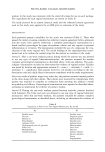
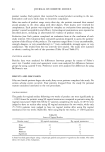
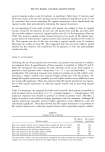
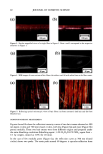
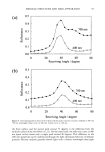
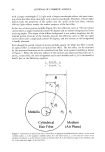
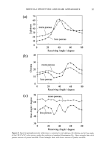
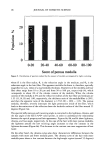
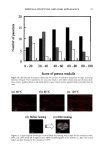
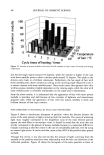
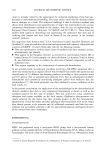
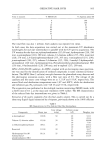
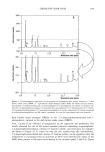
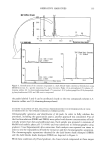
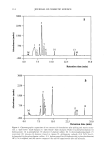
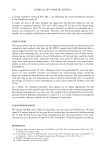
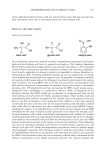
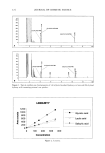
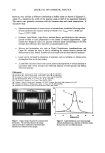
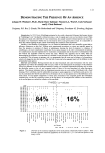
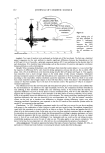
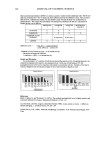
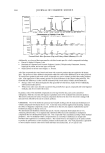
142 JOURNAL OF COSMETIC SCIENCE o- -o 2 - PC1 0 0 1 0 2 0 3 0'4 0•5 0'6 -0 2 -0 1 APR+AF-olI, X-expl 59%,19% Figure 2: PCA loading plot of the data obtained in phase 2, indicating that emulsifiers separate the APR attributes on PC1 and emollients separate the AF attributes on PC2. Analysis: Two types of analyses were performed on the data sets of the two phases. The first was a statistical paired comparison test for each attribute to identify significant differences between the formulations at the p=0.05 and 0.01 level. Secondly, a principal component analysis (PCA) was performed on the absolute data for each formulation. PCA identifies linear relationships such as the existence of a positive and negative correlation between attributes as well as formulations. Results: When comparing formulations only differing in their emulsifier system (phase 1), it was noticed that the majority of differences (84%) were observed during appearance, pick-up and rob-out, the so-called APR- phase. Only 16% of all differences were observed during the after feel (AF) phase (see Figure 1). This suggests that emulsifiers have a much stronger impact on the initial phase of skin sensory evaluation. Subsequent principal component analysis revealed that formulations were separated on the first principal component (PC1) according to their emulsifiers, whereas emollients caused the separation on PC2. However, while it was noted that certain emulsifiers had a bigger impact on skin feel than others, results from phase 1 did substantiate the concept of 'skin feel neutrality' due to the lack of the relevant control. The question of "what is no impact?" remained unanswered. The differences between the non-formulated and formulated oils (phase 2) were immense and confirmed that the non-formulated oil was indeed not the right benchmark. However, the comparisons between formulations only differing in their emollients yielded some very interesting results. It was noticed that the majority of significant differences was now in the AF phase of sensory evaluation (59%), with 41% in the APR-phase. This suggests that the impact of emollients is more dominant in the later phases of sensory evaluation, but not solely. Some of the carefully chosen oils differed only in a few attributes. The various emulsifiers introduced all kind of significant differences that were not observed for the non-formulated oils. The "skin feel neutral" emulsifier system was the only not to introduce new differences or eliminate existing differences. Again, even when comparing emollients, formulations were separated on the first PC based on their emulsifier systems while the second PC was separated on the emollients. Conclusions: In 1935, Schr6dinger experiment taught the world that you can not be sure about anything with respect to the combination of exact location in space and exact point in time. Nevertheless, humans have coped with that uncertainty on a macro-scale for as long as we know. We have diaries and agendas that tell us where to be at what moment in time. In the same way as we now from practical experience that we can agree to be somewhere at a given point in time, despite this being impossible according to quantum mechanics, we know from practical experience that the new emulsifier system does not contribute to skin feel. However, we cannot prove it. Even if you would make Schr6dinger's box transparent and you could see the cat licking its paws, scientifically speaking you can not be sure of what you see. The same applies to our sensory evaluations. You know it to be true, but you cannot prove it. After all, how do you demonstrate the presence of an absence? Acknowledgements: The authors appreciate the help of the team at Sensory Spectrum, Chatham, NJ, USA, in particular Lee Christie and Lynn Carlone, in executing the sensory studies described in this paper.

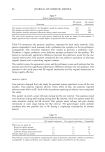
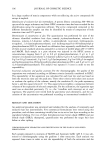
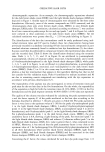
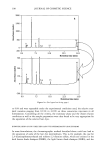
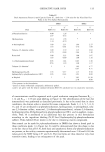
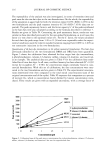
2001 ANNUAL SCIENTIFIC MEETING 143 ELASTASE INHIBITION ASSAY AS A TOOL FOR FORMULATION OPTIMIZATION AND QUALITY CONTROL Howard Epstein •, Hank Overkamp', Shigeru Moriwaki', Naoko Tsuji 2, Raymond E. Boissy, Ph. D2 and Yang Zhao' •The Andrew Jergens Company, CincinnatL OH, 2Kao Corporation, Tochigi, Japan and 3University of Cincinnati College of Medicine, Cincinnati, OH Introduction Formulating products with natural matertals such as botanicals often poses a variety of unique challenges. For example, many different plants may have similar names, different parts of plants may have different chenfical constituents. Important constituents of the desired botanical may be lost if the plant is not harvested and processed in an appropriate manner and when extracted, resulting chemical constituents may vary. Furthermore, the method of extraction is important, and when purchasing botanicals from unknown sources there is a risk of adulteration of the material during processing. In cases where chenfical assays may not be practical, a biological assay can be an alternative approach with respect to quality control and fornlulatlon optimization. A biological assay can also serve as a rapid screening tool to evaluate several new botanicals or evaluate the effect of process variables on kayown botanicals. Fibroblast ceils found in the dermal layer of skin and produce elastase, an enzyme kayown to break down the connective protein elastin. Fibroblast cells may be obtained from tissue samples and cultured in flasks relatively easily compared to other cell types. For this reason fibroblast cell cultures are a popular option for dermatological research. In this study, botanical extracts with the ability to inhibit elastase activity were investigated using a fibroblast elastase mlnbinon assay. Materials and Methods Dem•al fibroblasts obtained from neonatal foreskin were cultured to 100% confluence in T-75 culture flasks. Harvested fibroblast cells were washed with cold PBS buffer followed by centrifugation at 1,200 RPM for 10 nfinutes. Cells were solubilized in elastase buffer, 0.1% Triton-X 100, 0.2 M Tris- HC1 (pH 8.0) buffer, followed by ultrasonication and then centrifugation at 3,000 RPM for 20 nfinutes to obtain supernatants as the source of fibroblast derived elastase. Protein Assay A protein standard curve is developed to detem6ne the amount of protein in the fibroblast supernatant. A Pierce Protein Assay Kit was used to prepare serial dilutions of the protein standard from 1000 ug/ml to 1.953 ug/ml dispensed in a 96 well Falcon assay plate. F•brobla•.t lysate diluted to 1/2 concentration with elastase buftkr was added to three of the ten wells used, and a 1/10 dilution was added to another three wells. The 96 x•ell plate was incubated at 37 ø C for 30 minutes and concentration was measured spectrophotometrically at 560 nm. The curve generated, O.D. vs. protein concentration is used to determine optimal adjustment of protein concentration of fibroblast lysate to be used in the assay. Elastase Enzyme Standard Curve Elastase actMty is expressed as" 1 unit, representing the activity for release of 1 mnol ofp- nitroaniline per hour." 62.5 n•V[ ofp-nitroamline (pNA) is used to generate a standard curve. Serial diluttons ofp-nitroamline in DMSO from 250 nM./1 to 31.25 nM./l are placed in a Falcon 96 well assay plate. This plate is read spectrophotometrically at 405 ran. The corrected absorbance values for the standards were used to calculate the standard line equation using linear regression. General equation: absorbance at 405 nm = constant 1 (p-nitroamhne concentration) + constant 2. Elastase Activity 200 ul of fibroblast lysate is added to all 12 wells in a horizontal row of a 96 well assay plate. Then, various dilutions (i.e., IX, I/2X, 1/4X, and 1/10X) of test botanical extract were added to three triplicate wells respectively. To a second companion horizontal row, elastase buffer without cell lysate was added then combined w•th the same dilutions of botanical extract. This companion row was used to subtract the natural color of the botanical extract from the spectrophotometric reading. Phosphoramidon (1 uM at a
Purchased for the exclusive use of nofirst nolast (unknown)
From: SCC Media Library & Resource Center (library.scconline.org)