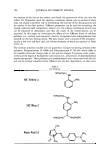
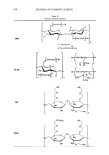
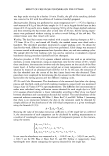
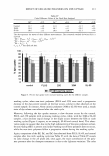
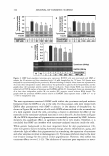
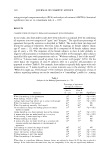
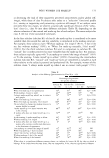
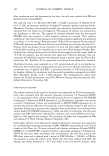
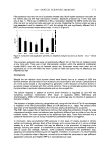
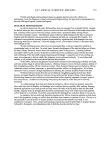
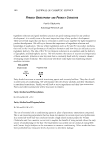
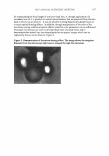
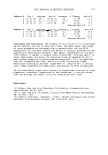
106 JOURNAL OF COSMETIC SCIENCE the sorption of the dye on the surface, and finally the penetration of the dye into the surface (9). Dependent upon the operative conditions chosen, one or another of these steps can assume a prevalent role in determining the outcome of the dyeing process and the quality of the final product. Different parameters can be used for controlling the dyeing conditions (pH, temperature, solvent, etc), the relative contribution of each step can be enhanced or diminished, and thus the course of the overall process can be regulated. In this paper we investigate the effect of two different kinds of cellulose polymers (i.e., cationic and non-ionic), directly incorporated into semipermanent hair dyestuff, on the hair dyeing process. The dyes chosen were a mixture of HC (character- ized by a low size) and basic dyes, the relevant formulas of which are reported in Table I (10-12). The cellulose polymers studied are two quaternary nitrogen-containing cellulose ether polymers: Polyquaternium 10 (30M) and Polyquaternium 67 (SL-60), which differ in the number of cationic charges (one or two positive charges for glucose units, respec- tively) and the degree of hydrophobic substitution (i.e., the presence of dimethyldodecyl ammonium groups). These polymers give predominantly ionic interactions with hair (2) and can be strongly adsorbed and/or diffused into the hair dependently via their ionic HC Yellow 2 HC Blue2 Basic Red 51 Table I Dye Formulas

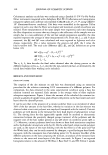
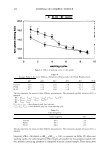
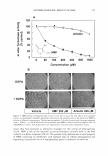
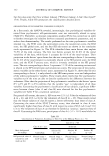
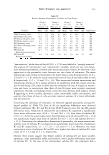
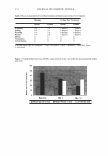
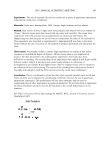
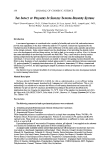
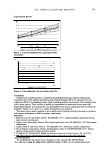
EFFECT OF CELLULOSE POLYMERS ON DYE UPTAKE 107 charge and molecular weight (1,5). Alternatively, we have studied two different non- ionic polymers: hydroxyethylcellulose (250) and cetil hydroxyethylcellulose (PLUS). The primary binding of these molecules to hair is, mainly, by polar and Van der Waals interactions, and generally they are not highly substantive to hair (1). While 30M and 250 have been well known and used in the cosmetic market over these last thirty years, SL-60 and PLUS are relatively new products. The formulas of the studied polymers are reported in Table II. As a control we have used yak hair colored with a base dyebath in which no polymers were present. EXPERIMENTAL MATERIALS The semipermanent direct dyes reported in Table I were a generous gift of James Robinson Ltd. (England) and of Ciba (Italy), and were used without further purification. Polyquaternium 10 and Polyquaternium 67 were purchased from Dow Chemical Com- pany hydroxyethylcellulose and cetil hydroxyethylcellulose were purchased from the Aqualon Company, Wilmington, DE. The surfactant mixture composed of Laureth-8, cocotrimonium chloride, butoxyethanol, PEG-7 glyceryl cocoate, and Quaternium-80 was purchased from LCW, and bi-distillate water (UPP) was purchased from Fluka and Carlo Erba. All these reagents were used as received. A buffer solution at pH 6.0 was prepared from distilled water with the addition of 2-amino-2-methyl-propanol (3.5% w/w). A regular cleaning shampoo containing so- dium laureth sulfate, sodium chloride, sodium lauryl sulfate, and lauryl glucoside was used during the washing procedure. Yak hair samples, obtained from So. Cap (Naples), were used throughout this work as test fibers. The average diameter was determined microscopically using 20 specimens, and a value of 70 ± 1 µm, 95 % confidence limit, was obtained. All tresses used were 4-5 cm in length and each tress was 0.15 mg in weight. DYEING EXPERIMENTS Preparation of dyeing solution. A base dye bath composmon ( control) was prepared by mixing 0.5% ofHC Blue 2, 0.5% of Basic Red 51, and 0.5% ofHC Yellow 2 with 10% solvariane mixture and 88.5% distilled water. In a first step, Solvariane and 20% of the total water amount were mixed and kept under stirring at room temperature for 15 min until a homogeneous solution was obtained. Successively, all the dyes were added and the mixture was kept under stirring at 60 ± 1 ° C for 2 hr until complete dissolution of the dyes. After 2 hr, the rest of the water was added and the solution was kept under stirring at room temperature for more than 3 hr. Finally, the pH of the resulting dyebath was corrected to 6.0 with the addition of 2-amino-2-methyl-propanol. For the preparation of the dyebath containing polymer, 0.1 % of the chosen polymer was added to the base bath composition. The polymer was first dissolved in distillated water previously warmed to 50° ± 1 ° C and kept under stirring for 2 hr. The mixed dye solution, obtained as described previously, was then added, and the resulting solution
Purchased for the exclusive use of nofirst nolast (unknown)
From: SCC Media Library & Resource Center (library.scconline.org)