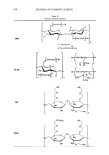
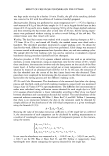
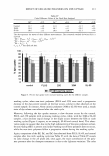
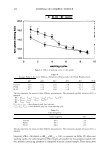
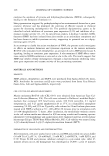
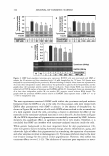
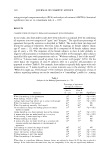
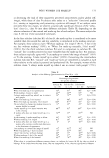
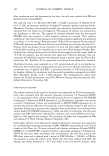
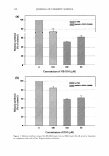
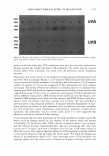
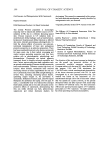
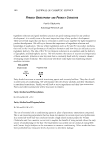
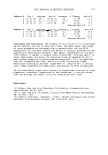
108 JOURNAL OF COSMETIC SCIENCE Table II Cellulose Polymer Formulas 30M R' = CHrCHrOH R= CHrCHOH-CHrN(CH1h SL-60 n 250 PLUS

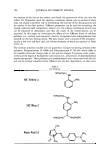
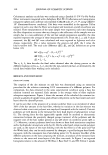
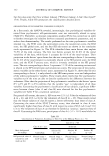
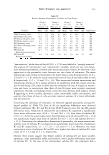
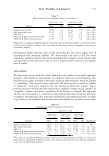
EFFECT OF CELLULOSE POLYMERS ON DYE UPTAKE 109 was kept under stirring for a further 10 min. Finally, the pH of the resulting dyebath was corrected to 6.0 with the addition of 2-amino-2-methyl-propanol. Dyeing procedure. Dyeing was performed at room temperature (25° ± 1 ° C) by dipping a total amount of 0.9 g of the yak hair sample (ca. 8-9 cm in length divided into six hair tresses of 0.15 mg each) into a beaker containing 50.0 g of the chosen dyebath solution and then removing the hair tresses after a fixed time of 30 min. All the dyeing experi- ments were performed without stirring in order to avoid felting of the yak hair. The colored tresses were then rinsed with water. Washing. The dyed hair tresses were washed with a regular cleaning shampoo at 40° ± 1 °C from 30 to 45 s, and rinsed off. Finally, the washed tresses were dried with a hairdryer. The described procedure represented a single washing cycle. To obtain the data for this work, different washing cycles were performed. Color change was measured in tresses treated with semipermanent hair dyes after three, six, and nine washing cycles. The sample after the first washing cycle was used as control as it simulated a typical hairdresser dyeing procedure (dyestuff and first shampoo). Extraction procedure. A 50% (v/v) aqueous ethanol solution was used as an extracting medium, at room temperature, using an immersion time for the tresses of 30 s. Under these conditions, the extraction involves only the dyes present on the cuticle of the fiber (outer layer). A further extraction was carried out at room temperature with a similar solution by means of an ultrasound bath (US) for 3-5 hr. In this case, the extraction of the dye adsorbed into the cortex of the hair (inner layer) was also obtained. These procedures were employed for determining the dye amount on the fiber (inner and outer layers) after the dyeing process and the different washing cycles. UV-Vis and Color Measurement. The absorbance of the extracted dyes (after the dyeing process and the third, sixth, and ninth washing treatments, respectively) was monitored using a Cary lE Varian UV-Vis spectrophotometer. The different dye concentrations or moles were calculated using calibration curves obtained for each single dye in a 50% (v/v) aqueous ethanol solution: a linear relationship according to Beer's Law was found between absorbence and concentration for each dye studied. The total absorbance of the extracted solution containing HC Blue 2, Basic Red 51, and HC Yellow 2 (assuming that there is no interaction between the dyes in the mixtures) could be obtained by simple addition of the absorbance of the individual component at a given wavelength using the formula (12,13): A= I1Ax.= I1s i Ci Knowing the value of the molar extinction coefficient 8 i of the single dye at a selected A, the concentration of each component can be calculated by making measurements at a number of wavelengths equal to the amount of components present in the mixture, using the system: {Al = 81 * b * C1 A2 = 82 * b * C2 + 81 * b * C1 A 3 = s 3 * b * c 3 + 82 * b * c2 + 81 * b * c1 In our case the absorbance was measured at A 1 = 624.47 nm, A2 = 542.61 nm, and A3 = 390.71 nm for HC Blue 2, Basic Red 51, and HC Yellow 2, respectively these wavelengths were chosen comparing the spectra obtained for the single dye.
Purchased for the exclusive use of nofirst nolast (unknown)
From: SCC Media Library & Resource Center (library.scconline.org)