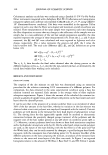
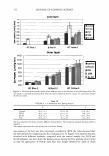
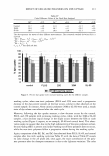
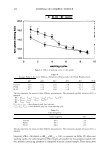
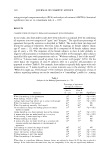
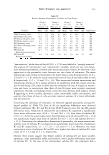
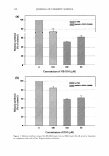
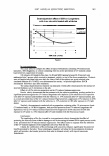
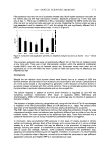
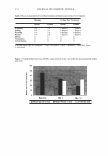
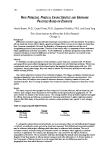
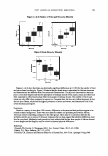
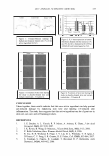
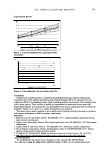
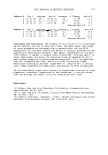
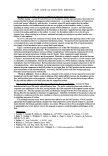
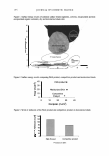
2007 ANNUAL SCIENTIFIC MEETING 173 Results: Throughout the duration of the study, subjects were instructed to use the jojoba supplemented sanitizer in place of their current sanitizer/alcohol rub product, as often as required during their work shift, but at least a minimum of eight times during the work shift. At 14 days a positive clinical response was noted during the Physician Assessment with all 14 subjects demonstrating an identifiable reduction in erythema, scaling, fissuring, and xerosis (Table I), (Figure 1). Erythema, scaling, and xerosis went from a moderate score of 2 to only visibly perceivable(+) clinical symptoms. Those subjects experiencing fissuring at baseline presented with healed skin sites at two weeks following product use. It's known that evaporative water loss from the stratum corneum correlates with the degree of barrier perturbation, including inflammatory dermatoses. There was a 25% rt:duction in TEWL values following baseline measurements at day 7, and a 53% reduction in TEWL measurements following 14 days of product application. (p 0.0001 for 7 and 14 days following baseline measurements). A breakout of skin site differences revealed that the dorsum of the hands produced a 19% and 36% reduction in TEWL values respectively at the day 7 and 14 evaluation points. Measurement of TEWL values on the palmar surface demonstrated a 36% reduction in TEWL at day 7, with a 59% reduction in evaporative water loss denoted at day 14. Both site differences were significant (p0.001) at day 7 and 14 versus baseline values. (Figure 1). Discussion: During the last 10 years alcohol based (60-95% ethanol) hand sanitizers have become predominant for sanitizing hands in most health care facilities, providing time savings, faster microbial killing, and less dermatitis of the hands than with plain soap and water or antiseptic hand wash scrub products. Although the time savings achieved by use of these products is viewed positively by most HCW's, the attendant changes in epidermal barrier function observed with multiple 40-50 or more exposures per day of the alcohol preparations can lead to chronic inflammatory skin disease and loss of hygiene adherence. As the CDC and WHO hand-hygiene guidelines continue to establish alcohol gel sanitizers as the preferred approach for HCW hand disinfection, the incidence of acute and chronic contact hand dermatitis and the loss of hygiene compliance will increase, as chronic ethanol exposures of the skin in an increasing number of HCW's occurs. Jojoba oil and its derivatives have chemistry closely resembling excreted human sebum. Further pre-clinical studies have demonstrated a variety of anti-inflammatory responses following exposure to jojoba, including a decrease in myeloperoxidase, nitric oxide (NO), and tumor necrosis factor-a activity. It is well known that the epidermal lamellar membranes consist of stratum corneum lipids containing a preponderance of ceramides, cholesterol, and long chain essential and non-essential free fatty acids. These lipids are essential in maintaining permeability and barrier function. Jojoba based oil derivatives with their similar cutaneous sebaceous lipid composition may serve to reconstitute lipids stripped from the epidermis during repeated hand washings with alcohol based hand sanitizers. The direct restoration of key lipids along with antioxidant/anti- inflammatory activity following topical exposure with jojoba derivatives may provide down regulation of inflammatory mediators and up-regulation of signaling for epidermal lipid re-synthesis which occurs during any perturbation of the barrier. References 1. Boyce J, Dziekan G, Girard R, et. al. The WHO Guidelines on Hand Hygiene in Healthcare (Advanced Draft): Global Patient Safety Challenge 2005-2006. World Health Organization, Geneva, Switzerland, 1-217 (2006). 2. Habashy RR, Abdel-Nairn AB, Khalifa AE, Al-Azizi MM, Anti-inflammatory effects of jojoba liquid wax in experimental models, Pharmacol. Res., 11, 1-11 (2004).

174 JOURNAL OF COSMETIC SCIENCE Table I. Physician Assessment (PA) of Hand Condition at Baseline and 14 Days Post Treatment Baseline 14 Days Post Treatment Dorsal Palmar Dorsal PaJmar Erythema 2.0 2.0 + Scorel + Scorel Scaling 2.0 2.0 + Scorel + Scorel Fissuring 1.0 1.0 0 (healed) 0 (healed) Xerosis 2.0 2.0 + ScoreI + Score! Edema 0 0 0 0 Vesiculation 0 0 0 0 Lichenification 0 0 0 0 0, no identifiable signs and symptoms +, slight involvement 1, mild 2, moderate 3, moderately severe 4, very severe. Figure 1. Transepidennal Water Loss (TEWL) values observed at day 7 and 14 for the dorsal and palmar surface sites alone. 60 50 40 30 20 10 0 Baseline El IVlean Dorsal Value Day 7 Day 14 ■ IVlean Palrrar Value □ Untreated Site
Purchased for the exclusive use of nofirst nolast (unknown)
From: SCC Media Library & Resource Center (library.scconline.org)