2007 ANNUAL SCIENTIFIC MEETING 179 Central centrifugal scarring alopecia deserves separate mention since this a fairly new terminology. Once the diagnosis is clearly central centrifugal scarring, the approach to management can proceed with topical agents, intralesional agents. HEAL TH OF THE HAIR SHAFT In African Americans, the curly, flattened hair does not emanate from a straight follicle. Instead, the follicle where the hair is formed is just as curved as the hair itself. Because of the curled nature of the hair, loosening of the curl to allow ease of hair care has been a prominent theme among African Americans, especially women. The flattened nature of the hair shaft predisposes the hair to increased fragility, and the relatively common practice of chemical and heat use compounds this fragility. It is common to see significant scarring alopecia accompanied by significant hair shaft damage from over- processing with heat or chemicals. Once this damage occurs, trichorrhexis nodosa [17] becomes likely and breakage ensues. The hot combing process, also known as pressing the hair, works as a temporary method of straightening kinky or curly hair. In recent times, thermal straightening of the hair has fallen out of favor by many African American women due to the temporary nature of the process. Common problems associated with hot comb use are: moderate to severe burns from accidental contact with the hot comb and overheating of the hair shaft causing weakening and breakage. Long-term use of hot-combing can cause severe damage to the hair shaft if the technique is not performed correctly. To avoid hair shaft damage, a well-trained professional should perform the procedure. In the 1960s, chemical straighteners became more refined and less damaging to the hair and scalp and more women began to utilize these products. Chemical relaxers are now the most common method of hair straightening used by African American women. Most chemical relaxers used on the hair in African- Americans contain sodium, potassium, or guanine hydroxides, sulfites, or thioglycolates. All of these chemicals work to produce a straight appearance by affecting the cysteine disulfide bonds of the hair. Problems that have arisen from the use of chemical straightening agents include: hair shaft dryness, increased fragility of the hair cuticle (over-porosity) and the lesser problem of skin damage. Moisturizing shampoos and conditioners used immediately after chemical treatment can repair some of this over-porosity. In addition to becoming over-porous, the elasticity of the hair can be severely decreased. To combat damage from heat and chemical treatments, African American patients, especially those who have clinical fragility and breakage, must condition the hair regularly after washing. Keeping chemical application to just new growth and only every 6-8 weeks will also help to keep the hair shaft healthy. Regular trims of damaged hair should be recommended every 8-10 weeks since many patients will be hesitant to cut the hair, incorrectly assuming that the damaged hair will grow faster if it is not cut. In summary, the hair and scalp disorders experienced by African American patients include those seen in the population at large, as well as those disorders more common in patients of color. The key is in the approach to clinical history of disease and hair care practices that patients may think is non- contributory to disease. Next, clinical and histologic examination must be performed in standard fashion, followed by therapeutic recommendations that fit both the disorder and the hair type.

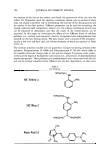
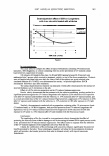
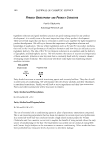
180 JOURNAL OF COSMETIC SCIENCE PRODUCT DEVELOPMENT AND PRODUCT CHEMISTRY Patrick Obukowho Advantage Research Lab Ingredient selection and good synthesis practice are good starting points for any product development it is usually seen as the most important stage of any product development. There are several stages that one has to overcome in order to put together the right template for product development. We will try to discuss the importance of ingredient selection and knowledge of application. The use of key ingredients such as EO and PO in product synthesis, their role in the overall performances of emulsion formation and how they can influence active ingredient delivery The role of EO/ PO in irritation reduction in an emulsion and the delivery of Lipophylic and Hydrophylic actives. We will examine the nature of reaction and importance of these materials. Irritation is one key item that is constantly dealt with by cosmetic chemist developing relaxer formulae. This discussion will throw some light into minimizing relaxer emulsion irritation. EO and PO Ethylene Oxide t;I� H-C-C-H \I Propylene Oxide Fatty alcohols are seen as essential structuring agents and viscosity builders. They also do well in other areas of conditioning. We will examine the role of fatty alcohols and their ethoxylates in emulsion formulation. Finally, we will look at active ingredients and their base interaction. Esters and other essential oils will be discussed in relaxers. Fatty Alcohol and Ethoxylation. R-OH and R-OH + EO Fatty Alcohol and Propoxylation R-OH and R-OH + PO The use of essential oils as conditioning agents in place of quaternary ammonium compound. This is an interesting experiment that has been documented in several reports and publication. In a recent lab work that was conducted under a high school science project by Yvonne Obukowho and I as a mentor, we set out to explore the benefit of using natural oils as the only source of conditioning for the hair. The experiment was carried out in Croda Lab using SEM and Contact Angle Analyzer as the instrument to measure conditioning. Other works that have been published have measured levels of protein to determine damage.
Purchased for the exclusive use of nofirst nolast (unknown)
From: SCC Media Library & Resource Center (library.scconline.org)