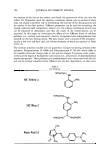
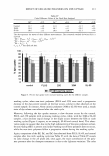
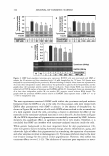
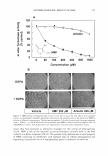
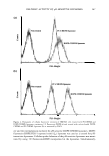
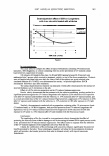
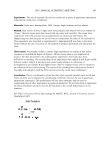
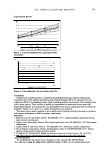
2007 ANNUAL SCIENTIFIC MEETING 181 Experiment: The use of essential oils such as coconut oil in place of quaternary ammonium compound in cream rinse conditioner. Materials: Curly wavy damaged hair, SEM, Contact Angle Analyzer and Lye relaxer. Method: Hair tresses of about 5.0gms each were prepared and treated with a Lye relaxer for 15mins. The hair tresses were then rinsed with tap water and towel dry The cream rinse conditioner with 10% coconut oil was applied and was rinsed out after 5mins. No shampooing was done because we do not want to compromise the effect of the essential oil. This experiment was described as experimental A. Experimental B was done in the same format without the use of coconut oil. All method of product application and timing was the same. Observation: We initially conduct a contact angle experiment on strands of hair before treatment to establish the degree of dryness. All hair tresses show a very high level of dryness. We then proceeded to do combing force experiment the results also show difficulties in combing. The second phase of the experiment with sample A and B gave totally different results. Sample A has improved contact angle which is an indication of hydrophobicity and sample B was slightly better than the original tresses with no treatment an indication of less cuticle coating. The results of the combing force reduction as showed favorably with sample A with the 10% coconut oil in the cream rinse conditioner. Conclusion: This is a confirmation of the fact that other essential materials such as oils and esters could be use to improve the conditioning of the hair with out the use of quaternary ammonium compound. This presentation will site other examples and the need to understand roles of other ingredients in product formulation. We will also look at ingredients and their ethoxylates and how this can be beneficial to the overall performances of our products. Ref: Effect of Coconut Oil On Hair Damage by MRTIS RELE Journal of Cosmetic Science March/April 2003. Ester Formation II + R-C -OH catalyst

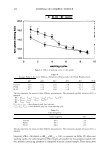
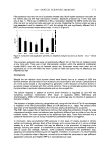
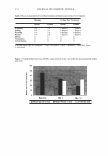
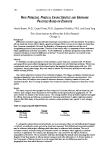
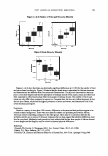
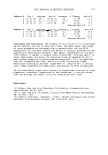
182 JOURNAL OF COSMETIC SCIENCE HAIR PROBLEMS, PHYSICAL CHARACTERISTICS AND GROOMING PRACTICES BASED ON ETHNICITY Harold Bryant, Ph.D., Crystal Porter, Ph.D., Stephanie Diridollou, Ph.D. and Grace Yang The L'Oreal Institute for Ethnic Hair & Skin Research Chicago, IL Backgrowid Differences in product usage and attitudes toward hair care products are well docwnented. For inst.ance, African American women tend to spend a greater percentage of their income on more hair care items than their Caucasian counterparts. However, the frequency of shampooing is much less and the use of straightening products is more prevalent. These are a few reasons why it is important to better llllderstand ethnic segmentation in the hair care market. Are the differences in attitudes and product usage based on consumer perception or inherent differences in the hair? To answer that question it is essential to link practices and perceptions to scientific data. Methods To determine consumer perceptions of hair problems, a pilot study was conducted with 3 50 female participants from various ethnic backgrowids who were asked to list all of their hair problems. The list was compiled and used for a national internet-based survey that targeted four ethnic groups with over 1200 respondents. Among other things, they were asked to indicate all of their hair problems as well as their ntmber one hair problem. Our current sample pool consists of hair collected in Jamaica, US, Ghana, and Kenya. Geometrical and mechanical parameters were measured using a miniature tensile tester and la� scan micrometer. Over 1500 fibers from 300 subjects were studied to determine diameter, ellipticity, number of twists, and mechanical profile. Prior to testing all samples were screened by amino acid analysis to determine overall quality. Results The survey responses were grouped into four categories Caucasian, Mexican, African American. and Chinese. Each category had a minimum of 300 responses and an age distribution ranging from 18 -80 years old that was similar to the national census. The average number of hair problems reported was higher for African American and Mexican as compared to Caucasian and Chinese. Logistic regression analysis indicates that while many of the problems are common, certain i:roblems were specific to each category (Table I). Table 1 Category Specific Hair Problems African American Breakage Dry scalp Itchy scalp � Oily scalp Caucasian Gray Too fine/thin Mexican Too frizzy To adequately address the perceived problems one must ascertain if they are well-defined (hair breakage vs. fallout). scientifically routed, and can be objectively measured. Well-defined and measurable problems may be addressed with product offerings while others may be addressed with education. The use of consumer research. scientific testing and literature reviews can determine which approach to problem resolution is appropriate. For instance, hair breakage was a top concern for the African American respondents to the survey. This is consistent with basic knowledge that already exists indicating the relative fragility of hair from people of African descent compared with other ethnicities (1-3). Recent studies on hair from people of African descent in our lab suggest that there are also differences based on the geographical area from which the hair is collected.
Purchased for the exclusive use of nofirst nolast (unknown)
From: SCC Media Library & Resource Center (library.scconline.org)