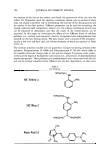
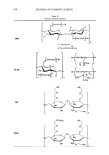
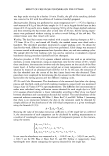
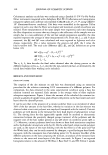
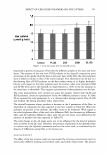
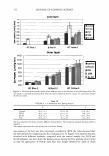
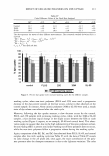
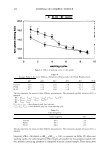
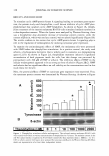
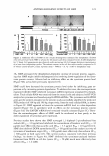
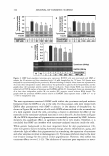
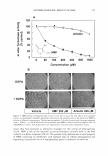
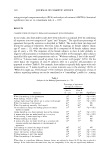
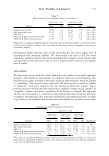
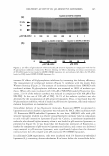
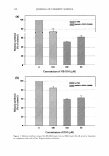
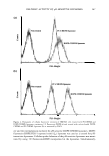
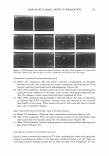
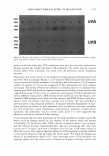
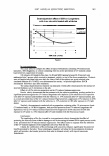
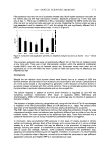
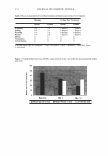
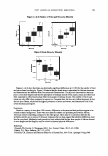
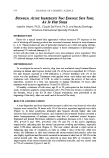
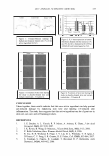
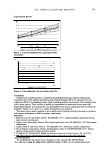
2007 ANNUAL SCIENTIFIC MEETING Control Control UVB Extract+ UVB Figure 1: Fontana-Masson stauung of human skin biopsies treated with 1 % of the active ingredient for 24 h DO D7 D28 Figure 3: Evolution of skin tone during the study in placebo-treated skin and extract-treated skin - Volunteer A CONCLUSION ::ll Q. Figure 2: IL-1 beta expression in human fibroblasts treated with the extract at 1 % and 3% for 24 h, irradiated with UVB at 1 00mJ/cm2 and treated again for 24 h DO D7 028 Figure 4: Evolution of skin tone du.ring the study in placebo-treated skin and extract- treated skin - Volunteer B 185 Taken together, these results indicate that this new active ingredient can help prevent sun-induced damage by enhancing skin tone and limiting UV-induced skin inflammation. The study thus suggests that this active ingredient can be of great use in skin care, sun care, and self tanning products. REFERENCES 1. J. E. Stryker, A. L. Yaroch, R. P. Moser, A. Atienza, K. Glanz, J Am A cad Dermatol., 56(3), 387-390, 2007. 2. J. K. Rivers, B. Wang, D. Marcoux, J Cutan Med Surg., 10(1), 8-13, 2006. 3. C. Robb-Nicholson, Harv Womens Health Watch, 14(2), 8, 2006. 4. R. Cui, H. R. Widlund, E. Feige, J. Y. Lin, D. L. Wilensky, V. E. Igras, J. D'Orazio, C. Y. Fung, S. R. Granter, D. E. Fisher, Cell, 128(5), 853-864, 2007. 5. S. Freeman, S. Francis, K. Lundahl, T. Bowland, R. P. Dellavalla, Arch Dermatol., 142(4), 460-462, 2006.

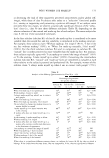
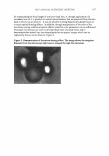
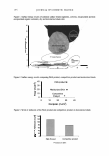
186 JOURNAL OF COSMETIC SCIENCE CONTROL OF SKIN TONE f/JA MICROLENS TECHNOLOGY Lisa Bouldin1, Kevin DiNicola1, Vince Gruber 1 , Ph.D., Steve Hinden1, Geoffrey Brooks2 and Bruce Victor2 1 Arch Personal Care, 70 Tyler Place, South Plainfield, NJ 2 Consu/tant to Arch Personal Care Introduction It is now becoming more generally recognized that skin pigmentation is controlled by two critical factors, the translucency of the stratum comeum and the color of the underlying pigment -containing skin components. The skin pigmentation components appear to be principally three molecules including: melanin, hemoglobin and collagen. As a person ages, the appearance of aging is influenced by inconsistencies in the patterns of these three pigments as they reflect back out through the transparent stratum comeum to the eye of the observer. Historically, cosmetic formulations have tried to influence these colors through a masking effect, typically done with opaque, colored particles that lay down on the surface of the skin and attempt to color mask the skin's natural pigments. However, the typical downside of such coloring attempts is that the skin loses a sense of depth and translucency that are indicative of naturally healthy skin. To the observer, a person wearing decorative foundation has skin that appears somewhat flat and two-dimensional. This talk will focus on a new skin tone control technology that works with a person's natural pigments rather than against their natural pigments to control signs of aging. Materials Lens-coated micro/ens particles The particles described in this talk are manufactured using a patent-pending technology. The present talk will focus only on a transparent lens-coated microlens. 3 However, colored micro lens particles will constitute a segment of this new technology. Discussion Lens-coated Micro/ens Technology The principal of the lens-coated microlens technology is demonstrated in Figure 1 below. Figure 1. Lens-Coated Microlens Technology t A. Standard Glass Microlens B. Lens-Coated Glass Microlens
Purchased for the exclusive use of nofirst nolast (unknown)
From: SCC Media Library & Resource Center (library.scconline.org)