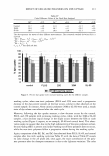
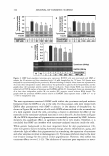
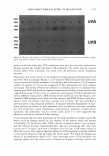
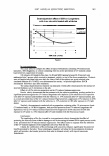
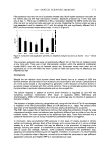
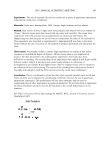
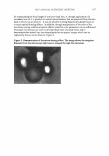
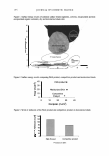
2007 ANNUAL SCIENTIFIC MEETING 187 By manipulating the focal length of a micron-sized lens, A, through application of a secondary lens, B, it is possible to control optical features that are projected from the skin back to the eye of an observer. It may be possible to bring features into greater focus or to cause optical blurring effects. In addition, through manipulation of the color of the microlens coating, additional optical effects related to color parameters can be influenced. This paper will discuss our work to develop these types of coated lenses and to demonstrate that indeed, tiny lens-shaped particles can project images which can be captured by the eye of an observer, Figure 2. Figure 2. Demonstration of the micro-lensing effect. The image shows the tungsten filament from the microscope light source imaged through the microlens.

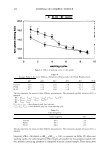
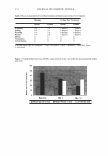
188 JOURNAL OF COSMETIC SCIENCE THE IMPACT OF POLYMERS IN SUNLESS TANNING DELIVERY SYSTEMS Olga V. Dueva-Koganov1, Ph.D., Colleen Rocafort2, B. Scott Jaynes1, Ph.D., Joseph Lupia1, Ph.D., Bernice Ridley3, XianZhi Joe Zhou 1 , Ph.D. and Shaun Barker 1 Ciba Specialty Chemicals, Inc. 1 Tarrytown, NY, 2 High Point, NC and 3 8radford, UK Introduction A sun-tanned appearance is considered to be a symbol of a healthy and active life, and sunless tanners provide such appearance to the skin without the need for UV exposure. Sunless tan is generated by the Maillard reaction of dihydroacetone (DHA) and/or ezythrulose with the amino acids, peptides and proteins in the stratwn comeum. Some sunless tanners have the disadvantage of not providing the desired control over color development with tans being uneven, too light or dark, or too orange or yellow. Also, it is known that some individuals do not develop a noticeable tan with DHA Thus, a need exists to develop sunless tanning compositions that provide improved color and help to develop a tan for inadequately reacting individuals. It is known that various chemicals can modify or enhance the tanning reaction obtained with DHA on skin. Examples of such ingredients include amino acids [I], amino-substituted silicone compounds [2], polyacrylamide [3], amphoglycinate derivatives [4], thickeners, humectants, UV-filters, vitamins and emollients [5] however, the data regarding the impact of polymers on the development of a sunless tan are rather limited. Our objective was to evaluate the ability of several polymers to influence the color development induced by sunless tanning formulations. Method Description We have utilized VITRO-SKIN® N-19 (IMS, Inc.) [6] as a substrate and an in vitro efficacy testing methodology for sunless tanners described by R. Jermann et al. with minor modifications. This in vitro methodology is a reliable tool to estimate the efficacy of self-tanning formulations on human skin [5]. Substrate was pre-cut into 4x4 cm pieces and hydrated according to the protocol described in [6]. Application dose was 2 mg/sq.cm temperature: 76 -78 °F. Color of the samples was measured every 24 h for 4 days with COLORTEC PSMrM Color Mode: L*a*b* Observer 10° Primary Illuminant D65 (Color- Tec, Clinton- NJ). Test Articles The following commercial and experimental polymers were evaluated: A - Dimethylacrylamide/Ethyltrimonium Chloride Methacrylate Copolymer B - Hydroxypropyl Starch Phosphate C - Experimental Polymer Derivative. DHA-compatible polymers A and B were evaluated in a simple base containing: Water, 3% DHA, 4% Pentylene Glycol, Preservatives and pH adjustors. Polymer A was tested at 1.5% (active) and Bat 5% (active) levels. These levels were recommended by the manufacturers as sufficient to create a gel-lotion with A or a gel with B. Experimental polymer C was tested in 2% aqueous solution, pH adjusted. It was applied on the substrate as a second coat immediately after application ofDHA-containing product. A commercially available sunless tanner/daily moisturizer (D) designed for medium/tan skin tones was tested as a benchmark. Ingredients in D included: Water, Glycerin, Cetearyl Alcohol, Petrolatum, Mineral Oil, Dimethicone, Ceteareth-20, Glyceryl Stearate, Persea Gratissima (Avocado) Fruit Extract, Avena Sativa (Oat Meal) Extract, Simmondsia Chinensis (Jojoba) Seed Extract, Calendula Officinalis Flower Extract, Olea Europaea (Olive) Fruit Oil, Tocopherol, Cyclopentasiloxane, Stearic Acid, Hydroxyethyl Acrylate/Sodium Acryloyldimethyltaurate Copolymer , Aluminum Starch Octenylsuccinate, PEG-100 Stearate, Methylparaben, Propylparaben, Xanthan Gum, DMDM Hydantoin, BHT, Fragrance, Dihydroacetone, Caramel, Titanium Oxide, Mica, Erythrulose.
Purchased for the exclusive use of nofirst nolast (unknown)
From: SCC Media Library & Resource Center (library.scconline.org)