J. Cosmet. Sci., 62, 453–467 (September/October 2011) 453 Qualifi cation of an automated device to objectively assess the effect of hair care products on hair shine RALF HAGENS, TIM WIERSBINSKI, MICHAEL E. BECKER, JÜRGEN WEISSHAAR, VOLKER SCHREINER, and HORST WENCK, Beiersdorf AG Germany (R.H., T.W., V.S., H.W.), Display Metrology & Systems, Karlsruhe, Germany (M.E.B.), and Opsira GmbH, Weingarten, Germany (J.W.). Accepted for publication May 26, 2011. Synopsis The authors developed and qualifi ed an automated routine screening tool to quantify hair shine. This tool is able to separately record individual properties of hair shine such as specular refl ection and multiple refl ection, as well as additional features such as sparkle, parallelism of hair fi bers, and hair color, which strongly affect the subjective ranking by individual readers. A side-by-side comparison of different hair care and styling products with regard to hair shine using the automated screening tool in parallel with standard panel assess- ment showed that the automated system provides an almost identical ranking and the same statistical sig- nifi cances as the panel assessment. Provided stringent stratifi cation of hair fi bers for color and parallelism, the automated tool competes favorably with panel assessments of hair shine. In this case, data generated with the opsira Shine-Box are clearly superior over data generated by panel assessment in terms of reliability and re- peatability, workload and time consumption, and sensitivity and specifi city to detect differences after sham- poo, conditioner, and leave-in treatment. The automated tool is therefore well suited to replace standard panel assessments in claim support, at least as a screening tool. A further advantage of the automated system over panel assessments is the fact that absolute numeric values are generated for a given hair care product, whereas panel assessments can only give rankings of a series of hair care products included in the same study. Thus, the absolute numeric data generated with the automated system allow comparison of hair care products between studies or at different time points after treatment. INTRODUCTION The appearance of hair is determined by the way the hair surface and hair body refl ect incident light (1,2). Consumers subjectively take hair shine as a sign of health and beauty. It is therefore of pivotal importance for hair care products to bring hair into a shiny state after treatment. A lot of effort has been put in the past into the development of methods to quantify hair shine, but none of them has yet been able to refl ect the consumer’s subjec- tive perception properly. The central problem in this case is that hair shine is a complex Address all correspondence to Ralf Hagens at ralf.hagens@biersdorf.com.

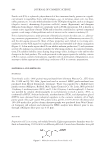
JOURNAL OF COSMETIC SCIENCE 454 feature composed of several properties such as specular refl ection, multiple refl ection, sparkle, parallelism of hair fi bers, and hair color. Up to now, hair care products have to be evaluated for their hair shine-promoting proper- ties in time- and resource-intensive panel studies by experienced panelists. Such panel studies provide only relative results, i.e., rankings of the investigated products within a study, which make the comparison of different studies with different products almost impossible. Thus, to make comparison of products across studies possible, an objective quantitative measure of hair shine is required. Furthermore, to be suitable for cosmetic development, any automated quantitative physical method of measuring hair shine has to correlate with panel assessments. This claim can only be met if all properties of hair shine are covered and integrated by an automated physical method. The authors have developed a new automated tool to quantify hair shine, which records all of the fi ve above-mentioned properties of hair shine separately in a single run. The new tool makes an approximation of automated physical assessments to panel-based rankings of hair shine feasible. This is achieved by the fi ne tuning of the physical assessments to correlate with panel assessments through individual weighting of the different properties of hair shine. MATERIAL AND METHODS HAIR Commercially available hair tresses of different ethnic origin and color were used. The tresses had a net hair weight of 4.5 g, a total length of 23 cm, and a width of 3 cm. Before application of the test products, the tresses were cleaned by wetting with cold tap water for 15 min and gently washing with a standard shampoo (50% SDS, 1% NaCl, 0.4% sodium benzoate, 0.1% citric acid, and 48.5% distilled water) for 1 min, followed by rinsing with lukewarm tap water for 2 min. To apply test products, 0.2 ml per gram of hair of the respective test products was rubbed in for 1 min, and all rinse-off products were then removed by rinsing the hair strips with lukewarm tap water for 2 min. Subse- quently the hair tresses were combed until all knots or fi ber crossings were removed. The tresses were then mounted on special carriers, taking care of the parallelism of hair fi bers, and equipped with a special slit aperture to avoid refl ections from the carrier (Figure 1B). INSTRUMENTATION FOR HAIR SHINE MEASUREMENT A newly developed recording device (denoted “opsira Shine-Box” see Figure 1A) was developed by the authors in cooperation with opsira GmbH, Weingarten, Germany, and Display Metrology & Systems, Karlsruhe, Germany. This device is able to assess multiple components of hair shine in parallel, encompassing specular and diffuse refl ection half- width of specular refl ection sparkle hair color and parallelism of hair fi bers using the software tool luca′tool developed by opsira GmbH. The core detector system of the opsira Shine-Box, the recording camera, is a state-of-the-art and high-grade CCD luminance measurement camera, called luca, with a 12-Bit grey-level dynamic. The grey-level dy- namic can be expanded by taking several measurements at different exposure times to up to 18 Bit. To reduce thermal noise and thus to improve the data quality, a thermoelectric
Purchased for the exclusive use of nofirst nolast (unknown)
From: SCC Media Library & Resource Center (library.scconline.org)