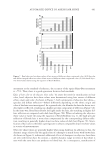
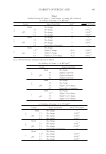
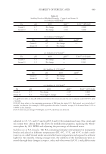
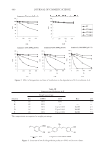
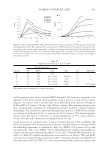
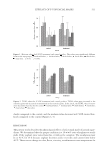
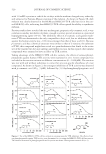
STABILITY OF FERULIC ACID 497 Table VIII Composition of Solutions E–G and O Solution Weight percentage Base pH Additional F.A DPPG H2O E 1% 30% Up to 100% NaOH 7.5 — F 1% 30% Up to 100% TEA 7.5 — G 1% 30% Up to 100% KOH 7.5 — O 1% 30% Up to 100% TEA 7.5 5.85% NaCl The compositions are expressed as weight percentage. PVG formation. These transformations, favored by the presence of OH- ions (ferulate anion conjugations), seem to follow the proposed pathways shown in Figure 8. As for the use of F.A in skincare products when F.A is likely to contact with bare skin, one should question the interaction of F.A when exposed to “real life” conditions of human stratum corneum and living epidermis. Simulation of F.A-based formulae with recon- structed epidermis as a model would be an interesting experimental approach. In fact, some microbial species, including bacteria, yeasts, and fi lamentous fungi (12–14) have been reported as being capable of degrading F.A. Microorganisms may possibly decarboxylate Figure 10. Effects of metallic cations on F.A degradation and PVG and its dimer’s formation in tested solu- tions. Solutions were incubated at 75° for seven days. The PVG and dimer accumulation% here were calculated in the same way as in Figure 4.

JOURNAL OF COSMETIC SCIENCE 498 in situ on skin, or degrade it through other pathways. The biological roles of the F.A- derived products are still unclear, since both PVG and its dimer are unstable. Additional work is required to elucidate the respective roles of F.A, PVG, and its dimer in the process of skin depigmentation. Effect of N2 atmosphere, vitamin C, and metallic cations on F.A degradation. The effect of N2 atmosphere and vitamin C on the formation of PVG and its dimer during the degradation of F.A is shown in Figure 9 and Table VII. The kinetics of degradation of F.A were slightly reduced under N2 atmosphere, albeit not signifi cantly, compared to normal at- mosphere N2 did not inhibit the formation of PVG or dimer, suggesting that F.A does not degrade through an O2-− involved radical mechanism. The effect of metallic cations (Na+/K+) is shown in Figure 10 and Table VIII. The presence of Na+/K+ was especially relevant to the degradation of F.A to PVG and its dimer. Na+/ K+, as expected, enhanced the formation of the dimer. On the other hand, these cations signifi cantly and surprisingly reduced both the general content level and the peak con- centration of PVG. The infl uence of K+ appeared stronger than that of Na+. These fi nd- ings suggest that the metallic cations may catalyze and orientate the degradation of F.A towards the dimer rather than other degradation products. Due to the effect of Na+/ K+, the balance between PVG formation and conversion to its dimer (or trimer) form may be shifted to the latter possibility, explaining the reduction in the accumulation of PVG. The presence of vitamin C clearly reduced the yellowing of the solutions at early incuba- tion times. This had no signifi cant effect on the formations of PVG or its dimer. Despite the N2 atmosphere and the presence of the well-known free-radical chain scavenger vitamin C, no signifi cant effect on the inhibition of F.A degradation and PVG formation was observed. Metallic cations showed a remarkable catalytic effect on the formation of the dimer, and the K+ of lower electronegativity appears much more effi cient in the catalysis than does the Na+. The environmental solvent of F.A clearly affects the degrada- tion of F.A. Water favors the progression while DPPG slows it down. The presence of metallic cations, leading to inhibit the accumulation of PVG, suggests that PVG was mainly formed through an ionic mechanism under our experimental conditions. From all these results, it appears that for ensuring long-term stability of F.A, an acid and high- DPPG environment, together with the absence of metallic cations, offers a much better practical approach in F.A-based cosmetic formulations. CONCLUSIONS Our results suggest that F.A is a thermally unstable substance, the stability of which is affected by pH and certain solvents. A low pH, a low temperature, and a high percentage of DPPG appear to be effi cient factors in ensuring a better chemical stability of F.A in a cosmetic me- dium. In addition, our analytical data suggest that PVG and its trans-conjugation dimer are the major degradation products of F.A, probably through an ionic mechanism rather than an O2-- related one. Additional studies are required to confi rm such hypotheses. ACKNOWLEDGMENTS This work was carried out and funded through a contract between L’Oreal Research and Fudan University of Shanghai. The authors owe thanks to researchers from both entities.
Purchased for the exclusive use of nofirst nolast (unknown)
From: SCC Media Library & Resource Center (library.scconline.org)