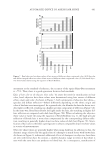
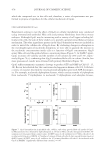
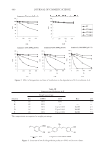
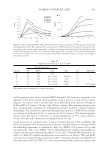
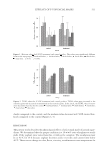
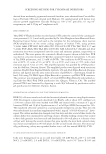
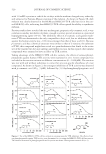
EFFICACY OF F-YOP FACIAL MASKS 511 cheeks compared to the control, and the melanin value decreased in F-YOP-treated fore- heads compared to the control (Figures 4, 5). DISCUSSION The present study describes the physiological effects of a face mask made of natural ingre- dients. We determined that the proper condition is a 10 w/w% ratio of yoghurt to sterile milk. If the yoghurt ratio varies from this, it will not be complete. The incubation must be at 42°C for 16 h because yoghurt becomes acidic over time and cannot form below 40°C. There was no change in color, fl avor, viscosity, or sediment at room temperature for Figure 1. Moisture values for F-YOP (treatment) and control product. The values were signifi cantly different between the two groups. forehead-before forehead-after cheek-before cheek-after chin-before chin-after. * p0.05 *** p0.001. Figure 2. TEWL values for F-YOP (treatment) and control product. TEWL values were increased in the control regions and decreased or maintained in the treated regions. In the cheek, the TEWL value for treat- ment was lower than that for the control. forehead-before forehead-after cheek-before cheek-after chin-before chin-after.

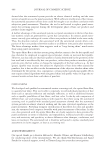
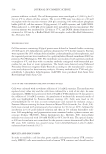
JOURNAL OF COSMETIC SCIENCE 512 Figure 3. Elasticity values for F-YOP (treatment) and control product in the cheek. The value decreased in the control region, and was maintained at pretreatment levels in the treatment region. before treatment after treatment. six months or more. If the ratios of yoghurt to pack base are 5:5 (1:1), it has a putrid smell of yoghurt. We tested several ratios of yoghurt to pack base (1:9, 2:8, and 4:6). All were stable and did not have a putrid smell of yoghurt. In consideration of the feel upon ap- plication and unit cost, we determined that 4:6 should be the fi nal ratio. O. humifusa powder was mixed with YP immediately prior to use for freshness, and the optimal powder ratio was determined as 3% of the total volume. This powder tends to gel when combined with water, and so if the amount of powder is increased, it will affect the application feel and washing. The moisture value was superior with F-YOP treatment compared to the control product that was used as the control. The TEWL decreased after treatment and the values were superior compared to the control. Elasticity decreased in the control region however it did not change in the F-YOP-treated region. Thus, F-YOP treatment supplied effi cient moisture to the skin and helped maintain elasticity. Figure 4. Melanin values for F-YOP (treatment) and control product. There was no effect on melanin in either group. The melanin value decreased in the treated forehead region, in comparison to the control. forehead-before forehead-after cheek-before cheek-after chin-before chin-after.
Purchased for the exclusive use of nofirst nolast (unknown)
From: SCC Media Library & Resource Center (library.scconline.org)