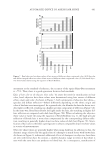
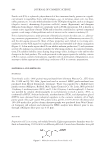
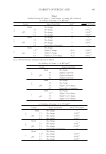
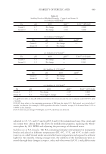
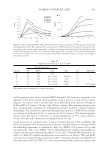
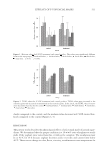
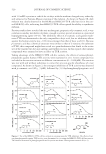
STABILITY OF FERULIC ACID 491 Figure 4. Effect of NaOH, KOH, TEA, and TEA with salt on the accumulation of PVG and its dimer during the degradation of F.A. We calculated the conversion rate of PVG and that of its dimer by tracing the ben- zene rings in the solutions, which means that a complete conversion of one molecule of F.A could theoretically produce one molecule of PVG or 0.5 molecule of the dimer. Thus, 1% (w/w) of F.A could transform up to 0.77% (w/w) of PVG or 0.77% (w/w) of its dimer. The PVG% and dimer% here are calculated according to this theoretical yield. Table IV Composition of Solutions A, E, F, G, and O Solution Weight percentage Base pH Additional F.A DPPG H2O A 1% 30% 69% — 3.0 — E 1% 30% Up to 100% NaOH 7.5 — F 1% 30% Up to 100% TEA 7.5 — G 1% 30% Up to 100% KOH 7.5 — O 1% 30% Up to 100% TEA 7.5 5.85% NaCl The compositions are expressed as weight percentage. and F.A retention rate, using a standard HPLC technique. The latter was comprised of an AgilentTM 1200 Series liquid chromatograph, using a delivery pump with an online degasser, an injector with a variable loop, and a photodiode array detector through an X-Terra RP18 (3.9 mm × 150 mm, 5 μm Waters) column. The equipment and processes were automatically controlled by “Chemstation revision A.08.03” software (Agilent Technology). The elution was carried out through solution A (0.1% TFA w/w in an aque- ous solution of methanol 60:40 v/v, respectively) for 15 minutes. The chromatographic process used a fl ow rate of 1.0 ml⋅min−1, a column temperature of 30°C, and an injection volume of 10 μl, with a detection wavelength fi xed at 323 nm. Sample preparation in simplifi ed systems. A series of model solutions of F.A at different pH levels was prepared. One hundred grams of the two simplifi ed solutions contained (w/w) the following components: (i) solution A—F.A 1.0 g DPPG, 30.0 g water, 69.0 g and (ii) solution B—F.A, 1.0 g DPPG, 99.0 g. The former basal solution was modifi ed to achieve new systems by adjusting the pH to 4.5, 6.0, and 7.5 with NaOH (solutions C, D, and E see Table IV). Further modifi cations were carried out as follows: TEA and KOH were used to neutralize the basal solution to pH 7.5 (solutions F and G see Table IV). A full replacement of F.A by PVG (1%, w/w) was performed both in the basal solution and

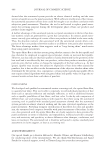
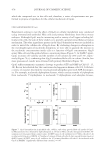
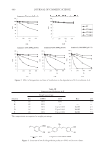
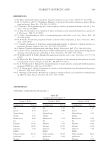
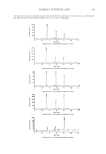
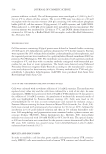
JOURNAL OF COSMETIC SCIENCE 492 Figure 5. Proposed mechanism for F.A degradation—Step one: decarboxylation. Figure 6. Accumulation and/or consumption of PVG and its dimer in tested solutions. Solutions were incubated at 75° for seven days. The PVG consumption% was calculated according to its initial concentra- tion (1%, w/w), and the dimer conversion% here was calculated in the same way as in Figure 4. Table V Composition of Solutions H–L Solution Weight percentage Base pH PVG DPPG H2O H 1% 30% Up to 100% — 4.65 I 1% 30% Up to 100% NaOH 7.5 J 1% 30% Up to 100% TEA 7.5 K 1% 30% Up to 100% NaOH 9.0 L 1% 30% Up to 100% TEA 9.0 The compositions are expressed as weight percentage.
Purchased for the exclusive use of nofirst nolast (unknown)
From: SCC Media Library & Resource Center (library.scconline.org)