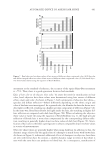
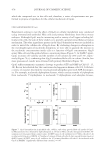
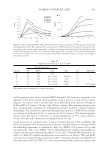
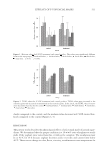
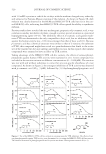
EFFICACY OF F-YOP FACIAL MASKS 513 Figure 5. Erythema values for F-YOP (treatment) and control product. The erythema value decreased in the treatment region of the cheek, compared to the control. forehead-before forehead-after cheek-before cheek-after chin-before chin-after. For this reason, physiological materials may act as an evaluation factor. Fermented milk at 1% fi nal concentration was comparatively more dominant than the positive control in DPPH and lipoxygenase assays. In theory, if fermented milk is added to sterile milk by 10 w/w%, this activity improves. We did not confi rm this with a long-term in vivo practical test, but in this study, we found that the elasticity value decreased in the control region but increased in the treatment region. We believe that this product will be suitable for dry-skin patients because of the associated reduction in TEWL, increased moisture, and lack of preservatives. There is an increasing demand for the cosmetics industry to produce products that are safe, effective, stable, and provide user convenience (19). Skin products that are made from natural materials are less likely to cause irritation in consumers with sensitive skin because there are no preservatives or additives. We studied the stability of our F-YOP product for over six months, and we did not fi nd any changes in the deposits, color, or fl avor. Our product appears to be effective at improving skin moisture and brightness, and in reducing TEWL. ACKNOWLEDGMENTS This work was supported by a Korea Science and Engineering Foundation (KOSEF) grant funded by the Korean government (MEST) (No 2009-0063466) REFERENCES (1) M. Turkoglu and N. Cigirgil, Evaluation of black tea gel and its protection potential against UV, Int. J. Cosmet. Sci., 29, 437–442 (2007). (2) M. Masuda, K. Murata, A. Fukuhama, S. Naruto, T. Fujita, A. Uwaya, F. Isami, and H. Matsuda, In- hibitory effects of constituents of Morinda citrifolia seeds on elastase and tyrosinase, Nat. Med. (Tokyo), 63, 267–273 (2009).

JOURNAL OF COSMETIC SCIENCE 514 (3) Y. F. Mahe, R. Martin, L. Aubert, N. Billoni, C. Collin, F. Pruche, P. Bastien, S. S. Drost, A. T. Lane, and A. Meybeck, Induction of the skin endogenous protective mitochondrial MnSOD by Vitreoscilla fi liformis extract, Int. J. Cosmet. Sci., 28, 277–287 (2006). (4) R. Liang, R. M. Han, L. M. Fu, X. C. Ai, J. P. Zhang, and L. H. Skibsted, Baicalin in radical scavenging and its synergistic effect with beta-carotene in antilipoxidation, J. Agric. Food Chem., 57, 7118–7124 (2009). (5) Z. Chen, Y. M. Liu, S. Yang, B. A. Song, G. F. Xu, P. S. Bhadury, L. H. Jin, D. Y. Hu, F. Liu, W. Xue, and X. Zhou, Studies on the chemical constituents and anticancer activity of Saxifraga stolonifera (L.) Meeb, Bioorg. Med. Chem., 16, 1337–1344 (2008). (6) S. H. Lee, S. Y. Choi, H. Kim, J. S. Hwang, B. G. Lee, J. J. Gao, and S. Y. Kim, Mulberroside F isolated from the leaves of Morus alba inhibits melanin biosynthesis, Biol. Pharm. Bull., 25, 1045–1048 (2002). (7) H. J. Kim, S. H. Seo, B. G. Lee, and Y. S. Lee, Identifi cation of tyrosinase inhibitors from Glycyrrhiza uralensis, Planta Med., 71, 785–787 (2005). (8) M. Brasca, S. Morandi, R. Lodi, and A. Tamburini, Redox potential to discriminate among species of lactic acid bacteria, J. Appl. Microbiol., 103, 1516–1524 (2007). (9) T. Uenishi, H. Sugiura, T. Tanaka, and M. Uehara, Role of foods in irregular aggravation of skin lesions in children with atopic dermatitis, J. Dermatol., 35, 407–412 (2008). (10) H. Dok-Go, K. H. Lee, H. J. Kim, E. H. Lee, J. Lee, Y. S. Song, Y. H. Lee, C. Jin, Y. S. Lee, and J. Cho, Neuroprotective effects of antioxidative fl avonoids, quercetin, (+)-dihydroquercetin and quercetin 3- methyl ether, isolated from Opuntia fi cus-indica var. saboten, Brain Res., 965, 130–136 (2003). (11) J. Y. Cho, S. C. Park, T. W. Kim, K. S. Kim, J. C. Song, S. K. Kim, H. M. Lee, H. J. Sung, H. J. Park, Y. B. Song, E. S. Yoo, C. H. Lee, and M. H. Rhee, Radical scavenging and anti-infl ammatory activity of extracts from Opuntia humifusa Raf, J. Pharm. Pharmacol., 58, 113–119 (2006). (12) E. M. Galati, M. R. Mondello, D. Giuffrida, G. Dugo, N. Miceli, S. Pergolizzi, and M. F. Taviano, Chemical characterization and biological effects of Sicilian Opuntia fi cus indica (L.) mill. Fruit juice: an- tioxidant and antiulcerogenic activity, J. Agric. Food Chem., 51, 4903–4908 (2003). (13) J. C. Lee, H. R. Kim, J. Kim, and Y. S. Jang, Antioxidant property of an ethanol extract of the stem of Opuntia fi cus-indica var. saboten, J. Agric. Food Chem., 50, 6490–6496 (2002). (14) D. Butera, L. Tesoriere, F. Di Gaudio, A. Bongiorno, M. Allegra, A. M. Pintaudi, R. Kohen, and M. A. Livrea, Antioxidant activities of Sicilian prickly pear (Opuntia fi cus indica) fruit extracts and reducing properties of its betalains: Betanin and indicaxanthin, J. Agric. Food Chem., 50, 6895–6901 (2002). (15) G. Goldstein and P. S. Nobel, Water relations and low-temperature acclimation for cactus species vary- ing in freezing tolerance, Plant Physiol., 104, 675–681 (1994). (16) S. E. Lee, H. J. Hwang, J. S. Ha, H. S. Jeong, and J. H. Kim, Screening of medicinal plant extracts for antioxidant activity, Life Sci., 73, 167–179 (2003). (17) Y. Oyanagui, Reevaluation of assay methods and establishment of kit for superoxide dismutase activity, Anal. Biochem., 142, 290–296 (1984). (18) R. K. Hughes, S. I. West, A. R. Hornostaj, D. M. Lawson, S. A. Fairhurst, R. O. Sanchez, P. Hough, B. H. Robinson, and R. Casey, Probing a novel potato lipoxygenase with dual positional specifi city reveals primary determinants of substrate binding and requirements for a surface hydrophobic loop and has implications for the role of lipoxygenases in tubers, Biochem. J., 353, 345–355 (2001). (19) B. L. Diffey, R. J. Oliver, and P. M. Farr, A portable instrument for quantifying erythema induced by ultraviolet radiation, Br. J. Dermatol., 111, 663–672 (1984). (20) R. Re, N. Pellegrini, A. Proteggente, A. Pannala, M. Yang, and C. Rice-Evans, Antioxidant activity applying an improved ABTS radical cation decolorization assay, Free Rad. Biol. Med., 26, 1231–1237 (1999). (21) F. J. Romero, F. Bosch-Morell, M. J. Romero, E. J. Jareno, B. Romero, N. Marin, and J. Roma, Lipid peroxidation products and antioxidants in human disease, Environ. Health Perspect., 106(Suppl. 5), 1229–1234 (1998). (22) T. Galliard and D. R. Phillips, Lipoxygenase from potato tubers. Partial purifi cation and properties of an enzyme that specifi cally oxygenates the 9-position of linoleic acid, Biochem. J., 124, 431–438 (1971). (23) M. Resch, A. Steigel, Z. L. Chen, and R. Bauer, 5-Lipoxygenase and cyclooxygenase-1 inhibitory active compounds from Atractylodes lancea, J. Nat. Prod., 61, 347–350 (1998).
Purchased for the exclusive use of nofirst nolast (unknown)
From: SCC Media Library & Resource Center (library.scconline.org)