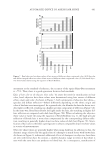
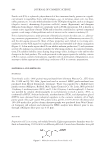
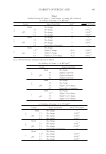
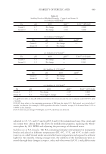
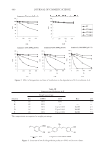
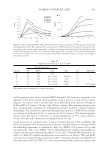
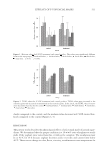
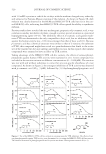
SCREENING METHOD FOR TYROSINASE INHIBITORS 521 (50 μM), 3-(4-hydroxyphenyl)lactic acid (70 μM), p-methoxycinnamic acid (120 μM), cinnamic acid (200 μM), caffeic acid (250 μM), m-coumaric acid (270 μM), o-coumaric acid (300 μM), 3-(4-hydroxyphenyl)pyruvic acid (700 μM), ferulic acid (750 μM), and 3-phenyllactic acid (1000 μM). The results indicate that the single phenolic hydroxyl group at the para position and the double bond on the side chain are critical for TYR enzyme inhibition. Additional hydroxyl or methoxy groups on the phenyl moiety and the hydroxyl and carbonyl groups on the side chain appear to have negative effects on TYR enzyme inhibition. The results support that p-coumaric acid has an optimal structure for the inhibition of TYR activity. As expected, the IC50 value of p-coumaric acid against TYR activity in HEK293 cell extracts was identical to the value previously determined using HEM extracts (3 μM) and very different from the value against mushroom TYR (300 μM) (11). Because p-coumaric acid, 3-(4-hydroxyphenyl)propionic acid and 3-(4-hydroxyphe- nyl)lactic acid appeared to be strong inhibitors of human TYR, their effects on cel- lular melanogenesis were compared in HEMs. In this experiment, cells were pretreated with a test compound and then treated with L-tyrosine to stimulate melanogenesis (22). As shown in Figure 3A,B, treatment of HEMs with L-tyrosine decreased cell vi- ability by 7.5% and increased intracellular melanin content by 68%. Among the three test compounds, p-coumaric acid inhibited the cellular melanin synthesis most effec- tively without signifi cant cytotoxicity (Figure 3A,B). The other two compounds had no signifi cant effects on cellular melanogenesis. Thus the inhibitory effects of these phenylpropanoids on cellular melanogenesis correlate well with their inhibitory ef- fects on TYR activity in vitro, supporting the usefulness of the TYR inhibitor screen- ing method developed in this study. These results also support a great potential of Figure 3. Effects of p-coumaric acid, 3-(4-hydroxyphenyl)propionic acid and 3-(4-hydroxyphenyl)lactic acid on melanin synthesis in HEMs. HEMs were pretreated with the vehicle or p-coumaric acid (Comp. 1), 3-(4-hydroxyphenyl)propionic acid (Comp. 2), or 3-(4-hydroxyphenyl)lactic acid (Comp. 3) at 100 μM and then stimulated with 1.0 mM L-tyrosine. Cell viability (A) and intracellular melanin content (B) are pre- sented as percent of vehicle control without L-tyrosine treatment (means ± SE, n=4). Data not sharing the same letters are signifi cantly different from each other.

JOURNAL OF COSMETIC SCIENCE 522 p-coumaric acid as a hypopigmenting agent whose in vivo effi cacy was demonstrated in a human study (23). CONCLUSIONS Although non-melanocytic cells such as fi broblasts and Chinese hamster-human hybrid ovary cells had been transfected with a human TYR construct for other purposes in previ- ous studies (12,24), the present study demonstrated for the fi rst time that cell-free ex- tracts of the established cell line, HEK293-TYR, may be conveniently used in the screening of TYR inhibitors as potential hypopigmenting agents. The rapid proliferation of this cell line in a relatively inexpensive culture medium should be a big advantage over HEMs. Thus, this cell line can be a good source of active human TYR enzyme and should help in the screening of hypopigmenting agents for cosmetic purposes. ACKNOWLEDGMENT This work was supported by a grant (2009-13870000) from the Regional Industry Technology Development Program of the Ministry of Knowledge Economy, Republic of Korea. REFERENCES (1) S. S. Sulaimon and B. E. Kitchell, The biology of melanocytes, Vet. Dermatol., 14, 57–65 (2003). (2) A. Slominski, Coming of age of melanogenesis-related proteins, Arch. Pathol. Lab. Med., 126, 775–777 (2002). (3) F. Solano, S. Briganti, M. Picardo, and G. Ghanem, Hypopigmenting agents: An updated review on biological, chemical and clinical aspects, Pigment Cell Res., 19, 550–571 (2006). (4) S. Briganti, E. Camera, and M. Picardo, Chemical and instrumental approaches to treat hyperpigmenta- tion, Pigment Cell Res., 16, 101–110 (2003). (5) S. Parvez, M. Kang, H. S. Chung, and H. Bae, Naturally occuring tyrosinase inhibitors: Mechanism and applications in skin health, cosmetics and agriculture industries, Phytother Res., 21, 805–816 (2007). (6) K. Lerch, Amino acid sequence of tyrosinase from Neurospora crassa, Proc. Natl. Acad. Sci. U. S. A., 75, 3635–3639 (1978). (7) B. S. Kwon, A. K. Haq, S. H. Pomerantz, and R. Halaban, Isolation and sequence of a cDNA clone for human tyrosinase that maps at the mouse c-albino locus, Proc. Natl. Acad. Sci. U. S. A., 84, 7473–7477 (1987). (8) T. Klabunde, C. Eicken, J. C. Sacchettini, and B. Krebs, Crystral structure of a plant catechol oxidase containing a dicopper center, Nat. Struct. Biol., 5, 1084–1090 (1998). (9) K. Jones, J. Hughes, M. Hong, Q. Jia, and S. Orndorff, Modulation of melanogenesis by aloesin: A competitive inhibitor of tyrosinase, Pigment Cell Res., 15, 335–340 (2002). (10) K. Takara, H. Iwasaki, K. Ujihara, and K. Wada, Human tyrosinase inhibitor in rum distillate waste- water, J. Oleo. Sci., 57, 191–196 (2008). (11) S. M. An, J. S. Koh, and Y. C. Boo, p-Coumaric acid not only inhibits human tyrosinase activity in vitro but also melanogenesis in cells exposed to UVB, Phytother. Res., 24, 1175–1180 (2010). (12) B. Bouchard, B. B. Fuller, S. Vijayasaradhi, and A. N. Houghton, Induction of pigmentation in mouse fi broblasts by expression of human tyrosinase cDNA, J. Exp. Med., 169, 2029–2042 (1989). (13) P. J. Bergman, J. McKnight, A. Novosad, S. Charney, J. Farrelly, D. Craft, M. Wulderk, Y. Jeffers, M. Sadelain, A. E. Hohenhaus, N. Segal, P. Gregor, M. Engelhorn, I. Riviere, A. N. Houghton, and
Purchased for the exclusive use of nofirst nolast (unknown)
From: SCC Media Library & Resource Center (library.scconline.org)