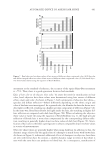
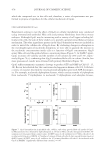
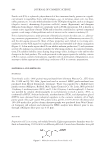
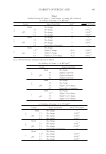
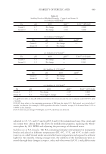
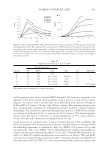
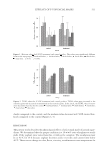
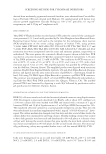
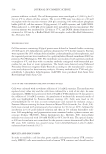
AUTOMATED DEVICE TO ASSESS HAIR SHINE 463 Figure 9 shows data from a side-by-side comparison of four different rinse-off condition- ers (denoted 10 to 40) assessed for hair shine using the opsira Shine-Box (Figure 9A) as well as the corresponding ranking results obtained by 30 independent panelists (Figure 9B). It is clearly visible from the picture that two different tresses may give different average shine values, although treated with the same product. There is, furthermore, some scatter of shine values for each individual tress, depending on the site of measure- ment. Nevertheless, the standard deviation of the mean from all measurements (4 sites per tress × 2 tresses) is rather low, allowing a clear distinction of mean objective shine values generated with different hair care products (high sensitivity). In contrast, the cor- responding subjective assessment of the same tresses and test products by panelists gives a similar ranking of hair shine, although with a substantially lower sensitivity. HAIR SPARKLE Effect of hair color on the objective sparkle value. To assess the need for stratifi cation of hair color for the assessment of objective sparkle values using the opsira Shine-Box, basal sparkle values were determined using hair tresses of different ethnic origin and color. As shown in Figure 10, hair color has a strong impact on objective sparkle values. In this case, objective sparkle values, as determined using the opsira Shine-Box, are lower as the analyzed hair is darker. Thus, stratifi cation of hair color is essential to produce reliable results and to assure comparability of results between studies. Figure 9. Reproducibility and sensitivity of the assessment of hair shine using the opsira Shine-Box. Hair shine was determined for two individual tresses each per test product (conditioners denoted 10 to 40—rinse- off). (A) Individual objective shine values determined at four different sites per tress (closed circles) as well as the mean ± SD from all eight data points (open squares). Higher values mean better hair shine in this case. (B) Corresponding sum scores of ranks determined for the same treated tresses by 30 independent panelists. Lower sum scores mean better hair shine in this case.

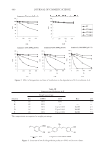
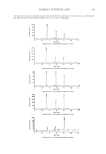
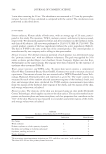
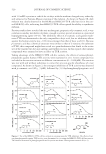
JOURNAL OF COSMETIC SCIENCE 464 Dynamic range of objective sparkle measurement. The sparkle value of a given hair tress is mainly determined by the geometry of the hair fi bers. Therefore, the sparkle value is not substantially changed by a hair care product unless it produces new sparkle spots on the hair fi bers. This is normally seen with leave-in products containing glitter particles and also with hair sprays leaving small refl ecting droplets on the hair fi bers. Most other con- ventional hair care products have no effects on the objective sparkle value. Figure 11A shows sparkle values of blond hair tresses treated either with a standard leave-in and rinse-off hair care product or a leave-in product containing glitter particles. An increase of the sparkle value is seen only with the product containing the glitter particles. Figure 11C shows sparkle values of blond hair tresses before and after treatment with different styling sprays. In each case, the application of the hair spray led to a signifi cant increase in the objective sparkle value determined with the opsira Shine-Box. Repetition of sparkle measurements at the same position on a given hair tress may lead to variances of up to 15%. This is most likely due to the fact that even minute changes in the relative position of the circular light source, which cannot be avoided when remount- ing a carrier, can have profound effects on the resulting sparkle values. The variance of repeated measurements at the same position on a given hair tress is in the same order of magnitude as the variance resulting from sparkle measurements at different positions on a hair tress. Despite this rather high variance, differences in objective sparkle values be- fore and after treatment with certain leave-in products and hair sprays are still high enough to reach a level of signifi cance. DISCUSSION The subjective impression of hair shine is composed of several components such as specu- lar and diffuse refl ection, as well as additional features such as color, sparkle, and parallel- ism of hair fi bers. All these components are integrated and interpreted by an experienced panelist making his subjective assessment of hair shine. We developed and qualifi ed an automated routine screening tool—the opsira Shine-Box—to detect and quantify differ- ences in hair shine following treatment with hair care (shampoo and conditioner) and/or styling products. This tool is able to separately record individual properties of hair shine such as specular refl ection, diffuse refl ection, color, sparkle, and parallelism of hair fi - bers—all information that would also be used by a panelist to assess hair shine. Previous approaches to capturing hair shine using instrumental techniques were ham- pered by the rather low sensitivity and specifi city of the methods, even in those published studies including polarization imaging (6). Using these previous methods, signifi cant quantitative differences in hair shine could only be detected and correlated with perceptual Figure 10. Basal sparkle values determined using the opsira Shine-Box for hair tresses of different ethnic origin and color.
Purchased for the exclusive use of nofirst nolast (unknown)
From: SCC Media Library & Resource Center (library.scconline.org)