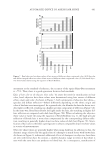
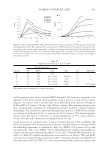
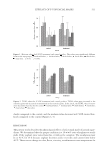
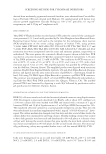
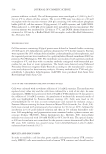
SCREENING METHOD FOR TYROSINASE INHIBITORS 519 their ability to accumulate melanin-like materials inside the cells. The established cell line, HEK293-TYR, was expanded and examined for the ability to express active TYR and synthesize melanin. The expression of active TYR was compared among HEMs, control HEK293 cells, and HEK293-TYR cells by TYR activity assay in vitro using cell-free extracts. The results showed that the specifi c TYR activity of HEK293-TYR cell extracts was close to that of HEM extracts, whereas no signifi cant activity was seen with the extracts of the control HEK293 cells (Figure 1A). The cell-free extracts of HEMs, control HEK293 cells, and HEK293-TYR cells were also subjected to Western blot for comparison of TYR protein expression. The results confi rmed that the TYR protein expression level relative to that of GAPDH, a housekeeping protein, in HEK293-TYR cells was similar to that in HEMs, whereas no TYR protein was detected in the control HEK293 cells (Figure 1B). The minor bands detected in the HEK293-TYR cells may be TYR protein that was not fully maturated via glycosylation (18). This result is consistent with the results of the TYR activity assay above. The potential ability of HEK293-TYR cells to produce melanin-like materials was examined in comparison with HEMs and control HEK293 cells. These cells were treated Figure 1. Generation and analysis of the HEK293-TYR cell line. HEK293 cells were transfected with a human TYR construct and subjected to cloning to establish a HEK293-TYR cell line as described in Materi- als and Methods. The expression of active TYR in HEMs, control HEK293 cells, and HEK293-TYR cells was compared by in vitro TYR activity assay (A) and Western blotting for TYR and GAPDH (B), using the cell-free extracts of those cells. Data represent means ± SE (n=3). Blots shown are representative of three in- dependent studies. The melanogenic properties of HEMs, control HEK293 cells, and HEK293-TYR cells were compared by Fontana-Masson staining for melanin after incubation of those cells with or without 1.0 mM L-tyrosine for six days (C).

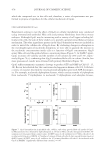
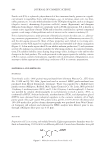
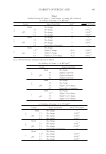
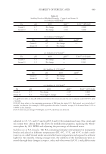
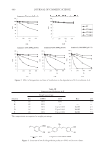
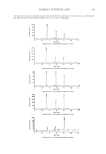
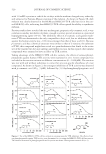
JOURNAL OF COSMETIC SCIENCE 520 with 1.0 mM L-tyrosine or vehicle for six days with the medium changed every other day and subjected to Fontana-Masson staining of the melanin. As shown in Figure 1B, dark melanin was clearly observed in the HEMs and HEK293-TYR cells but not in the con- trol HEK293 cells, indicating that HEK293-TYR cells acquired the ability to synthesize melanin. Previous studies have revealed the anti-melanogenic properties of p-coumaric acid, a very common secondary metabolite of plants, enough to attract special attention as a potential hypopigmenting agent (19–21). The inhibitory effect of p-coumaric acid against mush- room TYR was determined to be only comparable to kojic acid, but its inhibitory effects against the human enzyme was ~100 times stronger than that of kojic acid (11). Because p-coumaric acid has a chemical structure very similar to that of L-tyrosine, the substrate of TYR, this compound might have acted as a pseudosubstrate that binds to the active site of the enzyme but does not undergo any further reaction. In this regard, other similar compounds were assumed to have an effect on TYR activity. Taking advantage of the HEK293-TYR cell-free extracts, the effects of various phenyl- propanoids against human TYR activity were examined in vitro. A test compound was included in the reaction mixture at different concentrations (0 ~ 1000 μM). The reaction was run with and without substrates to correct for any non-specifi c absorbance of a test compound. As shown in Figure 2, the strongest inhibition of TYR activity was observed with p-coumaric acid (IC50, 3 μM), followed by 3-(4-hydroxyphenyl)propionic acid Figure 2. Use of the HEK293-TYR cell-free extracts in screening assay for TYR inhibitors. The effects of vari- ous phenylpropanoids aganist TYR activity were determined in vitro using the HEK293-TYR cell-free extracts. The chemical structures of phenylpropanoids and L-tyrosine are shown. Data represent means ± SE (n=3).
Purchased for the exclusive use of nofirst nolast (unknown)
From: SCC Media Library & Resource Center (library.scconline.org)