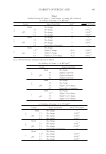
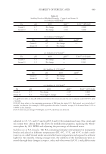
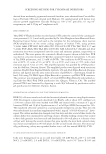
EFFICACY OF F-YOP FACIAL MASKS 509 Melanin and erythema values. Melanin and erythema values were measured by a dermaspec- trometer (Dermalab Cortex Technology), which measured the erythema index of the skin as described by the Diffey and Farr melanin index (19). After calibration of the erythema/ melanin indexes at zero, we performed the measurements (black: 99.9 white: 0.00). The measurement points were in four regions of the forehead, six regions of the cheek, and three regions of the chin. Average values were calculated. Subjective assessment. We asked the participants to subjectively assess the results of using the F-YOP or control treatments. Questions included the evaluation of skin moisture, skin brightness, and skin irritation after use (highest, high, medium, low, and lowest). Final results were assessed as percentages (Table III). Statistical analysis. The levels of signifi cance of any differences between groups were cal- culated by t-test. RESULTS IN VITRO TEST Scavenging activity on DPPH radicals. The scavenging activity was 19.71±9.24% in YP, 49.29±0.84% in yoghurt, 68.82±4.54% in O. humifusa, 30.66±4.30% in fermented milk, and 19.71±9.24% in the pack base, with a fi nal concentration of 0.1% in the Y-FOP product (Table IV). Trolox (6-hydroxyl-2,5,6,8-tetramethylchloroman-2-carboxylic acid, 97% Sigma) was used as a positive control. Trolox is a vitamin E derivative with excel- lent anti-oxidant effects (20). In our work, SC50 based on the DPPH radical scavenging rate was expressed as SC50. SC50 is the concentration of sample needed to produce a 50% reduction in the DPPH. Table III Subjective Feelings Regarding Moisture, Brightness, and Irritation after F-YOP Treatment No. Item Highest High Medium Low Lowest 1 Skin moisture 11.11 61.11 27.78 2 Skin brightness 44.44 50.00 5.56 3 Skin irritation 16.67 83.33 The lowest rating indicates no effect. Values are expressed as percentages (%). Subjects who felt high mois- ture: 72.72%. Skin brightness was indicated at a nearly medium level. Skin irritation was not represented by 83.33% of subjects. Table IV Physiological Activities (%) of Raw Materials for F-YOP YP Yoghurt O. humifusa. Raf. Fermented milk positive control DPPH 19.71 ± 9.24 49.29 ± 0.84§§ 68.82 ± 4.54§§ 30.66 ± 4.30§ 51.13 ± 3.07§§ SOD — — 37.89 ± 8.75* — 51.23 ± 11.29** LOX 22.05 ± 0.57 31.79 ± 1.22 — 27.19 ± 0.93 53.67 ± 2.99 YP (completed yoghurt and pack base mixture), Yoghurt, O. humifusa Raf., and fermented milk have anti- oxidant and antiinfl ammatory effects, except that there was no LOX effect in O. humifusa Raf. Final concen- tration of samples: 1000 ug/ml (SOD 500 ug/ml), positive control (IC50): Trolox, 5ug/ml in DPPH ascorbic acid, 33ug/ml in SOD NDGA, 7.55ug/ml in LOX. * p0.05 ** p0.01 § p0.001 §§ p0.0001.

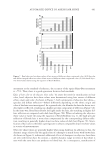
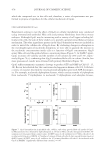
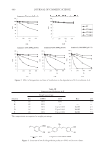
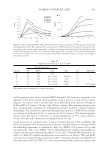
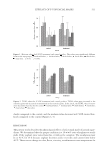
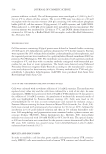
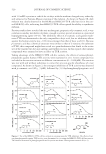
JOURNAL OF COSMETIC SCIENCE 510 SOD-like activity. O. humifusa had a ROS scavenging activity of 37.89±8.75% at a fi nal concentration of 0.1% (Table IV). The positive control was L-ascorbic acid (Sigma). The other three materials had no activities. SC50 values represent the concentration of sample required to scavenge 50% of the superoxide anion produced by the hypoxanthin-xanthine oxidase system. Inhibitory activity of lipoxygenase (LOX). YP, yoghurt, and fermented milk produced 22.05±0.57%, 31.79±1.22%, and 27.19±0.93% inhibition of LOX, respectively (Table IV). The fi nal concentration was 0.1% for all materials tested. Nordihydroguaiaretic acid (NDGA Sigma) was used for the positive control. IC50 values represent the concentration of sample required to inhibit 50% of LOX. Lipoxygenase (5-LO, 5-lipoxygenase) is a human enzyme that is a member of the lipoxygenase family. It transforms essential fatty acids into leukotriences and is a current target for pharmaceutical intervention in a num- ber of diseases. Lipid peroxidation is a free radical-related process that may be enzymati- cally controlled, e.g., for the generation of lipid-derived infl ammatory mediators, or may be non-enzymatically regulated (21). Typically, the hydroperoxide in lipoxygenation is measured using SLO (soybean lipoxygenase) (22). This approach can be used to screen inhibitors of lipoxygenase and to confi rm infl ammatory effectiveness (23). IN VIVO TEST F-YOP and control products were applied to human subjects on both the left and right sides of the face, respectively. The F-YOP-treated region is typically more moist, with more brightness and elasticity in the skin. Dermal irritation. The percentage of the face exhibiting primary irritation was a 20% degree of irritation, and this represented weak erythema. The remaining 80% did not have dermal irritation. The irritation level is shown in Table II. Water content (moisture) and TEWL values. The moisture levels in the F-YOP-treated regions were superior to those in the control. For the treated areas, the moisture was 18.7% in the forehead 24.66% in the cheek, and 17.08% in the chin, whereas the moisture in the control areas was 9.88% in forehead, 10.24% in the cheek, and 7.65% in the chin. The TEWL values were high across all regions compared to the control: 89±6.26% in the forehead, 140.72±10.19% in the cheek, and 123.29±6.67% in the chin (Figure 1). The TEWL values for the treated regions were inferior to those of the control. For the treated regions, the TEWL values decreased to 0.13% in the forehead, and increased to 8.26% in the cheek and 5.63% in the chin, but the TEWL values in the control regions increased to 9.69% in the forehead, 16.65% in the cheek, and 9.75% in the chin. TEWL values were lower, with 101.38±6.95% in the forehead, 50.37±5.93% in the cheek, and 157.81±10.88% in the chin, compared to the control (Figure 2). The values for water content and TEWL in the skin were shown in reciprocal proportion on a graph. Elasticity value. Elasticity decreased in the control region, and there was no change in elasticity in the F-YOP treatment region. The initial elasticity was maintained in the treatment region (Figure 3). Melanin and erythema value. There was no signifi cant decrease in melanin or erythema values for treatment or control. However, the erythema value decreased in F-YOP-treated
Purchased for the exclusive use of nofirst nolast (unknown)
From: SCC Media Library & Resource Center (library.scconline.org)