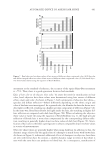
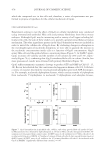
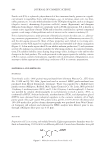
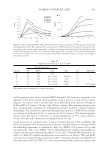
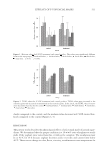
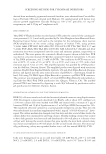
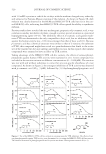
JOURNAL OF COSMETIC SCIENCE 474 RESULTS AND DISCUSSION HAIR GROWTH AND SHIFT IN THE FOLLICLE CYCLE The fi rst experimental evidence that the Gp4G formulation favors hair growth was ob- tained by comparing the size of hair shafts of Wistar rats that were (experiment) or were not (control) treated with the Gp4G formulation for an average of four weeks, during a hair follicle cycle induced by depilation. The experiment was repeated twice on a total of 20 animals. Hair shafts were on the average 20 ± 2% longer (Figure 1a). Rats have two basic types of hair: guard or overcoat, which can be further sub-grouped into monotrichs, awl, and auchenes and undercoat hairs, which are also called zigzags. Separating the hair into two size classes, i.e., above 10 cm (overcoat hairs) and below 6 cm (mostly undercoat hairs), we observed that there was an increase in the size of both undercoat (12 ± 5%) and overcoat (27 ± 2%) hair shafts (Figure 1b,c). However, the increase observed in the un- dercoat shafts was smaller than the increase observed in the overcoat shafts and was not statistically signifi cant. The most conspicuous effect of the Gp4G formulation was ob- served in the overcoat shafts, which may be the fi rst indication of a possible shift in the hair cycle. By counting papillar cells in the bulb of ten follicles in each section for a total of three sections, we were also able to show an average increase in the papillar cell count (32 ± 4%) in the bulbs of the treated follicles (Figure 1d). Therefore, the follicles are somehow being stimulated to induce hair growth. Similar effects have been shown to oc- cur in Wistar rats treated with Hibiscus rosa-sinensis extracts. The action mechanism of Hibiscus seems to be related to the effect of β-catenin, which prolongs the anagen phase and/or shortens the telogen phase (7,12). Recent results indicate that a seed extract of Hibiscus abelmoschus favors FGF-2 activity, which may also help to explain the result cited above (23). In order to understand the effect of Gp4G in hair follicles, histological follicles that were either in anagen or telogen phases were counted (Figure 2) (24,26). This method is based on the fact that the medulla of telogen follicles receives a different staining in longitudi- nal sections at the height of the sebaceous glands (see Methods section). Treatment with Gp4G formulation causes a decrease in the number of telogen follicles and an increase in the number of anagen follicles when compared with the control group. This provides strong evidence that the average increase in the hair length was promoted by a shift in the hair cycle, either by an expansion in the anagen phase or a shortening of the telogen phase. In terms of potential application to humans, we do not expect to see an increase in Figure 1. Effect of Gp4G formulation treatment on the hair follicle structure. (a) Average length of hair shafts, length of (b) undercoat and (c) overcoat hair shafts, and (d) papillar cell count in the bulb of follicles. Cell count represents an average number for all types of follicles. Signifi cantly different from controls, * p 0.05.

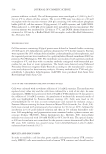
EFFECT OF Gp4G ON SKIN TISSUES 475 facial hair growth since the physiological responses present in human scalp are opposite to those found in facial hair (27). The fact that the Gp4G formulation stimulates follicles suggests that it may also be stimulating adjacent interfollicular and bulge stem cells, which may affect the health of dermal and epidermal tissues (28–30). D. Oh and co-workers (27) have shown that even whole proteins (human growth hormone) encapsulated in liposomes, which are delivered to the hair follicles and allowed to interact with their adjacent stem cells, have shown dramatic and generic effects as hair growth, anti-acne effects, skin tone improvement, and anti-wrinkle effects (27,31). To characterize possible actions of the Gp4G formula- tion on dermal tissues, we have investigated some key morphofunctional parameters such as vascularization, fi broblast activation, and deposition of collagen and proteoglycan versican in the dermis (32). EFFECT ON THE DERMIS Again using Wistar rats that were or were not treated with the Gp4G formulation, tissue samples were taken and evaluated histologically. The number of active fi broblasts (large cells with irregularly branched cytoplasm) was counted in histological hematoxylin- eosin–stained sections of the skin (Figure 3) (26), and it is clearly higher in the Gp4G formulation-treated group compared with the control group. It is expected that a higher number of active fi broblasts leads to increased synthesis and deposition of collagen molecules. In fact, the sections stained using the picrosirius method (33), and analyzed using polar- ized light microscopy, showed a statistically different higher number of thin brilliant green collagen fi brils in skin treated with the Gp4G formulation, whereas in non-treated skin thick yellow brilliant fi brils were predominant (Figure 4). The high proportion of thin fi bers supports our hypothesis that the Gp4G formulation may favor fi broblast acti- vation and de novo synthesis of collagen fi brils in the dermis. Vascularization is another important parameter that can be related to hair growth and the physiological conditions of epidermal tissues. Figure 5 shows sections of skin immunostained with an anti-laminin (LM) antibody. LM is a specifi c marker for basement membranes, present in all types of blood vessels (34,35). Importantly, the number of vessels per unit of area showed an expressive increase (38%) in the group treated with the Gp4G formulation (Figure 5). It has been shown earlier that follicle cycling is associated with Figure 2. Effect of Gp4G formulation on the hair growth phases. Sections of H&E-stained dorsal skin from (a) controls (not treated with Gp4G) and (b) rats treated with Gp4G formulation. (c) Percentage of anagen and telogen hair growth phases. * Signifi cantly different from controls, p 0.001. Arrows indicate the position of the sections in the height of the sebaceous glands.
Purchased for the exclusive use of nofirst nolast (unknown)
From: SCC Media Library & Resource Center (library.scconline.org)