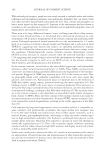
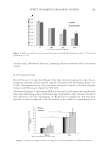
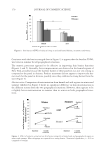
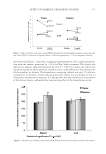
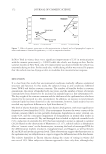
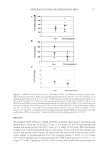
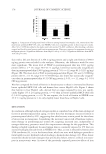
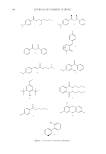
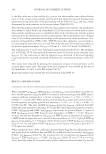
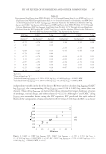
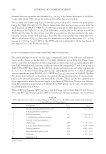
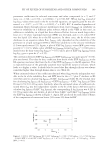
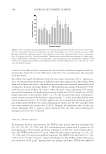
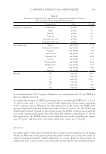
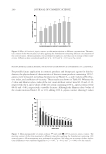
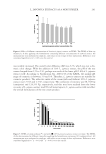
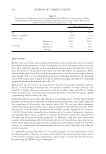
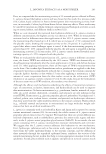
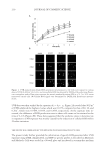
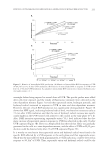
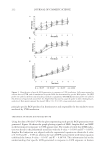
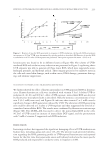
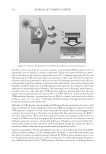
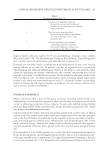
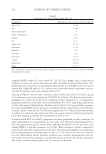
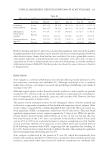
183 FIT OF FLUXES OF SUNSCREENS AND OTHER COMPOUNDS clinically relevant measurement)—decrease SLIPID and SAQ and increase MW. On the other hand, partition coeffi cients, K, and permeability coeffi cients, P (J/concentration in the VEH, CVEH), which are the basis for the Potts–Guy type analyses, are not useful parameters from which to design molecules exhibiting increased, or in this case decreased, fl ux (15). However, solubility-based parameters are because they are independent parameters that predict SMI. As the potential hazards from the topical absorption of sunscreens and other compounds becomes better recognized and understood (18,19), the practical aspect of de- signing sunscreens and other compounds found in cosmetic formulations so that they are not absorbed becomes more important. The topical absorption of sunscreens and other com- pounds have been studied by numerous investigators (20) however, the study of the in vivo absorption of sunscreens and other compounds from the VEH PG:AQ, 30:70, (JMHVEH) reported in 1995 remains the largest database containing sunscreens and other compounds found in cosmetic formulations obtained under the same EXP conditions (n = 10) (21). The structures are shown in Figure 1. The authors recognized the dependence of EXP JMHVEH on KOCT:VEH and SVEH. In fact, their equation (8) is very similar to the RS equation with a dependence of JMAX on the solubilities of the permeants in OCT, SOCT, and the VEH, SVEH, except that the coeffi cient (y = 0.38) to the parameter log SOCT was quite different from what we have found (see below) because molecular volume, MV (or MW), was disregarded. In addition, the correlation between the product of (KOCT:VEH)y·c and SVEH, SMI, and maxi- mum fl ux was not recognized, which is an important concept for the design of new drugs with increased (or decreased) topical delivery (15). Here, we fi rst report the fi t of the physicochemical data for the components of the sun- screens and other compounds database n = 10 to the RS equation and the correlation of log JMHVEH with MW, log SOCT and either log SVEH or log SAQ. We also recently correlated EXP fl ux values for the delivery of drugs through human skin in vitro from water (EXP JMHAQ) with EXP fl ux values for their delivery through a sili- cone membrane from water (EXP JMPAQ): n = 11, r2 = 0.82 (22). The conclusion was that EXP JMHAQ could be predicted by EXP JMPAQ. The unexpected fi nding that both EXP JMHAQ and EXP JMPAQ depended on SAQ as well as SLIPID (SOCT) (23), when it has been assumed that a silicone membrane presented only a lipid barrier to permeation, was ratio- nalized based on the fact that silicone membranes absorb small amounts of water (24). It should be noted that only a few VEHs such as water, methanol, and PG do not interact with silicone membrane (25,26) so that PG:AQ, 30:70 (21) and water VEHs (22,23) can be used in the study of fl ux through silicone membrane without raising concerns about VEH effects on JMPAQ. Here, we next report (i) the EXP fl ux values of selected members (n = 7) that were avail- able to us from the in vivo sunscreens and other compounds database through silicone membranes from the same PG:AQ (30:70) VEH, EXP JMPVEH, used in the in vivo study (21), instead of from a water VEH (22,23) (ii) the fi t of the physicochemical data for se- lected members of the sunscreen database (n = 7) and a homolog of 2 (2′) to the RS equa- tion (iii) correlations of solubilities and MW data with EXP JMPVEH data, and (iv) the correlation between EXP JMPVEH and EXP JMHVEH. Finally, we report calculated JMPVEH values (CALC JMPVEH) using the previously deter- mined coeffi cients from the fi t of EXP JMPAQ data (n = 22, where SLIPID = SOCT) to the RS equation (x = -2.046, y = 0.667, z = 0.00374, r2 = 0.88) (23) to determine if JMPAQ coef- fi cients could be used to calculate JMHVEH accurately.

JOURNAL OF COSMETIC SCIENCE 184 Figure 1. Structures of sunscreen components.
Purchased for the exclusive use of nofirst nolast (unknown)
From: SCC Media Library & Resource Center (library.scconline.org)