J. Cosmet. Sci., 64, 193–205 (May/June 2013) 193 Effects of seaweed Laminaria japonica extracts on skin moisturizing activity in vivo JAE-SUK CHOI, WOI SOOK MOON, JI NA CHOI, KEE HUN DO, SUN HWA MOON, KWANG KEUN CHO, CHAE-JEONG HAN, and IN SOON CHOI, RIS Center, Industry-Academic Cooperation Foundation, Silla University, Republic of Korea (J.-S.C., K.H.D, S.H.M., I.S.C.), Ecomine Co., Ltd., Republic of Korea (W.S.M., J.N.C.), Department of Animal Resources Technology, Gyeongnam National University of Science and Technology, Republic of Korea (K.K.C), Department of Beauty Art, Graduate School of Beauty Art, Youngsan University, Republic of Korea (C.-J.H.) Department of Biological Science, Silla University, Republic of Korea (I.S.C). Accepted for publication August 29, 2012. Synopsis Twelve species of edible seaweed from the coast of Korea were screened for skin moisturizing activity. We placed the lead of a Corneometer on an approximately 6-cm2 test area of the forearm and measured both un- treated skin (control) and skin treated with test moisturizing creams either containing or not containing 5% water:propylene glycol (50:50) extracts of seaweeds. Over the 8-h observation period, the strongest activity of the Laminaria japonica extracts occurred at the 2-h period. For the 10% extract, hydration with the L. ja- ponica extract increased by 14.44% compared with a placebo. Transepidermal water loss (TEWL) was also measured using a test cream with 10% L. japonica extract. For up to 8 h after applying the creams, TEWL was decreased to 4.01 g/cm2, which was approximately 20% of that seen with the control. We suggest that the L. japonica extract hydrates skin via the humectants and hydrocolloids that it contains. To confi rm the safety of L. japonica extracts, we performed a patch test on human skin. The results suggested that at moder- ate doses humans can safely use the extracts. For commercial applications, we evaluated the physicochemical characteristics of the test cream products, including Hunter L, a, and b values pH refractive index and coef- fi cient of viscosity. L. japonica extract did not affect overall formulations of the test cream product in any of the tested aspects. These results suggest that L. japonica extract is a promising ingredient in moisturizing formulations. INTRODUCTION Skin is the most exposed organ of the human body and acts as the fi rst line of defense against external insults. The appearance and function of skin are maintained by an important Address all correspondence to In Soon Choi at ischoi@silla.ac.kr .

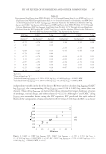
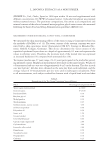
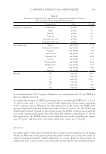
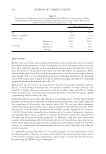
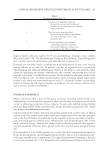
JOURNAL OF COSMETIC SCIENCE 194 balance between the water content of the stratum corneum and skin surface. At least 10% water is needed in the skin to keep it soft and fl exible. When the water content falls below this level, keratin becomes progressively less fl exible. A variation in water content of only 1% can signifi cantly change its elasticity and permeability (1,2). Moisturizer prevents the skin from drying and chapping, thus slowing the aging process. A wide variety of moisturizing components are available in different formulations, such as vegetable glycerin, rose water, jojoba oil, vitamin E oils, and sorbitol. However, there remains a demand for a highly effective moisturizer with an excellent safety and effi cacy profi le. Thus, for many years, there have been numerous attempts to develop new agents capable of preventing and/or treating dry skin (2–4). Interest in marine organisms as potential and promising sources of pharmaceutical agents has increased in recent years (5,6). Seaweeds can act as a source of bioactive compounds and are able to produce a great variety of secondary metabolites with dif- ferent activities. Several cosmetic ingredients from seaweeds were recently shown to have whitening (7), antiaging (8), and antiwrinkle effects (3), and can protect against ultraviolet light (9). However, few studies have measured the moisturizing effects of seaweed extracts (10). In addition, there has been no report on the skin moisturizing activity of indigenous seaweed species in Korea. Therefore, to develop a new moisturizer, we measured the moisturizing effects of Korean indigenous seaweed extracts using a Corneometer and a Tewameter. To confi rm the safety of the extract, we conducted a patch test for human skin. For possible commercial application, we also measured the physiochemical char- acteristics of the test cream products such as Hunter L, a, and b values pH refractive index and coeffi cient of viscosity. MATERIALS AND METHODS SEAWEED EXTRACTS Seaweed thalli were collected from the coast of Korea from November 2005 to April 2006. Twelve edible seaweed species (four of Chlorophyta, six of Phaeophyta, and two of Rhodophyta) were used in this study. Seaweed tissues were dried for 1 day at room temperature using an electric fan and then ground into powder using a coffee grinder for 10 min. For the water/propylene glycol extraction, we used the methods described by Mekideche and Briand (10). To each 5 g of powder, 100 mL of 50% water/50% propylene glycol was added at room temperature for 1 day to extract the water/propylene glycol-soluble components. This procedure was repeated two times, and the combined extracts were stored at −20°C until use. TEST CREAM WITH SEAWEED EXTRACT To determine in vivo skin moisturizing activity, test creams were made with the 12 seaweed extracts. The test creams were kindly supplied by Silla B&H Co., Ltd. (Busan, Korea). The formulations studied (Table I) were prepared in a PRIMIX RM homomixer
Purchased for the exclusive use of nofirst nolast (unknown)
From: SCC Media Library & Resource Center (library.scconline.org)