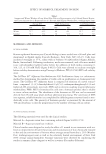
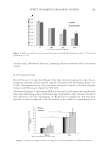
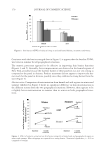
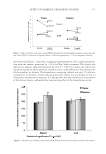
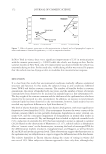
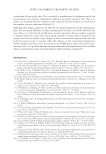
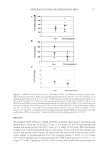
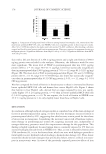
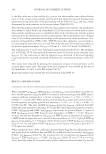
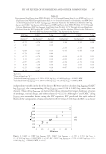
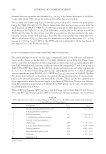
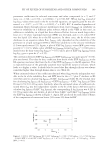
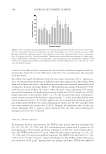
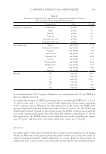
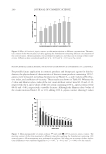
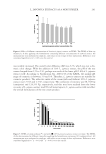
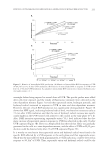
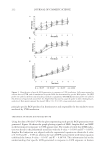
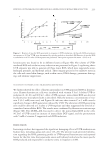
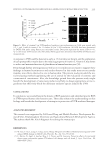
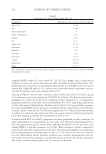
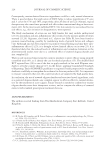
TOPICAL INGREDIENT REDUCES SYMPTOMS OF ACNE VULGARIS 223 Between baseline and day 56, there was a statistically signifi cant reduction in the number of papules/pustules and comedones in the placebo and active treatment groups. However, when the percentage change from baseline was considered, the active group had a statisti- cally greater reduction in papules/pustules and comedones, even after only 14 days of continued use. Levels of sebum production reduced in both groups, as did the number of infl ammatory lesions (Table III). Neither product was found to cause irritation to the skin or desquamation. DISCUSSION Acne vulgaris is a common infl ammatory skin disorder affecting mainly adolescents (35), but sometimes continuing into adulthood (2). Although considered to be a condition rather than a disease, acne impacts on social and psychological wellbeing, particularly if scarring occurs (36). Although topical agents, such as benzoyl peroxide, antibiotics, and retinoids, are popular treatments (37), interest in the use of natural ingredients is growing (19), including bo- tanical compounds, such as chamomile, green tea, and curcumin (38). However, few have been tested rigorously in human trials. The present review evaluated evidence for the therapeutic effects of brown seaweed and its bioactive compounds on markers of skin health and symptoms of acne vulgaris. More recent evidence is provided by a double-blind RCT that tested the effects of a novel sea- weed ingredient, SOZC, on symptoms of mild acne over 56 days of use. This trial found signifi cant improvements in acne vulgaris symptoms by 14 days of use. While the placebo- treated subjects showed similar improvements up to day 14, but not beyond, this may have been because of the 1.8% lactic acid present in the product vehicle. Facial peels contain 35% to 50% lactic acid and are known to improve comedonal acne (39). Smaller clinical trials have showed a 67% reduction in skin sebum levels and increased levels of IL1α following treatment with SOZC, suggesting that the ingredient has soothing ef- fects (22). Seaweed extracts may also help to hydrate the skin, thus sealing the epidermis barrier and supporting the healing process (33). Acne vulgaris is infl uenced by the growth of P. acnes (8), which has traditionally been treated with antibiotic therapies (37). However, concerns have been raised about bacterial resistance, particularly when topical and oral antibiotic treatments are combined (40). Table III Effect of Active and Placebo Treatments on Lesion Numbers and Sebum Production (Ref. 34) Treatment Baseline Day 3 Day 14 Day 28 Day 56 Comedones (mean number) Active 48.2 ± 24 48 ± 24 34.1 ± 24 28.1 ± 17 19.7 ± 13 Placebo 58.4 ± 23 58 ± 23 49.3 ± 22 45.1 ± 20 38.4 ± 18 Infl ammatory lesions (mean number) Active 37.7 ± 4 37 ± 4 26.9 ± 4 17.3 ± 5 13.6 ± 6 Placebo 42.6 ± 4 42.2 ± 4 34.4 ± 6 31.6 ± 6 20.3 ± 6 Sebum production (μg/cm2) Active 154 ± 12 153 ± 12 146 ± 14 123 ± 15 101 ± 5 Placebo 150 ± 12 148 ± 12 144 ± 12 130 ± 18 106 ± 11

JOURNAL OF COSMETIC SCIENCE 224 Consequently, marine-derived bioactive ingredients could be a safe, natural alternative. There is good evidence that application of SOZC helps to reduce populations of P. acnes and S. aureus by 67% and 58%, respectively, after 28 days of use (22). Natural, topical therapies may also cause fewer potential side effects than conventional drug or laser treat- ments (41). In the most recent published RCT (34), skin sensitivity was reduced but no side effects, e.g., skin irritation or desquamation, were reported. The likely mechanisms of action are not fully known but may include antibacterial (22,32), antioxidant and anti-infl ammatory effects related to the nutrient profi le of brown seaweed (21,29). Alginates, also found in L. digitata (see Table II), have been found to promote wound healing, possibly by modulating levels of growth factors and collagen (42). Although zinc has been reported to promote wound healing and may have anti- infl ammatory effects (24,25), it is thought to have limited effi cacy on its own (23). It is therefore likely that the reduced levels of infl ammation and comedone formation in the aforementioned studies were due to a combined effect of seaweed oligosaccharides and zinc complex (22). There is now increased expectation for cosmetic products to prove effi cacy using properly controlled trials (43), as is already the case for medical products (15). The double-blind RCT reported here (34) is one of the fi rst to apply methods in line with Kligman stan- dards to over-the-counter skincare (17). In the future, applying Consolidated Standards of Reporting Trials (CONSORT) guidelines or registered trials prospectively on public databases could help to strengthen the evidence for skincare products (44). It is important to reassure consumers that over-the-counter products are supported by high-quality data. In conclusion, the use of seaweed oligosaccharides and associated novel ingredients, such as a patented oligosaccharide–zinc complex, appear to offer an effective, natural alterna- tive for the treatment of acne vulgaris. Future research is needed to confi rm how marine oligosaccharides exert their therapeutic actions, and to compare the effi cacy of seaweed extracts with standard prescription treatments for acne. AKNOWLEDGMENTS The authors received funding from The Mentholatum Company, East Kilbride, United Kingdom. REFERENCES (1) M. Taylor, M. Gonzalez, and R. Porter, Pathways to infl ammation: acne pathophysiology, Eur J Derma- tol., 21(3), 323–333 (2011). (2) S. Purdy and D. de Berker, Acne vulgaris, Clin. Evid, (Online), pii: 1714 (2011). (3) M. Toyoda and M. Morohashi, Pathogenesis of acne. Med. Electron. Microsc. 34(1), 29–40 (2001). (4) F. Poli, N. Auffret, C. Bevlot, M. Chivot, M. Faure, D. Moyse, H. Pawin, J. Revuz, and B. Dreno, Acne as seen by adolescents: results of questionnaire study in 852 French individuals. Acta Derm. Venereol., 91(5), 531–536 (2011). (5) S. C. Glazebrook and H.C. Williams, Acne prevalence, knowledge about acne and psychological mor- bidity in mid-adolescence: a community-based study. Br. J. Dermatol. 145(2), 274–279 (2001). (6) L.K. Dunn, J.L. O’Neil, and S.R. Feldman, Acne in adolescents: quality of life, self-esteem, mood and psychological disorders, Dermatology online 17(1), 1 (2011). (7) C.C. Zouboulis, Acne and sebaceous gland function, Clin. Dermatol. 22, 360–366 (2004).
Purchased for the exclusive use of nofirst nolast (unknown)
From: SCC Media Library & Resource Center (library.scconline.org)