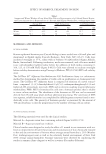
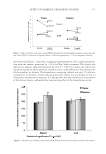
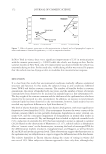
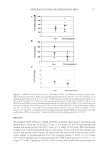
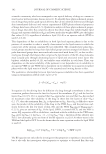
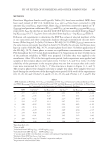
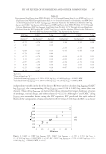
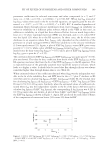
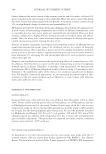
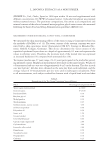
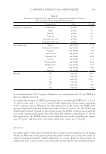
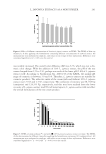
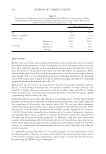
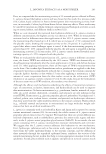
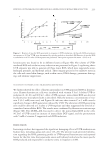
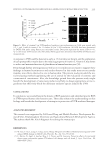
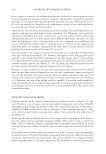
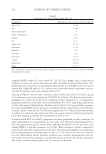
L. JAPONICA EXTRACTS AS A MOISTURIZER 199 at a concentration of 10% L. japonica. However, at a concentration of 15%, the TEWL of skin was slightly increased. To confi rm the duration of TEWL-preventing effects, we measured TEWL at 0, 3, 5, 10, 15, and 30 min, and 1, 1.5, 2, 4, 6, and 8 h after application of the creams containing 10% L. japonica extracts. Within 5 min after application of the creams, the TEWL level was very large both with and without the cream. From 10 min to 2 h, the TEWL was dramatically reduced. Overall, in the testing group, the TEWL of skin treated with the test cream containing the extract was lower than that without cream (Figure 5). At 8 h after application, the TEWL of skin treated with the test cream containing the extract was 4.01 g/cm2, and that of the test cream without the extract was 5.10 g/cm2. PATCH TEST To confi rm safety of the extracts for human skin, a patch test was performed on 25 human volunteers. When the 20 mg per test patch was applied with the test cream, none of the 25 subjects developed erythema, cellular infi ltration, or vesicles. Based on these results, we suggest that the L. japonica extract is not irritating to normal human skin at moderate doses. Table II. Proximate Compositions, Free Amino Acid Compositions and Mineral Contents of the L. japonica Water/ Propylene Glycol Extracts Compositions Unit Contents Proximate compositions Carbohydrate g/100g 0.6 Sugars g/100g 0.5 Proteins g/100g 0.2 Crude fat g/100g 0.2 Saturated fatty acid g/100g 0.1 Unsaturated fatty acid g/100g - Free amino acids Alanine mg/100mL 4.23 Ammounium chloride mg/100mL 1.62 Arginine mg/100mL 2.03 Aspartic acid mg/100mL 42.47 Glutamic acid mg/100mL 68.94 Glycine mg/100mL 0.17 Hydroxyproline mg/100mL 38.14 Phosphoserine mg/100mL 0.37 Serine mg/100mL 0.86 Threonine mg/100mL 0.42 Minerals Na mg/100g 40.4 Ca mg/100g 30.0 K mg/100g 102.2 Mg mg/100g 3.5 Fe mg/100g 0.05 Zn mg/100g 0.02

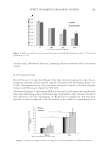
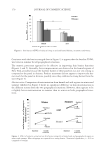
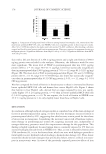
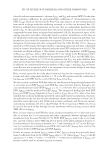
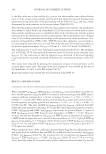
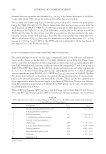
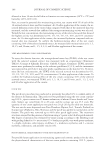
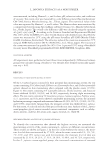
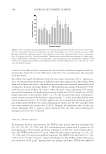
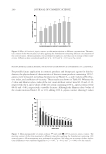
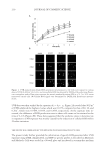
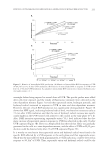
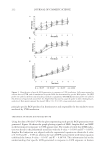
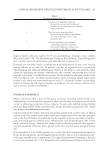
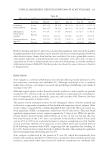
JOURNAL OF COSMETIC SCIENCE 200 PHYSIOCHEMICAL CHARACTERISTICS OF THE TEST CREAM PRODUCTS CONTAINING 10% L. JAPONICA For possible future application in cosmetic products and therapeutic agents for skin hy- dration, the physiochemical characteristics of the test cream products containing 10% L. japonica were measured, including chromaticity (as Hunter L, a, and b values), pH, refrac- tive index, and coeffi cient of viscosity. These results are shown in Table III. Whereas the L value and Hunter color a value of the test cream without extract were 86.12 and −0.14, respectively, the L and a values of the test cream containing 10% L. japonica extract were 80.64 and −0.84, respectively, a notable decrease. Although the Hunter color b value of the creams increased from 1.01 to 4.91, adding 10% L. japonica extract showing b values Figure 2. Effect of Laminaria japonica extract on skin moisturization at different concentrations. The mois- ture content of skin was measured 2 h after applying the formulations containing different concentrations of the seaweed extract. All measurements were performed in triplicate, and values are an average of three repli- cations. Differences were considered signifi cant at * p 0.05 and ** p 0.01 versus the control. Figure 3. Moisturizing profi le of creams without ( ) and with ( ) 10% Laminaria japonica extract. The moisture content of skin was measured at different times after applying the formulations containing 10% seaweed extract. All measurements were performed in triplicate, and values are an average of three replica- tions. Differences were considered signifi cant at * p 0.05, ** p 0.01, and *** p 0.001 versus the control.
Purchased for the exclusive use of nofirst nolast (unknown)
From: SCC Media Library & Resource Center (library.scconline.org)