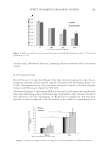
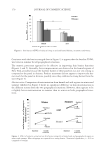
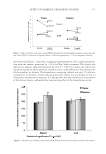
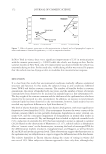
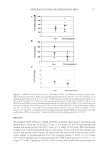
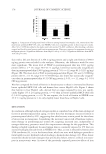
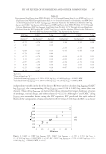
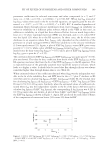
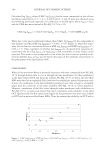
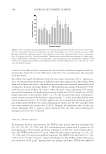
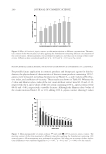
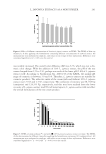
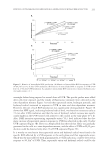
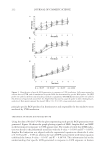
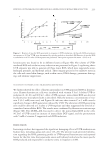
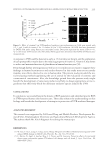
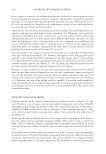
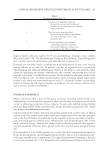
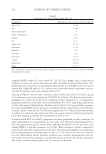
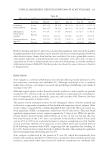
EFFECT OF SORBITOL TREATMENT ON SKIN 171 As observed in Figure 7, there was a signifi cant improvement of 29% in skin moisturiza- tion with the osmotic protectant (p 0.01) in New York in summer. The vehicle also appeared to improve skin moisturization by 14% (p = 0.007). In winter, the vehicle was extremely drying for all the panelists, and there was a visible fl akiness of skin observed for all the panelists in Arizona. The formulation containing sorbitol was only 5% effective compared to its baseline, clearly indicating that this vehicle was too drying on skin to change skin moisturization response. It is also possible that the severely arid environment of the Arizona winter confounded any moisturizing effect of the formulations tested. Figure 6. Moisturization of subjects from humid (New York) and arid (Arizona) regions in winter and summer. Figure 5. Effect of osmotic protectant on basal TEWL in humid and arid geographical region in winter and sum- mer. Lower TEWL is indicative of improved barrier. *Statistical signifi cance p 0.05 as compared to baseline.

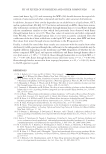
JOURNAL OF COSMETIC SCIENCE 172 In New York in winter, there was a signifi cant improvement of 12% in moisturization with the osmotic protectant ( p 0.0002) while the vehicle was drying on skin. For the summer months in New York, only 4% improvement was observed while the vehicle was extremely drying on skin. In this study also, visible drying of skin was noticed. It appears that this vehicle was too drying on skin to modulate skin moisturization response. DISCUSSION It is clear from this study that environmental conditions markedly infl uence epidermal structure and function. In this study, the subjects living in arid conditions exhibited lower TEWL and thicker stratum corneum. The number of lamellar bodies in stratum granulosum, the extent of lamellar body exocytosis, and the number of layers of stratum corneum have been observed to be increased in animals kept in a dry environment (3). The dry weight of the stratum corneum and the thickness of the epidermis have also been reported to be increased in a dry environment. In addition, an increase in total stratum corneum lipids has been observed in dry environment however, lipid analysis has not revealed any signifi cant differences in lipid distribution (3). The level of relative humidity infl uences skin barrier development, with more rapid barrier formation at lower humidity (30,31). Dry environment decreases the water content of the stratum corneum which in turn perturbs desmosome degradation in intact stratum cor- neum (6,9), and the consequent impairment of desquamation in normal skin results in thicker stratum corneum (6). Dry and damaged skin is linked to depleted ceramide levels (32) a reduction of ceramides (by 40%) has been reported in winter as opposed to summer (28,29). Based on the observations of Mammone et al. (17), sorbitol induces a dehydration effect or “osmotic stress” on the keratinocytes, increasing the levels of messenger RNA for the differentiation markers involucrin, transglutaminase, and fi laggrin, as well as Keratin K1 and K10 and involucrin protein levels. These observations suggest that keratinocytes in the epidermis may use dehydration as a sign to trigger the differentiation of the skin barrier. The relative humidity in Tucson Arizona during the course of testing in winter did not exceed 12%. Most subjects in Arizona appeared to have oily skin, although they Figure 7. Effect of osmotic protectant on skin moisturization in humid and arid geographical region in winter and summer. *Statistical signifi cance p 0.05 as compared to baseline.
Purchased for the exclusive use of nofirst nolast (unknown)
From: SCC Media Library & Resource Center (library.scconline.org)