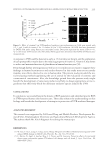
EFFECT OF SORBITOL TREATMENT ON SKIN 173 complained of having dry skin. This is possibly a manifestation of adaptation to the hot environment since ambient temperature infl uences the sebum excretion rate. This is re- lated to an increased delivery of sebum to the surface of the skin without an increment in the number of active sebaceous follicles (33). Although skin barrier appears to be effected by ambient humidity of the environment, there was not much difference in skin moisturization of subjects in New York and Ari- zona. Chou et al. (31) noticed no differences in skin capacitance between subjects exposed to ultralow humidity versus the control group exposed to normal relative humidity. Our results also did not exhibit a big change in skin moisturization between the arid and humid locations except in summer when the subjects in dry environment appeared to exhibit slightly drier skin. Since the amino acids of NMF play a major role on skin mois- turization (34), it is possible that the decrease in humidity in winter reduces the total free amino acid generation and consequent dryness of the stratum corneum (35). REFERENCES (1) P. M. Elias, G. Menon, B. K. Wetzel, and J. W. Williams, Barrier requirements as the evolutionary “driver” of epidermal pigmentation in humans, Am. J. Hum. Biol., 22(4), 526–537 (2010). (2) J. W. Fluhr, R. Darlenski, N. Lachmann, C. Baudouin, P. Msika, C. De Belilovsky, and J. P. Hachem, Infant epidermal skin-physiology: Adaptation after birth, Br. J. Dermatol., 166(3), 483–490 (2012). (3) M. Denda, J. Sato, Y. Masuda, T. Tsuchiya, J. Koyama, M. Kuramoto, P. M. Elias, and K. R. Feingold, Exposure to a dry environment enhances epidermal permeability barrier function, J. Invest. Dermatol., 111(5), 858–863 (1998). (4) S. Mac-Mary, J. M. Sainthillier, and P. Humbert, Dry skin and the environment, Exog, 3, 72–80 (2004). (5) M. Denda, Infl uence of dry environment on epidermal function, J. Dermatol. Sci., 24(Suppl 1), S22–S28 (2000). (6) J. Sato, M. Denda, J. Nakanishi, and J. Koyama, Dry condition affects desquamation of stratum cor- neum in vivo, J. Dermatol. Sci., 18(3), 163–169 (1998). (7) A. Watkinson, C. Harding, A. Moore, and P. Coan, Water modulation of stratum corneum chymotryp- tic enzyme activity and desquamation, Arch. Dermatol. Res., 293, 470–476 (2001). (8) L. Declercq, N. Muizzuddin, L. Hellemens, L. Van Overloop, R. Sparacio, K. D. Marenus, and D. H. Maes, Adaptation response to human skin barrier to hot and dry climate, J. Invest. Dermatol., 119, 716 (2002). (9) A. V. Rawlings, and C. R. Harding, Moisturization and skin barrier function, Dermatol. Ther., 17(Suppl 1), 43–48 (2004). (10) J. P. Marty, [NMF and cosmetology of cutaneous hydration], Ann. Dermatol. Venereol., 129, 131–136 (2002). (11) S. Verdier-Sévrain, and F. Bonté, Skin hydration: A review on its molecular mechanisms, J. Cosmet. Der- matol., 6(2), 75–82 (2007). (12) P. Yancey, M. Clark, S. Hand, R. Bowlus, and G. Somero, Living with water stress: Evolution of osmo- lyte systems, Science, 217, 1214 (1982). (13) M. Bitoun, and M. Tappaz, Gene expression of the transporters and biosynthetic enzymes of the osmo- lytes in astrocyte primary cultures exposed to hyperosmotic conditions, Glia, 32(2), 165–176 (2000). (14) A. Garcia-Perez, and M. B. Burg, Renal medullary organic osmolytes, Physiol. Rev., 71, 1081 (1991). (15) S. Bagnasco, S. Uchida, R. Balaban, P. Kador, and M. B. Burg, Induction of aldose reductase and sorbi- tol in renal inner medullary cells by elevated extracellular NaCl, Proc. Natl. Acad. Sci. USA, 84, 1718 (1987). (16) Y.Sugiyama, Y. Ota, M, Hara, and S. Inoue, Osmotic stress up-regulates aquaporin-3 gene expression in cultured human keratinocytes, Biochim. Biophys. Acta, 1522, 82–88 (2001). (17) T. Mammone, M. Ingrassia, and E. Goyarts, Osmotic stress induces terminal differentiation in cultured normal human epidermal keratinocytes, In Vitro Cell Dev. Biol. Anim., 44(5–6), 135–139 (2008). (18) J. P. Pinnagoda, R. A. Tupker, T. Agner, and J. Serup, Guidelines for transepidermal water loss (TEWL) measurements, Contact Dermatitis, 22, 164–178 (1990).

JOURNAL OF COSMETIC SCIENCE 174 (19) P. G. M. Van Der Walk, and H. I. Maibach, A functional study of the skin barrier to evaporative water loss by means of repeated cellophane-tape stripping, Clin. Exp. Dermatol., 15(3), 180–182 (1990). (20) R. Ghadially, B. E. Brown, S. M. Sequeira-Martin, K. R. Feingold, and P. M. Elias, Structural, func- tional, and lipid metabolic changes in the aged permeability barrier, J. Invest. Dermatol., 95(5), 2281– 2290 (1993). (21) N. Muizzuddin, K. D. Marenus, and D. H. Maes, Factors defi ning sensitive skin and its treatment, Am. J. Cont. Derm., 9(3), 170–175 (1998). (22) G. Grubauer, P. M. Elias, and K. R. Feingold, Transepidermal water loss: The signal for recovery of bar- rier structure and function, J. Lipid Res., 30(3), 323–333 (1989). (23) E. Marttin, M. T. Neelissen-Subnel, F. H. De Haan, and H. E. Bodde, A critical comparison of methods to quantify stratum corneum removed by tape stripping, Skin Pharmacol., 9(1), 69–77 (1996). (24) H. Tagami, Measurement of Electrical Conductance and Impedance, Handbook of Non-Invasive Methods and the Skin (CRC Press, Boca Raton, FL, 1995), pp. 159–164. (25) A. O. Barel, and P. Clarys, Measurement of Electrical Capacitance, Handbook of Non-Invasive Methods and the Skin (CRC Press, Boca Raton, FL, 1995), pp. 165–172. (26) J. Sato, M. Yanai, T. Hirao, and M. Denda, Water content and thickness of the stratum corneum con- tribute to skin surface morphology, Arch Dermatol. Res., 292(8), 412–417 (2000). (27) K. Hashimoto-Kumasaka, K. Takahashi, and H. Tagami, Electrical measurement of the water content of the stratum corneum in vivo and in vitro under various conditions: Comparison between skin surface hygrometer and corneometer in evaluation of the skin surface hydration state, Acta Derm. Venereol., 73(5), 335–339 (1993). (28) A. Conti, J. Rogers, P. Verdejo, C. R. Harding, and A. V. Rawlings, Seasonal infl uences on stratum corneum ceramide 1 fatty acids and the infl uence of topical essential fatty acids, Int. J. Cosmet. Sci., 18, 1–12 (1996). (29) D. Black, A. Del Pozo, J. M. Lagarde, and Y. Gall, Seasonal variability in the biophysical properties of stratum corneum from different anatomical sites, Skin Res. Technol., 6(2), 70–76 (2000). (30) J. Agren, G. Sjörs, and G. Sedin, Ambient humidity infl uences the rate of skin barrier maturation in extremely preterm infants, J. Pediatr., 148(5), 613–617 (2006). (31) T. C. Chou, K. H. Lin, S. M. Wang, C. W. Lee, S. B. Su, T. S. Shih, and H.Y. Chang, Transepidermal water loss and skin capacitance alterations among workers in an ultra-low humidity environment, Arch. Dermatol. Res., 296(10), 489–495 (2005). (32) M. J. Choi, and H. I. Maibach, Role of ceramides in barrier function of healthy and diseased skin, Am. J. Clin. Dermatol., 6(4), 215–223 (2005). (33) C. Pierard-Franchimont, G. E. Pierard, and A. Kligman, Seasonal modulation of sebum excretion, Der- matologica., 181(1), 21–22 (1990). (34) J. A. Bouwstra, H. W. Groenink, J. A. Kempenaar, S. G. Romeijn, and M. Ponec, Water distribution and natural moisturizer factor content in human skin equivalents are regulated by environmental rela- tive humidity, J. Invest. Dermatol., 128(2), 378–388 (2008). (35) C. Katagiri, J. Sato, J. Nomura, and M. Denda, Changes in environmental humidity affect the water- holding property of the stratum corneum and its free amino acid content, and the expression of fi laggrin in the epidermis of hairless mice, J. Dermatol. Sci., 31(1), 29–35 (2003).
Purchased for the exclusive use of nofirst nolast (unknown)
From: SCC Media Library & Resource Center (library.scconline.org)