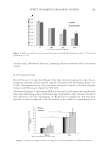
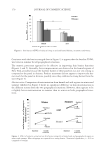
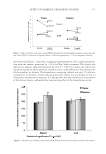
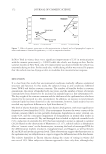
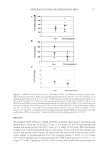
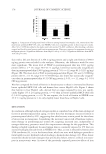
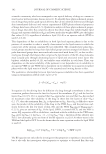
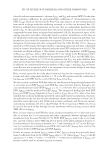
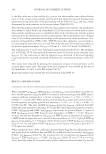
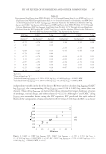
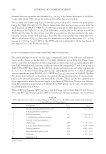
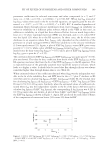
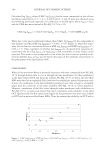
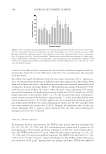
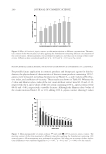
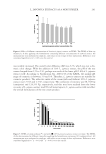
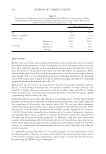
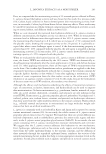
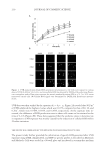
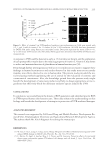
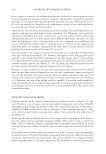
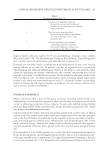
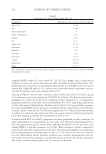
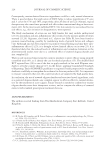
L. JAPONICA EXTRACTS AS A MOISTURIZER 201 was notably increased. The overall color difference (ΔE) was 6.76, which was not a dra- matic color change. With the addition of 10% L. japonica extract, the pH of the test cream changed from 6.35 to 5.91, perhaps as a result of the lower pH (5.60) of L. japonica extract itself. According to Notifi cation No. 2009-158 of the KFDA, the normal pH range of cosmetics is between 3.0 and 9.0. Therefore, L. japonica extracts are suitable for cosmetic products. The refractive index of the cream with and without 10% L. japonica extract was 1.3543 and 1.3727, respectively. The coeffi cient of viscosity was 68, 945 Cp (centipoise) and 124,333 Cp, respectively, and this may have resulted from the lower viscosity of L. japonica extract itself. For all tested aspects, L. japonica extract did not affect the overall formulations of the test cream product. Figure 5. TEWL of cream without ( ) and with ( ) 10% Laminaria japonica extract over time. The TEWL of skin was measured at different times after applying the formulations containing 10% seaweed extract. All measurements were performed in triplicate, and values are an average of three replications. Differences were considered signifi cant at ** p 0.01 and *** p 0.001 versus the control. Figure 4. Effect of different concentrations of Laminaria japonica extract on TEWL. The TEWL of skin was measured 2 h after applying the formulations containing different concentrations of seaweed extract. All measurements were performed in triplicate, and values are an average of three replications. Differences were considered signifi cant at * p 0.05 versus the control.

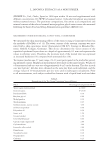
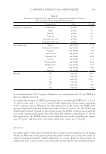
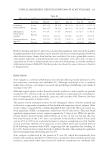
JOURNAL OF COSMETIC SCIENCE 202 DISCUSSION Because skin is the most exposed organ of the human body, and because water determines the softness and smoothness of skin, moisturizers are most commonly used to treat dry skin. Skin hydration depends on the equilibrium between water transferred by osmosis from the dermis to the epidermis and water lost from the surface by evaporation. Dehy- dration of the upper layer of the skin results when water is lost from the stratum corneum more rapidly than it is received from the lower layer of the skin. Dry skin is also the result of loss of the horny layer of lipids. Dry skin is brittle and rough, although it is constantly supplied with water from inside the body (18). Moisturizers are used to treat dry and irritated skin as well as atopic dermatitis and ich- thyosis. A wide variety of moisturizers are currently available, but there remains a de- mand for a highly effi cacious moisturizer with an excellent safety and effi cacy profi le. Thus, for many years, there have been numerous attempts to develop new agents capable of preventing and/or treating dry skin. Intertidal seaweeds are periodically exposed to air and experience a variety of potentially stressful environmental conditions, including nutrient limitation, high light, high and low temperatures, desiccation, and osmotic stress (19). To overcome these situations, seaweeds produce a great variety of secondary metabolites with different activities. These biologically active secondary metabolites are valuable natural ingredients for cosmetics (7–9,20). In particular, seaweed polysaccharides such as fucoidan, carrageenan, alginates, and agar have been used as excipients in cosmetic formulae because of their high gelling, bonding, and viscosity-increasing properties (3). However, until now, few studies have measured the moisturizing effects of seaweed extracts (10). In addition, there has been no report on the skin moisturizing activity of indigenous seaweed species in Korea. For these reasons, we evaluated the skin moisturizing activities in easily collectible and edible in- tertidal seaweeds. It is generally accepted that there are two major strategies for the measurement of skin moisturizing effects. The fi rst is to assess skin hydration by measuring the water content of the stratum corneum using a Corneometer. The second is to assess skin barrier function by measuring the TEWL using a Tewameter. Table III. Physiochemical Characteristics of Test Cream Without (a) and With (b) Laminaria japonica Extract. All Measurements Were Performed in Triplicate, and Values are an Average of Three Replications. Differences Were Considered Signifi cant at p 0.05 Test cream products a b pH 6.35 5.91 Refractive index(nD) 1.3543 1.3727 Viscosity (cps) 124,333 68,945 Color value (Lightness, L) 86.12 80.64 (Redness, a) −0.14 −0.84 (Yellowness, b) 1.01 4.91 ΔE Value — 6.76
Purchased for the exclusive use of nofirst nolast (unknown)
From: SCC Media Library & Resource Center (library.scconline.org)