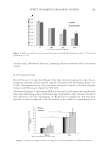
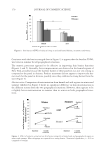
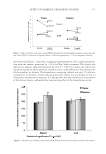
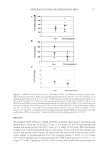
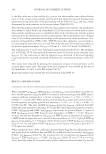
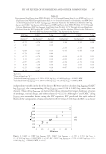
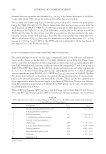
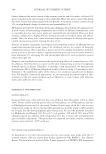
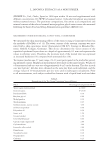
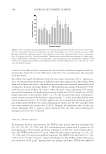
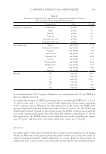
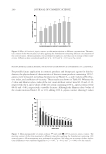
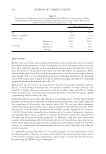
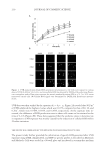
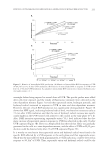
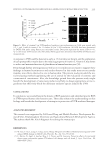
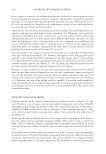
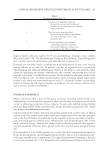
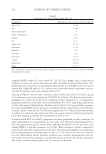
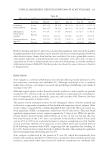
L. JAPONICA EXTRACTS AS A MOISTURIZER 197 were measured, including Hunter L, a, and b values pH refractive index and coeffi cient of viscosity. Test cream color was measured by a color difference meter (Spectrophotometer CM-700d Konica Minolta Sensing, Inc., Tokyo, Japan). The numerical value of the color was expressed by Hunter L, a, and b values. The Hunter values were monitored by a computerized system using SpectraMagic software (version 2.11 Minolta Cyberchrom Inc., Osaka, Japan). The overall color difference (ΔE) was calculated using the equation 1 2 2 2 2 ª º ' ' ' 'b ¬ ¼ E L a . According to the Cosmetic Standard and Experimental Method (No. 2007-45) by the KFDA (17), after 10-fold dilution with distilled water, the pH of the cream was measured at 25°C using the pH meter SevenEasy pH S20K (Mettler-Toledo GmbH, Greifensee, Switzerland). The refractive index of the cream was measured at 25°C using an ABBE Refractometer DR-A1 (ATAGO Co., Ltd., Tokyo, Japan). The viscosity of the cream was measured in spindle No. SC4-25 at 1 rpm and 25°C using a Brookfi eld viscosity meter (Brookfi eld programmable DV-III+RHEOMETER, Stoughton, MA). STATISTICAL ANALYSES All experiments were performed at least three times independently. Differences between groups were calculated using a Student’s t-test. Results were deemed statistically signifi - cant at p 0.05. RESULTS SCREENING OF SKIN MOISTURIZING ACTIVITY Of the 12 seaweed species screened for their potential skin moisturizing activity, the test creams containing 5% Codium fragile, Ecklonia cava, Enteromorpha linza, and Undaria pinnatifi da extracts showed no skin moisturizing effect compared with the placebo cream (17.05% Figure 1). Test creams containing 5% Capsosiphon fulvescens, Hizikia fusiformis, and Sargassum horneri exhibited 19.09%, 18.95%, and 18.16%, respectively, showing slight moisturizing effects. The test cream containing 5% Gracilaria verrucosa, Laminaria japonica, Porphyra yezoen- sis, S. sagamianum, and Ulva pertusa showed considerable moisturizing activity the increased hydration percentage compared with untreated skin was 20.32%, 28.71%, 23.46%, 24.27%, and 19.99%, respectively. Among them, the strongest activity was exhibited by L. japonica. For this reason, we selected and tested this species for the next assay. Analysis of the L. japonica water/propylene glycol extracts revealed various nutritional components, such as carbohy- drates, proteins, crude fat, free amino acids, sugars, minerals, etc. (Table II). SKIN MOISTURIZING ACTIVITY OF L. JAPONICA EXTRACT To identify the concentration that showed the highest activity, we measured the moisturizing activity of the cream containing L. japonica at different concentrations. These results are shown in Figure 2. In the test cream without the extract, the mois- ture level of skin was increased by 17.02% when the same cream with 1%, 3%, 5%, 7%, 10%, and 15% extract was used for treatment, the moisture level of skin was increased by 21.31%, 24.21%, 27.31%, 29.16%, 31.46%, and 30.72%, respectively. In the L. japonica cream-applied group, the increased concentration of seaweed

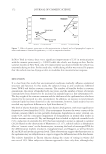
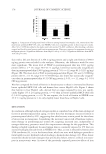
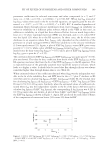
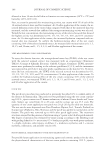
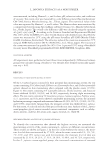
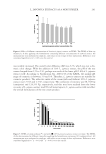
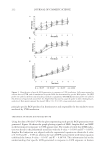
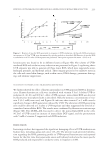
JOURNAL OF COSMETIC SCIENCE 198 extracts reasonably and dose-dependently increased the hydration compared with un- treated skin from 0% to 10%. However, with the 15% concentration, the moisture level decreased. To confi rm the length of hydration from the test cream containing 10% L. japonica ex- tract, we measured skin hydration at different times after application of the creams. Both with and without the extract, the hydration percentage was increased immediately and continued to decrease over time (Figure 3). The hydration percentage of skin was 73.78% with the test cream without the extract when the same cream containing 10% extract was used for treatment, the hydration percentage of skin was 94.22%, which was 20.44% higher than that in the placebo. From 1 to 2 h, the moisturizing cream containing L. japonica extract increased skin hydration approximately 1.5 times more than did the same cream without the extract. At 8 h after application, the increased skin hydration percent- age of skin treated with the test cream containing the extract was 18.70%, and that of the test cream without the extract was 15.81%. Namely, the hydration effect of the test cream containing 10% L. japonica extract lasted for 8 h, the time tested, showing the strongest activity at the 2-h period. TEWL OF L. JAPONICA EXTRACT To determine the best concentration, the TEWL of the treated skin was determined for 0%, 1%, 3%, 5%, 7%, 10%, and 15% concentration test creams with L. japonica at 2 h after application. These results are shown in Figure 4. In the test cream without the ex- tract, the TEWL of skin was 8.67 g/cm2 when the same cream containing 1%, 3%, 5%, 7%, 10%, and 15% extract was used for treatment, the TEWL of the skin was 8.25, 7.90, 7.06, 6.76, 6.54, and 6.70 g/cm2, respectively (Figure 4). The TEWL of skin without any test cream was 12.22 g/cm2. Among these test groups, the lowest TEWL was exhibited Figure 1. The 12 seaweed species from which extracts were obtained (Pla: Placebo control, Cfr: Codium frag- ile, Cfu: Capsosiphon fulvescens, Eca: Ecklonia cava, Eli: Enteromorpha linza, Gve: Gracilaria verrucosa, Hfu: Hizikia fusiformis, Lja: Laminaria japonica, Pye: Porphyra yezoensis, Sho: Sargassum horneri, Ssa: S. sagamianum, Upe: Ulva pertusa, and Upi: Undaria pinnatifi da). The moisture content of skin was measured 2 h after apply- ing the formulations containing 5% seaweed extract. All measurements were performed in triplicate, and values are an average of three replications. Differences were considered signifi cant at * p 0.05, and ** p 0.01 versus the placebo control.
Purchased for the exclusive use of nofirst nolast (unknown)
From: SCC Media Library & Resource Center (library.scconline.org)