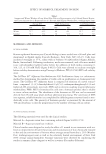
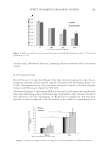
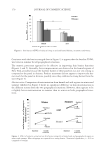
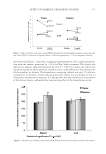
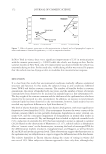
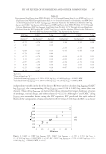
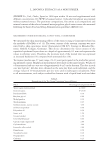
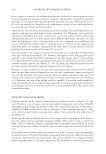
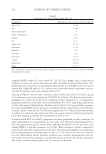
L. JAPONICA EXTRACTS AS A MOISTURIZER 195 (PRIMIX Co., Ltd., Osaka, Japan) at 3000 rpm within 10 min and supplemented with different concentrations (%) (W/W) of seaweed extract. A placebo formulation was prepared without seaweed extract. The proximate compositions, free amino acid compositions and mineral contents of the selected seaweed water/propylene glycol extracts were also measured following the Korea Food and Drug Administration guidelines (KFDA) (11). MEASUREMENT OF SKIN MOISTURIZING ACTIVITY USING A CORNEOMETER We measured the skin moisturizing effects of the extracts using a Corneometer based on the methods of Dal’Belo et al. (4). The water content of the stratum corneum was mea- sured with a skin capacitance meter (Corneometer CM 825 Courage & Khazaka Elec- tronic GmbH, Cologne, Germany). This device determines the water content of the superfi cial epidermal layers down to a depth of approximately 0.1 mm and expresses the values in arbitrary units. Therefore, the moisture level of the treated skin was expressed as increased hydration (%) compared with untreated skin (10). Ten women (median age, 27 years range, 24–31 years) participated in the study after provid- ing informed consent. Biophysical measurements were made on the inner forearm. We placed a Corneometer lead on a test area of approximately 6 cm2 on the forearm. The dose in each case was 8 μl/cm2. All data were obtained on the same day from each individual, and the average values of 10 measurements per site were used in subsequent calculations. Prior to all measurements, each subject washed her forearm with a liquid hand wash and then Table I. Formulation of the Test Cream Containing Seaweed Extract INCI Percentage of components (W/W) Water (aqua), demineralized as 100% Seaweed extract 0–15.00 Disodium EDTA 0.10 Butylene glycol 6.00 Methylparaben 0.20 Triethanolamine 0.25 Sorbitan stearate, sucrose cocoate 4.50 Sorbitan sesquioleate 0.50 Polysorbate 60 0.50 Stearic acid 1.50 Cetearyl alcohol 1.50 Cetyl ethylhexanoate 8.00 Captylic/capric triglyceride 2.00 Gyclomethicone 4.00 Limnanthes alba seed oil 2.00 Dimethicone 0.50 Tocopheryl acetate 0.20 Propylparaben 0.10 Carbomer 0.25

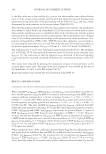
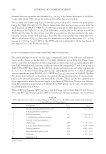
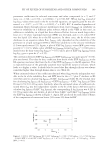
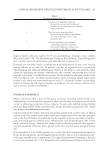
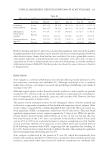
JOURNAL OF COSMETIC SCIENCE 196 allowed at least 30 min for full skin acclimation to room temperature (20°C ± 2°C) and humidity (45%–60%) (12). First, to screen for potential skin moisturizing activity, test creams with 5% of each of the 12 seaweed extracts were used for treatment. At 2 h after application of the creams, the in- creased hydration status of the treated skin compared with that of the untreated skin was measured, and the seaweed that exhibited the strongest moisturizing activity was selected. To fi nd the best concentration, the moisturizing activity of the selected seaweed that showed the highest activity was determined at 0%, 1%, 3%, 5%, 7%, 10%, and 15% concentra- tions. At 2 h after application of the creams, the increased hydration compared with un- treated skin was measured. To confi rm the hydration-lasting effect of the test cream containing 10% of the selected seaweed extract, we measured skin moisturization at 0, 3, 5, 10, 15, and 30 min, and 1, 1.5, 2, 4, 6, and 8 h after application of the creams. TEWL MEASUREMENTS USING THE TEWAMETER To assess skin barrier function, the transepidermal water loss (TEWL) of the test cream with the selected seaweed extract was measured with an evaporimeter (Tewameter TM210 Courage & Khazaka Electronic GmbH, Cologne, Germany). TEWL measure- ments were performed according to the relevant guidelines (13,14), and the instrument was registered in g/m2h for 2 min after probe equilibration on the skin for 30 s. To deter- mine the best concentration, the TEWL of the selected seaweed was determined at 0%, 1%, 3%, 5%, 7%, 10%, and 15% concentrations 2 h after application of the creams. To confi rm the hydration-lasting effect of the test cream containing 10% of the selected seaweed extract, we measured TEWL at 0, 3, 5, 10, 15, and 30 min, and 1, 1.5, 2, 4, 6, and 8 h after application of the creams. PATCH TEST The patch test procedure was conducted as previously described (15) to confi rm safety of the extracts for human skin. The patch test was performed using the test cream contain- ing 10% L. japonica extract on 25 human volunteers, of whom 20 were female and 5 were male. Subject age varied from 22 to 28 years, and the average age was 25.5 years. The quantity of test cream applied per test patch was 20 μl (20 mg for solid test materials). The test articles were dispensed onto Finn Chambers (Epitest, Ltd., Tuusula, Finland) on Scanpor tape (Alpharma, Oslo, Norway), and the patch was applied to normal skin on the forearm. The patch was removed up to 48 h after patch application. The treatment sites were assessed for the presence of irritation using a 5-point scale 6 h after patch removal. The degree of irritation was evaluated by visual scoring according to the following scale with grading defi ned as: 0 = no reaction 0.5 = barely perceptible, very weak spotty erythema 1 = slight erythema, either spotty or diffuse 2 = moderate erythema and 3 = intense erythema, infi ltration, and possible vesicles (16). PHYSIOCHEMICAL CHARACTERISTICS OF THE TEST CREAM PRODUCTS For possible future application in moisturizing agents and cosmetic products for dry skin, the physiochemical characteristics of the test cream products containing 10% L. japonica
Purchased for the exclusive use of nofirst nolast (unknown)
From: SCC Media Library & Resource Center (library.scconline.org)