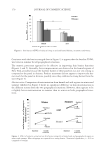
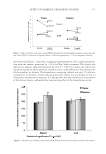
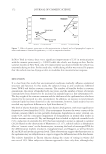
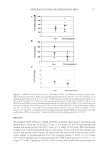
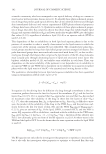
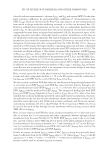
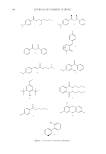
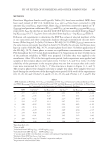
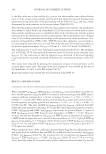
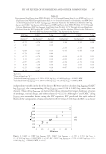
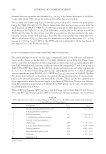
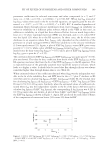
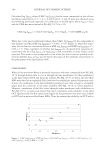
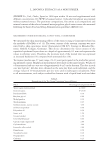
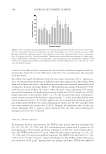
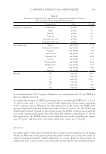
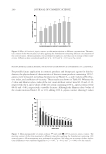
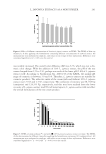
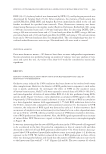
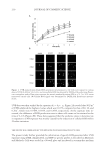
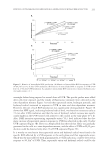
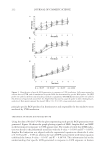
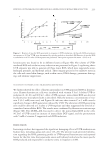
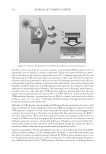
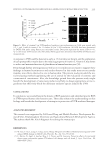
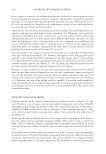
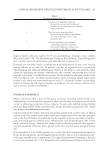
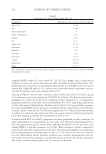
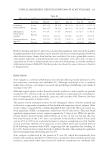
KINETICS OF UVB IRRADIATION-MEDIATED ROS GENERATION IN HUMAN KERATINOCYTES 213 keratinocytes was found to be in different kinetics (Figure 4B). The scheme of UVB- mediated ROS and oxidative stress induction was presented in Figure 5 explaining that a UVB exposure was able to generate all three major ROS, which were superoxide anion, hydrogen peroxide, and hydroxyl radical. These oxygen species led to oxidative stress in the cells and caused skin damage, such as skin cancer, DNA damage, premature skin ag- ing, and immune suppression. THE EFFECT OF VITAMIN C ON UVB-MEDIATED ROS PROFILES We further showed the effect of known antioxidant on UVB-generated ROS in keratino- cytes. Human keratinocyte cells were incubated with vitamin C for 1 h before UVB ir- radiation (0, 40, 60, and 90 J/m2). After a UVB exposure, intracellular ROS was detected by fl uorescence microplate reader as described. Only the nontoxic concentrations of vita- min C (0–5 mM) were used, and Figure 6A indicates that vitamin C at 5 mM caused a signifi cant change in ROS generation induced by UVB. The alteration of ROS generating rate could be detected at 1 h after a UVB exposure and thus suppressed the level of ac- cumulated intracellular ROS. The results were confi rmed by fl uorescence microscope (Figure 6B). The DCFH2-DA was used to detect the intracellular ROS in the cells. 90 J/m2 of UVB caused an increase of intracellular DCF signal, and the pretreatment with 5 mM of vitamin C suppressed such ROS induction. DISCUSSION Increasing evidence has supported the signifi cant damaging effects of UVB irradiation on human skin, including aging and cancer (25–28). The present study provided informa- tion regarding the ROS generating profi le in UVB-exposed keratinocytes and reported herein for the fi rst time that superoxide anion and hydroxyl radical are the main specifi c ROS produced and responsible to oxidative stress in response to UVB. Figure 4. Kinetics of specifi c ROS generated in response to UVB irradiation. (A) Specifi c ROS generations in response to 90 J/m2 UVB were determined by specifi c probed as described. (B) Kinetics of specifi c ROS accumulation at 0–2 h after UVB exposure was presented. Data point represent the mean ± SD (n = 4).

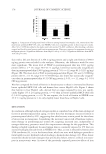
JOURNAL OF COSMETIC SCIENCE 214 Oxidative stress caused by the excessive amounts of intracellular ROS is shown to be an important cause of damage to cellular components. Three main types of ROS were identi- fi ed, and evidence indicated that superoxide anion (•O2−), hydrogen peroxide (H2O2), and hydroxyl radical (•OH) were generated continuously in the living cells (29,30). Superox- ide anion after being generated could be converted to hydrogen peroxide by the function of superoxide dismutase enzyme. Consistent with this notion, our results revealed that hydrogen peroxide induction in UVB-exposured keratinocytes was found to follow the induction of superoxide anion. However, the increasing level of hydroxyl radical was de- tectable at the very early time after UVB irritation indicates the possibility that this free radical may be generated by the direct effect of UVB. Previous studies indicated that UVB-mediated damage of pyrimidine base of DNA is tightly associated with cellular oxidative stress (31–33). Also, UVB-induced DNA damage through hydroxyl radical formation was previously shown (34). Although a UVB exposure caused signifi cant ROS upregulation in keratinocytes up to 24 h (data not shown), we found signifi cant induction of ROS accumulation only at 0–2 h after UVB exposure, compared to that of the nonirradiated control. These results suggest that oxidative stress generated in this study was mediated by the induction of specifi c ROS in the early time period. We found that superoxide anion and hydroxyl radical were in- creased in UVB-treated cells at a higher rate over that of control cells, whereas a rate of hydrogen peroxide increase is of minimal difference. Therefore, we have provided infor- mation that oxidative stress caused by UVB is generated during the 2-h period after ex- posure by cellular induction of superoxide anion and hydroxyl radical. Various nonenzymatic dietary antioxidants can protect cells within the body from ROS- induced oxidative damage (35,36). Among them, vitamin C is a powerful antioxidant that was shown to reduce an oxidative damage induced by UVB in mouse keratinocytes in vitro (37). In the present study, vitamin C at the concentration of 5 mM could suppress the genera- tion of ROS induced by 90 J/m2 UVB irritation. The effect of vitamin C on ROS generation Figure 5. Schematic presentation of the UVB-mediated ROS generation in keratinocytes.
Purchased for the exclusive use of nofirst nolast (unknown)
From: SCC Media Library & Resource Center (library.scconline.org)