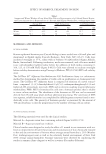
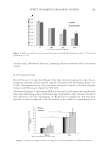
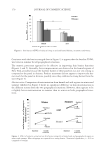
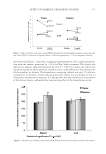
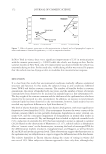
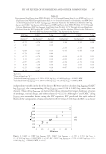
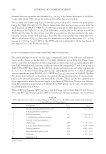
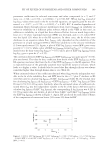
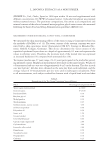
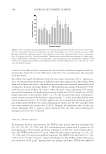
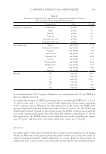
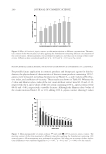
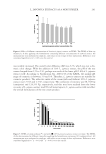
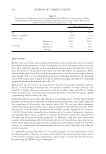
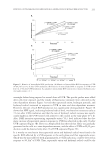
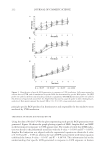
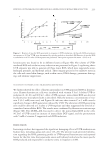
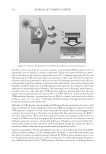
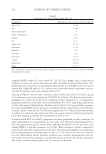
L. JAPONICA EXTRACTS AS A MOISTURIZER 203 First, we compared the skin moisturizing activity of 12 seaweed species collected in Korea L. japonica showed the highest activity and was chosen for this study. In a previous study (10), Codium fragile collected in France showed potent skin moisturizing activity how- ever, in our results, Codium fragile from Korea did not show any effects. These results may be caused by variations in cellular chemical compositions and biological activities accord- ing to season, habitat, and different thalli in seaweed (21). When we were measured the increased skin hydration abilities of L. japonica creams at different concentrations, the highest activity was shown at 10%. When we measured the moisture level at different times after application of the 10% L. japonica extract cream, the moisturizing effect lasted up to 8 h, which was an increase of 15% compared with the placebo cream, showing the strongest activity at the 2-h period. It is generally ac- cepted that when a new challenger agent is tested, if the skin moisturizing property is greater than 10%–20% compared with the placebo, the new agent is regarded as having moisturizing activity (22). In our results, 10% L. japonica extract showed favorable mois- turizing capacity of 15% compared with the placebo. When we evaluated the skin barrier function of L. japonica cream at different concentra- tions, the lowest TEWL was exhibited by the 10% extract. TEWL was dramatically re- duced beginning immediately after the cream application to 10 min, and did not decrease until 2 h. After applying moisturizer, there are two types of TEWL measurements that can be done. One is when lipid formulations such as petrolatum are applied to the skin, evaporative water loss is immediately reduced due to closing of the stratum corneum by a specifi c lipid(s). Another is that within 15 min after applying a moisturizer, a large amount of water evaporation from the skin surface occurs in the oil-in-water (O/W) emulsion or an aqueous cosmetic solution (23,24). In this study, because the formulation of the test cream was an O/W emulsion, this tendency was observed. Although the effi cacy and mechanisms underlying the effects of moisturizers remains a topic of controversy, occlusives, humectants, and hydrocolloids can be used to improve skin moisturization. Occlusive moisturizers (e.g., petrolatum, lanolin, mineral oil, vege- table oil, acetyl alcohol, cholesterol, ceramides, and silicones) are oily substances that retard TEWL. Humectants (e.g., glycerin, propylene glycerol, polysorbate 30, polyglyceryl-3, sorbitol, gelatin, urea, sodium lactate, vitamins, and proteins) are hydroscopic substances that draw water from the viable epidermis/dermis to the stratum corneum. Hydrocolloids (e.g., colloidal oatmeal and proteins in moisturizers) are large molecular weight sub- stances that form an artifi cial membrane (25). L. japonica is commonly used as a foodstuff in Korea and Japan and is reported to contain various nutritional contents (26). In our study, the solids content of L. japonica water/ propylene glycol extracts was 25.2 mg/ml. We found that there are several different nu- tritional components, such as carbohydrates, proteins, free amino acids, sugars, and min- erals, in the L. japonica water/ propylene glycol extracts (Table II). In our results, the test cream containing 10% L. japonica increased skin moisture immediately and over time. We suggest that the L. japonica extract addresses skin hydration via two mechanisms. First, hydroscopic substances such as free amino acids, sugars, and minerals that draw water from the viable epidermis/dermis to the stratum corneum, and the diffusion of these materials through the superfi cial epidermal layers, reinforces the activity of the natural moisturizing factors in skin that help to retain appropriate moisture levels in the epidermis. Second, phycocolloids such as alginate and protein in seaweed extracts attach

JOURNAL OF COSMETIC SCIENCE 204 to skin proteins to form a protective barrier for both immediate and long-term regulation of moisture loss. To confi rm the safety of the L. japonica extracts, we performed a patch test for human skin. The results suggest that the extracts can be safely used by humans at moderate doses. In addition, for commercial applications, we evaluated the physiochemical characteristics of the test cream products, including Hunter L, a, and b values pH refractive index and the coeffi cient of viscosity. L. japonica extract did not affect overall formulations of the test cream product in any of the tested aspects. Regarding odor, we confi rm that the extract added no objectionable odor to the cream, but the cream itself has a mild odor, which likely masks that of the seaweed. In conclusion, L. japonica extract used at 5%–10% in cosmetic formulations may consti- tute an effective hydrating agent it may become a promising and effective moisturizing ingredient in face- and body-care product formulations. In addition, it has been reported that L. japonica has additional benefi ts for the skin, such as antimicrobial (27), antioxi- dant (28), and anti-infl ammatory activities (29). Therefore, it is expected that L. japonica will be used as a promising cosmetic ingredient that possesses various biological activities as well as skin moisturizing activity. ACKNOWLEDGMENTS This work was supported by the Global Healthcare Industry RIS Center, Ministry of Knowledge Economy, Republic of Korea. Kwang Keun Cho was also supported by the Priority Research Centers Program through the National Research Foundation of Korea (NRF) funded by the Ministry of Education, Science and Technology (2012-006683), Republic of Korea. REFERENCES (1) T. S. Spencer, Water and the horny layer. J. Soc. Cosmet. Chem., 27, 63–72 (1976). (2) M. N. Padamwar, A. P. Pawar, A. V. Daithankar, and K. R. Mahadik, Silk sericin as a moisturizer: an in vivo study, J. Cosmet. Dermatol., 4(4), 250–257 (2005). (3) S. K. Kim, Y. D. Ravichandran, S. B. Khan, and Y. T. Kim, Prospective of the cosmeceuticals derived from marine organisms, Biotechnol. Bioprocess Eng., 13(5), 511–523 (2008). (4) S. E. Dal’Belo, L. R. Gaspar, and P. M. Maia Campos, Moisturizing effect of cosmetic formulations containing Aloe vera extract in different concentrations assessed by skin bioengineering techniques, Skin Res. Technol., 12, 241–246 (2006). (5) A. M. Mayer and M. T. Hamann, Marine pharmacology in 1999: compounds with antibacterial, antico- agulant, antifungal, anthelmintic, anti-infl ammatory, antiplatelet, antiprotozoal and antiviral activities affecting the cardiovascular, endocrine, immune and nervous systems, and other miscellaneous mecha- nisms of action. Comp. Biochem. Physiol. C Toxicol. Pharmacol., 132(3), 315–339 (2002). (6) D. J. Newman, G. M. Cragg, and K. M. Snader, Natural products as sources of new drugs over the pe- riod 1981-2002, J. Nat. Prod., 66(7), 1022–1037 (2003). (7) N. Y. Yoon, T. K. Eom, M. M. Kim, and S. K. Kim, Inhibitory effect of phlorotannins isolated from Ecklonia cava on mushroom tyrosinase activity and melanin formation in mouse B16F10 melanoma cells, J. Agric. Food. Chem., 57(10), 4124–4129 (2009). (8) T. Fujimura, K. Tsukahara, S. Moriwaki, T. Kitahara, T. Sano, and Y. Takema, Treatment of human skin with an extract of Fucus vesiculosus changes its thickness and mechanical properties, J. Cosmet. Sci. 53(1), 1–9 (2002). (9) A. Gröniger, R. P. Sinha, M. Klisch, and D. P. Häder, Photoprotective compounds in cyanobacteria, phytoplankton and macroalgae: a database, J. Photochem. Photobiol. B., 58, 115–122 (2000). (10) N. Mekideche and X. Briand, A Marine Moisturizer, Cosm. Toil., 111(6), 101–106 (1996).
Purchased for the exclusive use of nofirst nolast (unknown)
From: SCC Media Library & Resource Center (library.scconline.org)